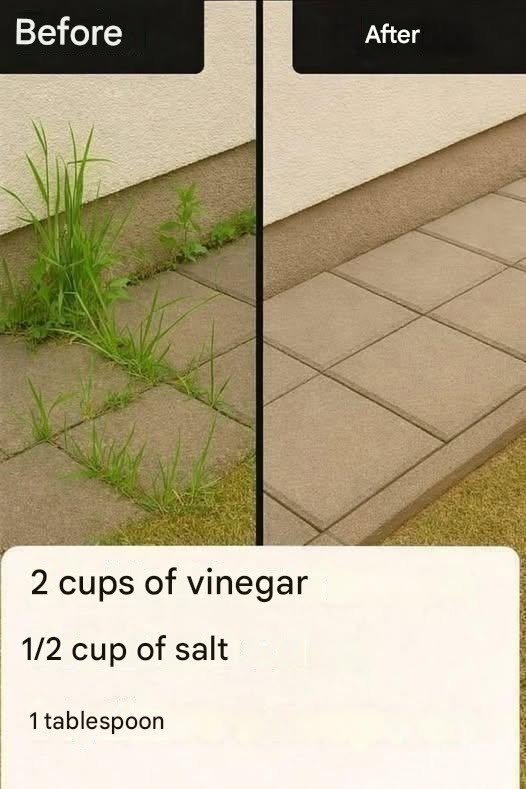
A homemade herbicide can be effective for young, actively growing weeds, especially those growing in cracks in driveways, patios, and walkways. It is generally less effective on deep-rooted perennial weeds than commercial systemic herbicides because it usually burns the leaves rather than killing the roots.
Super-Effective Homemade Herbicide Recipe
Ingredients
- 1 gallon (3.8 liters) white vinegar (5% acidity)
- For stronger results, use horticultural vinegar (20% acidity) with extreme caution.
- 1 cup table salt or rock salt
- 1 tablespoon liquid dish soap (not dishwasher detergent)
Instructions
- Pour the vinegar into a large bucket or garden sprayer.
- Add the salt and stir until completely dissolved.
- Add the dish soap last and gently mix to avoid excessive foaming.
- Transfer the mixture to a spray bottle or garden sprayer.
How It Works
- Vinegar damages plant cells and dries out leaves.
- Salt draws moisture from plant tissues and makes the soil less hospitable for plant growth.
- Dish soap helps the solution stick to the leaves instead of beading up and running off.
How to Apply
- Spray on a warm, sunny, dry day (above 75°F or 24°C is ideal).
- Thoroughly coat the leaves until they are wet but not dripping.
- Avoid spraying before rain; allow at least 24 hours of dry weather.
- Spray in the morning for maximum sunlight exposure.
- Reapply after 5–7 days if needed.
Best Uses
This mixture works well on:
- Young annual weeds
- Weeds growing in:
- Sidewalk cracks
- Driveways
- Gravel paths
- Patios
- Fence lines
It is not recommended for use in garden beds or lawns because it can damage or kill desirable plants, and the salt can remain in the soil.
Extra-Strength Version
For tougher weeds:
- 1 gallon (3.8 L) 20% horticultural vinegar
- 1 cup salt
- 2 tablespoons dish soap
This formulation acts more quickly but requires additional caution.
Safety Precautions
- Wear gloves, long sleeves, and eye protection.
- If using horticultural vinegar (20%), consider a face shield or goggles, as it can cause serious skin and eye burns.
- Avoid spraying on windy days to prevent drift onto desirable plants.
- Keep children and pets away until the spray has dried.
- Store any leftover mixture in a clearly labeled container out of reach of children and pets.
Limitations
- Most homemade herbicides kill the top growth, but many perennial weeds (such as dandelions, bindweed, or thistle) may regrow from their roots.
- Salt can build up in soil and make it difficult for future plants to grow, so use it only where you want little or no vegetation.
For vegetable gardens or flower beds, it’s usually better to avoid salt-based herbicides and instead use methods like mulching, hand weeding, or targeted applications of vinegar without salt to reduce long-term soil damage.