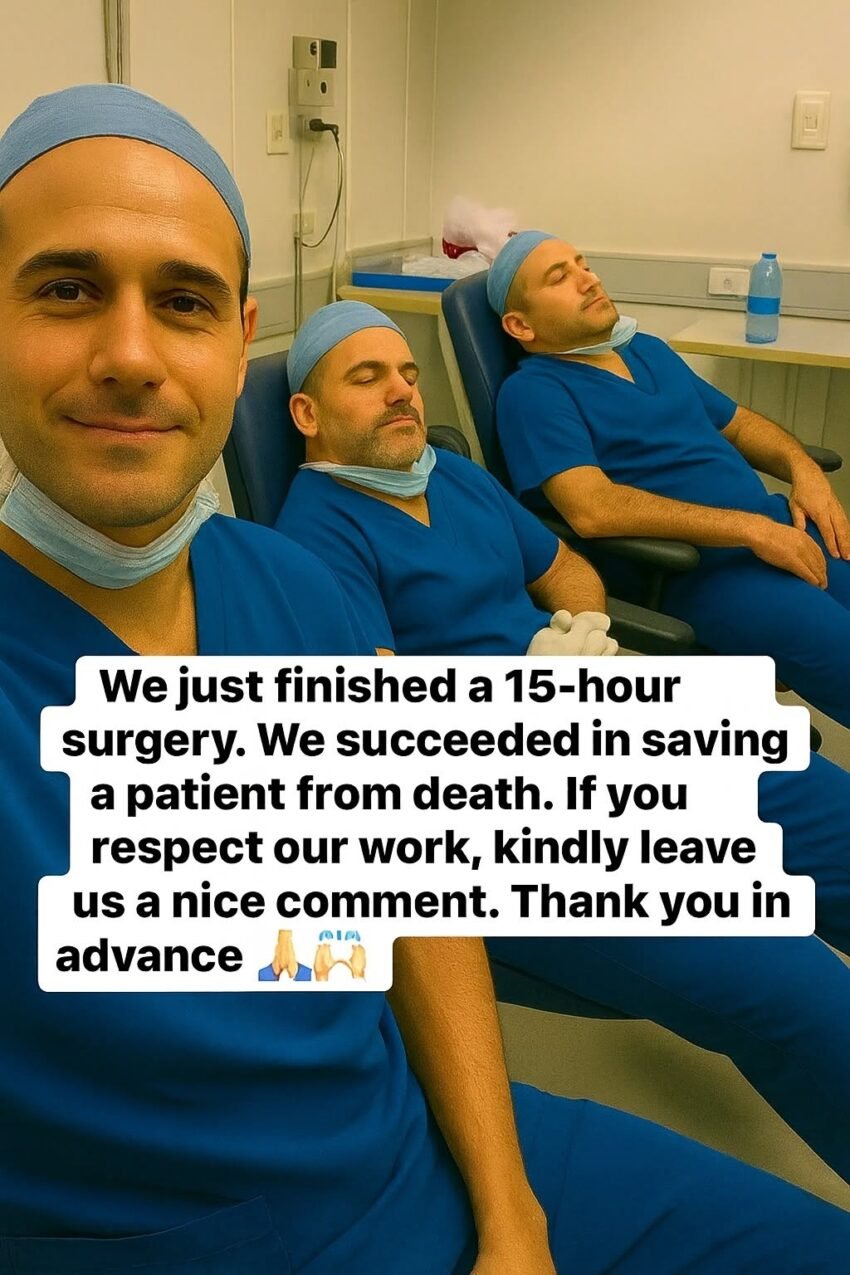
It sounds like you’re asking for a detailed explanation of what it’s like when a surgery lasts around 15 hours in the operating room and what doctors (and the whole team) are doing during that time.
A 15-hour operation is considered a very long, complex surgery. These usually happen in cases like major trauma, complex cancer removal, organ transplant, or multi-step reconstructive surgery. During this time, the operating room runs almost like a tightly controlled system with many professionals working together continuously.
At the start, the patient is prepared and anesthetized by the anesthesiology team. This alone is carefully managed because the patient must be kept fully unconscious, pain-free, and medically stable for many hours. Once surgery begins, the surgical team focuses on the main procedure, often working in shifts or rotating lead surgeons so that fatigue doesn’t affect precision.
Inside the OR, everything is highly structured. Nurses continuously manage sterile instruments, suction, and supplies. Anesthesia staff monitor heart rate, blood pressure, oxygen levels, and fluid balance every minute. Even small changes in the patient’s condition can require immediate adjustments in medication or technique.
For a 15-hour surgery, fatigue management is critical. Surgeons may step out briefly or rotate roles while others take over, especially during less critical phases. The room is kept sterile the entire time, so even breaks are carefully coordinated. Everyone must maintain focus, because a small mistake after many hours can have serious consequences.
There are also “milestone checks” during long operations—points where the team reassesses progress, blood loss, imaging results, and whether the original surgical plan still makes sense or needs adjustment. In some cases, unexpected findings can extend the surgery even further.
After the main procedure is complete, the closure phase begins. This can itself take hours, especially in major surgeries where multiple layers of tissue need careful reconstruction. Once finished, the anesthesia team gradually wakes the patient while continuing close monitoring before transfer to intensive care or recovery.
So in short, a 15-hour operating room procedure is not one continuous effort by a single doctor—it’s a coordinated, high-intensity teamwork process involving rotation, constant monitoring, and precise decision-making to safely carry a patient through a very complex medical situation.
If you meant something slightly different by “doctor application” (like paperwork, training, or reporting after surgery), tell me and I’ll explain that part too.