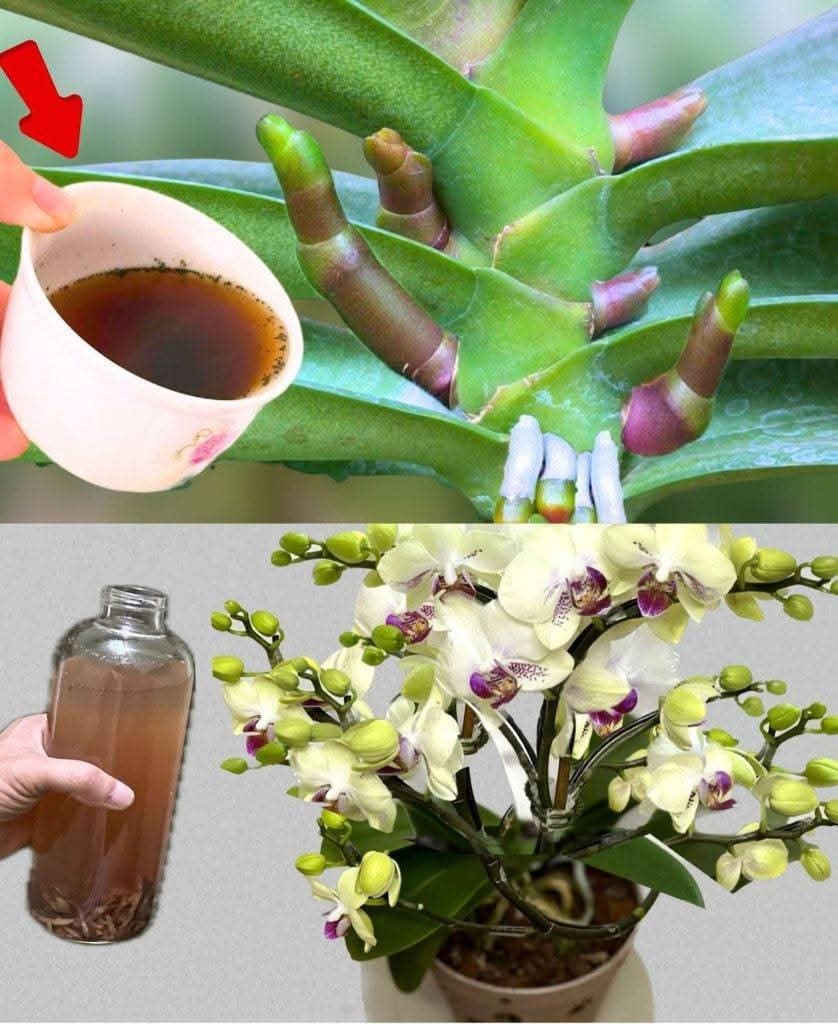
If you saw a claim like “Water your orchid with this and it will be 10 times more beautiful,” it’s almost certainly an exaggeration. Orchids don’t have a single miracle fertilizer or homemade recipe that produces dramatic results overnight. Healthy growth comes from proper light, watering, humidity, and balanced nutrition.
Here are a few safe options that can support healthy orchids:
Option 1: Balanced orchid fertilizer (recommended)
This is the most reliable method.
What you’ll need
A balanced orchid fertilizer (such as 20-20-20 or a fertilizer labeled specifically for orchids)
Water
How to use
1. Dilute the fertilizer to ¼ to ½ the strength recommended on the label.
2. Water the orchid with the solution every 2–4 weeks during active growth.
3. Once a month, water with plain water to flush excess fertilizer salts from the potting mix.
Option 2: Rice water (occasional use)
Rice water contains small amounts of nutrients but is not a complete fertilizer.
Ingredients
½ cup uncooked rice
2 cups water
Instructions
1. Rinse the rice briefly.
2. Soak it in the water for 20–30 minutes.
3. Strain the liquid.
4. Dilute with an equal amount of fresh water (1:1).
5. Use it once a month to water the orchid.
Option 3: Banana peel tea (use sparingly)
Banana peels provide potassium, but homemade teas can spoil and may encourage mold if overused.
Ingredients
1 banana peel
1 liter of water
Instructions
1. Soak the peel in water for 24 hours.
2. Remove the peel.
3. Dilute the liquid with an equal amount of water.
4. Apply once every 4–6 weeks.
For lush, leafy orchids
Most orchids grow healthier leaves when they have:
Bright, indirect light (avoid strong midday sun).
Water only when the potting mix is nearly dry.
40–70% humidity with good air circulation.
A coarse orchid bark mix rather than regular potting soil.
Temperatures of about 18–27°C (65–80°F) for many common orchids.
Avoid these common mistakes
Overwatering, which can rot the roots.
Using coffee, milk, sugar water, or undiluted kitchen scraps as fertilizer.
Letting water sit in the crown of the plant, which can cause rot.
Fertilizing a dehydrated orchid—water first if the potting mix is very dry.
A healthy orchid won’t become “10 times more beautiful” from any single ingredient, but consistent care and light feeding can produce greener leaves, stronger roots, and more frequent flowering over time. If you know the type of orchid you have (for example, a Phalaenopsis, Cattleya, or Dendrobium), I can provide care recommendations specific to that variety.