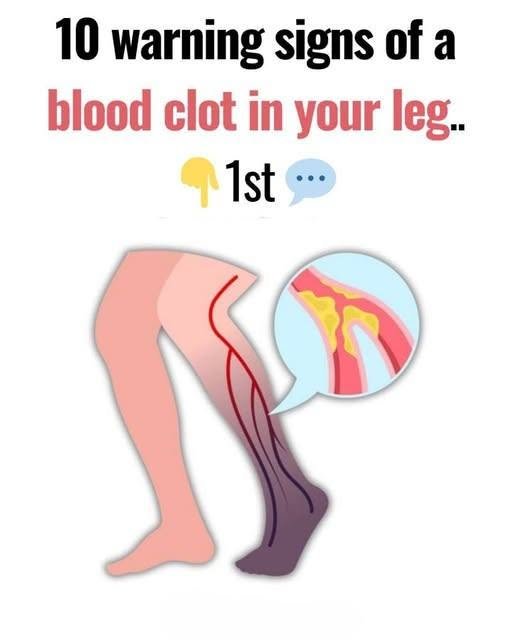
Here are 10 warning signs of a blood clot in the leg in detail:
1. Swelling in One Leg
One of the most common signs is swelling that affects only one leg. The swelling may develop suddenly or gradually over several hours or days. It usually occurs in the calf, ankle, or entire leg.
Why it happens: The clot blocks normal blood flow, causing fluid to build up in the surrounding tissues.
2. Leg Pain or Tenderness
Pain often starts in the calf and may feel like:
- A cramp
- Muscle soreness
- Tightness
- Persistent aching
The pain may worsen when walking or standing and improve slightly when resting.
3. Warm Skin
The affected area often feels warmer than the surrounding skin because of inflammation and reduced blood circulation.
You may notice warmth by touching both legs and comparing them.
4. Red or Discolored Skin
The skin over the clot may become:
- Red
- Purple
- Bluish
- Darker than normal
The discoloration is usually localized around the calf or thigh.
5. Enlarged Surface Veins
Veins near the skin may become more visible or appear swollen because blood is being redirected around the blocked vein.
These veins may look rope-like or bulging.
6. Persistent Calf Cramp
Unlike a typical muscle cramp, pain from a blood clot:
- Doesn’t improve with stretching
- Continues for hours or days
- May become progressively worse
Many people initially mistake this symptom for a pulled muscle.
7. Tight or Heavy Feeling in the Leg
Some people describe:
- A feeling of heaviness
- Tightness
- Pressure
- Fullness in the affected leg
This sensation may make walking uncomfortable.
8. Skin That Feels Firm or Hard
The tissues around the clot may become firm due to inflammation and swelling.
The affected area can feel noticeably different from the other leg.
9. Pain When Flexing the Foot
Some people experience increased calf pain when pulling the toes upward toward the shin. Although this has historically been associated with DVT, it is not a reliable test and should not be used to diagnose or rule out a blood clot.
10. Shortness of Breath or Chest Pain (Emergency Warning)
If part of the clot travels to the lungs, symptoms can include:
- Sudden shortness of breath
- Sharp chest pain
- Rapid heartbeat
- Coughing, sometimes with blood
- Lightheadedness or fainting
These symptoms may indicate a pulmonary embolism, which requires immediate emergency medical care.
Risk Factors
You’re more likely to develop a blood clot if you have:
- Long periods of sitting (such as long flights or car rides)
- Recent surgery or hospitalization
- Pregnancy or the weeks after childbirth
- Smoking
- Obesity
- Cancer
- A personal or family history of blood clots
- Certain inherited clotting disorders
- Use of estrogen-containing birth control or hormone therapy
- Increasing age, especially over 60
When to Seek Medical Care
Seek urgent medical evaluation the same day if you have:
- New swelling in one leg
- Leg pain with redness and warmth
- Symptoms that suggest a blood clot, especially if you have risk factors
Call your local emergency services immediately if you develop:
- Sudden shortness of breath
- Chest pain
- Coughing up blood
- Fainting or severe dizziness
These symptoms may indicate a pulmonary embolism.
How Doctors Diagnose It
A healthcare provider may use:
- A physical examination
- A blood test called a D-dimer
- An ultrasound of the leg veins (the most common imaging test)
- Less commonly, other imaging tests if needed
Treatment
Treatment aims to prevent the clot from growing and reduce the risk of pulmonary embolism. It may include:
- Blood-thinning medications (anticoagulants)
- Compression stockings in selected cases
- Procedures to remove or dissolve the clot in certain high-risk situations
- Encouraging movement and follow-up care, depending on the person’s condition
Early diagnosis and treatment greatly reduce the risk of serious complications. If you notice swelling, pain, warmth, or redness in one leg—especially if these symptoms appear together—it’s important to seek prompt medical evaluation rather than waiting to see if they resolve on their own.