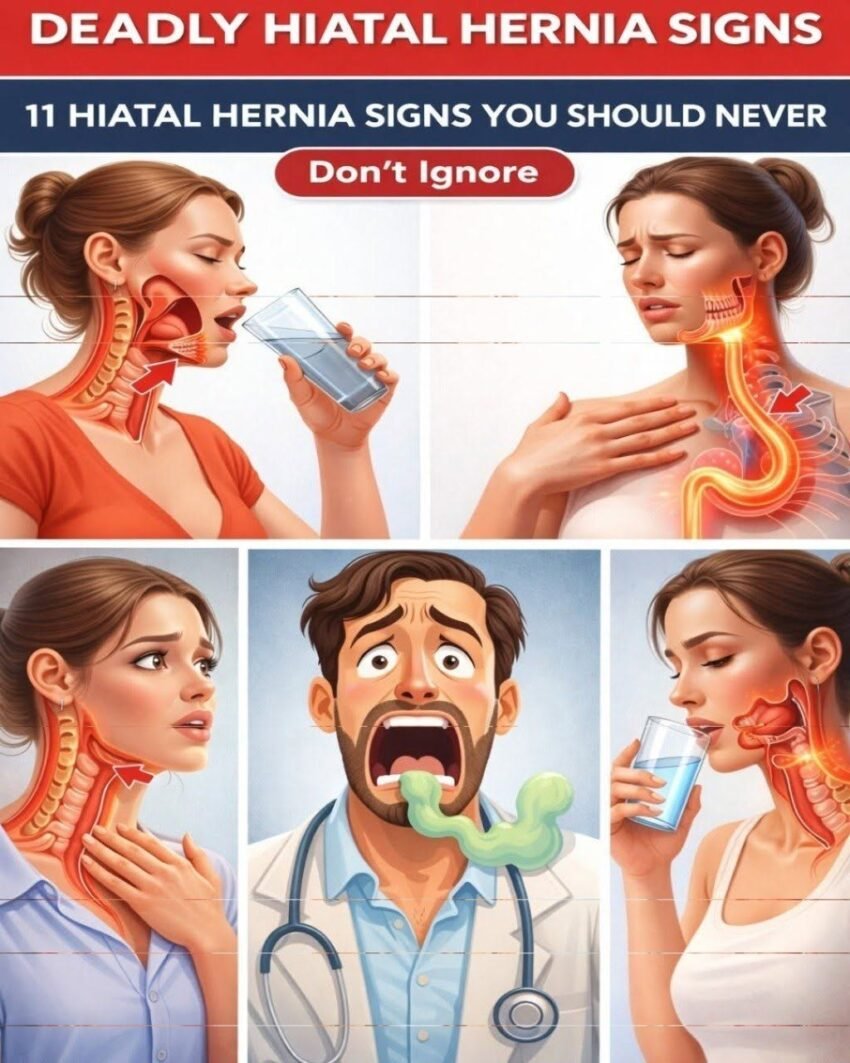
Here are 10 common hiatal hernia signs and symptoms explained in detail:
1. Heartburn (Most Common Symptom)
Heartburn is a burning sensation in the chest that usually occurs after eating or when lying down.
Why it happens:
A hiatal hernia can weaken the barrier between the stomach and esophagus, allowing stomach acid to flow upward.
Symptoms include:
- Burning in the chest
- Sour taste in the mouth
- Worse after large meals
- Worse when bending over or lying flat
2. Acid Reflux (GERD)
Acid reflux occurs when stomach acid moves back into the esophagus.
Symptoms include:
- Sour or bitter taste
- Food coming back into the throat
- Frequent burping
- Irritated throat
- Bad breath
Long-term acid reflux can damage the esophagus if left untreated.
3. Chest Pain
Some people experience chest discomfort that can resemble heart-related pain.
Characteristics:
- Burning or pressure in the chest
- May occur after meals
- Often improves with antacids
- Can worsen while lying down
Important: Because chest pain can also be caused by a heart attack, seek immediate medical attention if it is severe, sudden, associated with shortness of breath, sweating, dizziness, or pain spreading to the arm, jaw, or back.
4. Difficulty Swallowing (Dysphagia)
A hiatal hernia may make swallowing uncomfortable.
Symptoms:
- Feeling like food gets stuck
- Pain while swallowing
- Needing extra water to swallow food
- Trouble swallowing solid foods
This may occur because inflammation or narrowing of the esophagus develops from chronic acid exposure.
5. Frequent Burping or Belching
Excess air may build up in the stomach.
Signs include:
- Constant belching
- Feeling bloated
- Temporary relief after burping
This often accompanies acid reflux.
6. Nausea and Vomiting
Some people feel nauseated, especially after eating.
Possible reasons:
- Acid reflux irritating the stomach and esophagus
- Food remaining in the stomach longer
- Large hiatal hernias affecting normal stomach movement
Persistent vomiting should be evaluated by a healthcare professional.
7. Feeling Full Quickly (Early Satiety)
People with a hiatal hernia may feel full after eating only a small amount.
Symptoms:
- Loss of appetite
- Bloating
- Upper abdominal discomfort
- Reduced food intake
Large hiatal hernias are more likely to cause this symptom.
8. Shortness of Breath
A large hiatal hernia can occasionally contribute to breathing difficulties.
Why it happens:
- The stomach may press against the lungs.
- Acid reflux can irritate the airways.
- Aspiration (small amounts of stomach contents entering the airway) can affect breathing.
This symptom is more common with larger hernias.
9. Chronic Cough or Hoarseness
Stomach acid reaching the throat or voice box can cause irritation.
Symptoms include:
- Persistent cough
- Hoarse voice
- Frequent throat clearing
- Sore throat, especially in the morning
These symptoms may occur even without noticeable heartburn.
10. Upper Abdominal Pain or Bloating
Some people experience discomfort in the upper abdomen.
Symptoms:
- Pressure after meals
- Fullness
- Bloating
- Mild to moderate pain below the ribs
Eating smaller meals often reduces discomfort.
Less Common but Serious Symptoms
Seek urgent medical care if you experience:
- Severe chest or abdominal pain
- Vomiting blood
- Black, tarry stools (which may indicate bleeding)
- Inability to swallow food or liquids
- Persistent vomiting
- Severe shortness of breath
- Sudden intense pain with fever
- Rapid heartbeat or fainting
These symptoms could indicate complications such as bleeding, obstruction, or a strangulated hiatal hernia.
Risk Factors
A hiatal hernia is more likely in people who:
- Are over age 50
- Have obesity
- Are pregnant
- Frequently lift heavy objects
- Have chronic coughing
- Strain during bowel movements
- Smoke
Diagnosis
A healthcare provider may diagnose a hiatal hernia using:
- Upper endoscopy
- Barium swallow X-ray
- Esophageal manometry
- Ambulatory pH monitoring (to measure acid reflux)
Treatment
Treatment depends on the severity of symptoms and may include:
- Eating smaller, more frequent meals
- Avoiding large meals before bedtime
- Losing weight if appropriate
- Elevating the head of the bed
- Avoiding trigger foods (such as fatty, spicy, or acidic foods if they worsen symptoms)
- Over-the-counter or prescription acid-reducing medications, such as antacids, H2 blockers, or proton pump inhibitors, under medical guidance
- Surgery in selected cases, such as large hernias or symptoms that do not improve with other treatments
When to See a Doctor
Arrange a medical evaluation if you have:
- Frequent heartburn or reflux (more than twice a week)
- Difficulty swallowing
- Persistent chest or abdominal pain
- Unexplained weight loss
- Symptoms that do not improve with treatment
Early diagnosis and appropriate treatment can help prevent complications and improve quality of life.