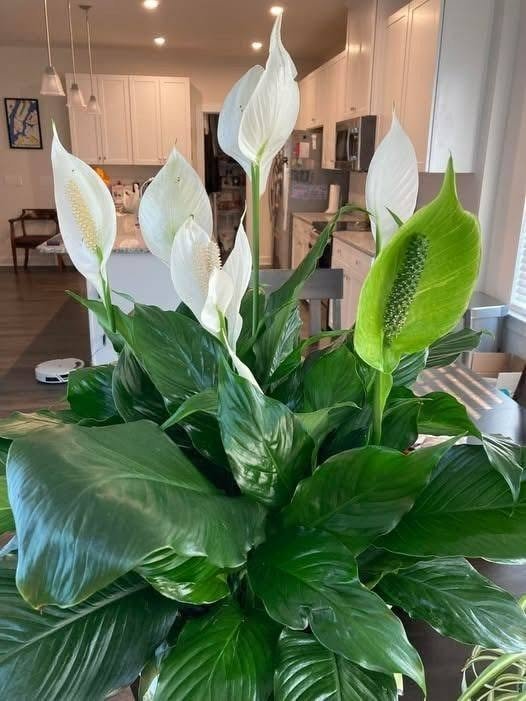
A healthy Peace Lily is prized for its glossy green leaves and elegant white blooms. While it’s often called a “flower,” the white part is actually a modified leaf called a spathe, which surrounds the tiny true flowers on the central spike (spadix). If your peace lily isn’t flowering much, improving its growing conditions can encourage more frequent and longer-lasting blooms.
1. Give It Bright, Indirect Light
The most common reason a peace lily doesn’t bloom is insufficient light.
- Place it near an east- or north-facing window.
- A south- or west-facing window works if filtered with a sheer curtain.
- Avoid direct afternoon sunlight, which can scorch leaves.
Ideal Light Level:
- Bright, indirect light for 8–10 hours daily
- Too little light = lush leaves but few or no flowers.
Tip: If natural light is limited, use a full-spectrum LED grow light for 10–12 hours daily.
2. Water Correctly
Peace lilies prefer consistently moist—but not soggy—soil.
Best Watering Practice
- Water when the top 1 inch (2–3 cm) of soil feels dry.
- Water thoroughly until excess drains from the pot.
- Empty the drainage tray afterward.
Avoid
- Standing water
- Bone-dry soil for long periods
- Watering on a fixed schedule without checking the soil
Signs:
- Drooping leaves: Needs water (or occasionally has root problems).
- Yellow leaves: Often caused by overwatering.
3. Increase Humidity
Peace lilies naturally grow in tropical forests.
Aim for 50–70% humidity.
Ways to increase humidity:
- Use a humidifier.
- Place the pot on a pebble tray filled with water.
- Group plants together.
- Mist lightly if your home’s air is very dry (less effective than a humidifier).
4. Maintain the Right Temperature
Ideal temperature:
- 65–80°F (18–27°C)
Avoid:
- Temperatures below 55°F (13°C)
- Cold drafts
- Heating vents
- Air conditioners
Stable warmth helps stimulate blooming.
5. Fertilize During the Growing Season
Nutrients are essential for flower production.
Recommended Fertilizer
- Balanced fertilizer (such as 10-10-10 or 20-20-20)
- Feed every 6–8 weeks during spring and summer.
- Use half the recommended strength.
Avoid overfertilizing because excess fertilizer salts can damage roots and reduce flowering.
6. Repot Only When Necessary
Peace lilies actually bloom better when they’re slightly root-bound.
Repot only when:
- Roots circle the pot heavily.
- Water drains immediately because roots occupy all the soil.
- Growth slows noticeably.
Choose a pot only 1–2 inches (2.5–5 cm) larger than the current one.
7. Use High-Quality Potting Mix
A loose, well-draining mix is ideal.
Good blend:
- Peat moss or coco coir
- Perlite
- Pine bark
- Compost
Avoid heavy garden soil.
8. Remove Spent Flowers
After blooms fade:
- Cut the flower stalk at its base using clean scissors.
- This allows the plant to direct energy toward producing new flowers.
Also remove:
- Yellow leaves
- Brown leaves
- Damaged foliage
9. Keep Leaves Clean
Dust blocks sunlight.
Every few weeks:
- Wipe leaves with a damp cloth.
- Or rinse gently under lukewarm water.
Cleaner leaves photosynthesize more efficiently.
10. Don’t Move It Too Often
Peace lilies prefer stable conditions.
Constant relocation changes:
- Light intensity
- Temperature
- Humidity
This can delay flowering.
11. Avoid Overcrowded Roots
Although peace lilies like being slightly root-bound, extremely crowded roots can reduce blooming.
Signs include:
- Roots emerging from drainage holes
- Soil drying very quickly
- Poor growth
- Fewer flowers
12. Give the Plant Time
Young peace lilies may not bloom until they are mature.
Typically:
- Blooming begins after the plant reaches maturity.
- Healthy mature plants often flower once or twice a year, with blooms lasting several weeks. Under excellent indoor conditions, some modern cultivars may bloom more frequently.
Common Reasons Peace Lilies Don’t Flower
| Problem | Effect | Solution |
|---|---|---|
| Too little light | No flowers | Move to brighter indirect light |
| Overwatering | Root stress | Let the top inch of soil dry before watering |
| Underwatering | Wilting and poor growth | Water consistently |
| Low humidity | Brown leaf tips | Increase humidity |
| Too much fertilizer | Leaf growth instead of blooms | Reduce feeding |
| Pot too large | Focus on root growth | Use a snug pot |
| Cold temperatures | Flower production slows | Keep warm and away from drafts |
Seasonal Care
Spring
- Increase watering slightly.
- Begin fertilizing.
- Repot if necessary.
Summer
- Provide bright indirect light.
- Water regularly.
- Maintain humidity.
- Expect the most active growth and blooming.
Autumn
- Reduce fertilizer.
- Continue moderate watering.
Winter
- Water less frequently.
- Keep away from cold windows.
- Maximize available light.
Extra Tips from Plant Experts
- Rotate the pot every few weeks for even growth.
- Use room-temperature, filtered, or rainwater if your tap water is heavily chlorinated or high in minerals, as peace lilies can be sensitive to water quality.
- Check regularly for pests such as spider mites and mealybugs.
- Avoid placing the plant in direct midday sun.
- Ensure the pot has drainage holes.
How Long Does It Take to Bloom Again?
After improving care:
- New flower buds may appear in 6–12 weeks during the active growing season.
- Plants kept in very low light may take several months to recover and resume blooming.
Key Takeaway
The three biggest factors that encourage abundant peace lily blooms are:
- Bright, indirect light (the most important factor)
- Consistent watering with well-draining soil
- Regular but moderate fertilization during spring and summer
When these needs are met and the plant is healthy, a mature peace lily is much more likely to reward you with lush white blooms throughout its active growing periods.