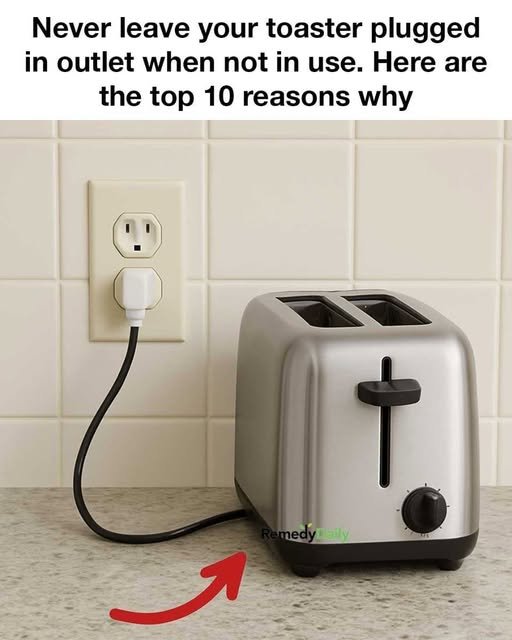
A toaster is generally designed to remain plugged in safely when it’s in good condition and used correctly. However, some people prefer to unplug it after use because it can reduce certain risks. Here are ten reasons why unplugging a toaster when it’s not in use may be a good idea:
- Reduces fire risk
- Although modern toasters include safety features, electrical faults can still occur due to worn wiring, damaged cords, or internal component failures. Unplugging removes the power source and eliminates the possibility of the toaster accidentally heating because of an electrical malfunction.
- Protects against power surges
- Lightning strikes or utility power fluctuations can send voltage spikes through your home’s electrical system. Keeping the toaster unplugged helps protect its electronic components from surge damage.
- Prevents accidental activation
- Someone could accidentally press the lever while cleaning or while moving items on the countertop. If the toaster is unplugged, it cannot turn on unexpectedly.
- Improves kitchen safety
- Water from a sink, spilled drinks, or cleaning liquids can come into contact with electrical appliances. An unplugged toaster presents less electrical hazard during cleaning.
- Reduces risk from damaged cords
- Over time, cords can become frayed or pinched. If a damaged toaster remains plugged in, it could pose a shock or fire hazard.
- Protects curious children and pets
- Children may play with appliance controls, and pets may chew on power cords. Unplugging the toaster removes power from the appliance when it’s not being used.
- Encourages regular cleaning
- Since you should always unplug a toaster before cleaning the crumb tray or removing crumbs, unplugging after each use can help establish a safer cleaning routine.
- Extends the life of the appliance (slightly)
- While the effect is generally small, disconnecting appliances from power may reduce wear from occasional electrical surges or voltage fluctuations.
- Eliminates standby electrical concerns
- Most traditional mechanical toasters draw essentially no electricity when idle, though some digital or “smart” models may consume a tiny amount of standby power. Unplugging eliminates any standby consumption.
- Provides peace of mind
- If you’re leaving home for an extended period or going on vacation, unplugging small kitchen appliances can reduce worry about electrical issues while you’re away.
Is it necessary?
For most households, it is not strictly necessary to unplug a modern, well-maintained toaster after every use. Manufacturers design toasters to remain plugged in safely when they are functioning properly. However, unplugging is a reasonable extra safety precaution, especially if:
- The toaster is old or damaged.
- There are children or pets in the home.
- You’re cleaning the toaster.
- You’ll be away from home for an extended period.
The most important safety practices are to keep the toaster clean, never insert metal objects into it while it’s plugged in, avoid using it near water, inspect the cord regularly, and follow the manufacturer’s instructions.