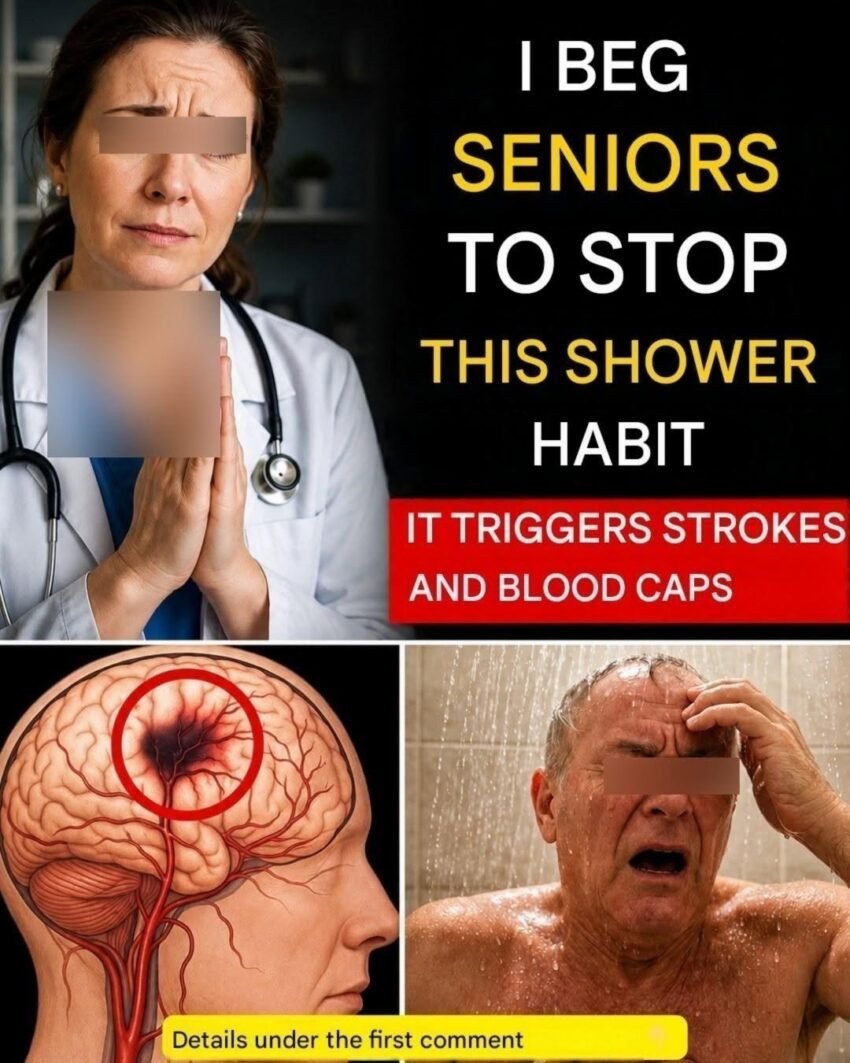
Shower habits that may increase health risks in seniors
1. Very hot showers or hot baths
A very hot shower can cause blood vessels near the skin to widen (vasodilation). This may lead to:
- A sudden drop in blood pressure
- Dizziness or fainting
- Falls in the bathroom
- Increased strain on the cardiovascular system
For people with heart problems, sudden blood pressure changes may be more concerning.
Safer approach:
- Use warm water instead of very hot water.
- Avoid staying in a very hot shower for a long time.
- Sit down if you feel lightheaded.
2. Cold water immediately after being warm
Sudden exposure to cold water can cause:
- Blood vessels to tighten (vasoconstriction)
- A temporary rise in blood pressure
- Increased heart workload
This may be risky for some people with:
- Uncontrolled hypertension
- Heart rhythm problems
- Previous stroke or heart attack
Safer approach:
- Change water temperature gradually.
- Avoid sudden cold showers if your doctor has advised against them.
3. Showering when dehydrated
Older adults often have a reduced sense of thirst. Dehydration can contribute to:
- Low blood pressure
- Weakness
- Dizziness
- Increased risk of falls
Drink enough fluids unless you have a medical reason to restrict them.
4. Showering immediately after waking up
Blood pressure naturally changes in the morning. Some people experience a morning rise in blood pressure, which is one reason cardiovascular events are more common in early hours.
A safer routine:
- Wake up slowly.
- Sit on the edge of the bed for a minute.
- Move around gently before taking a shower.
- Avoid very hot water first thing in the morning.
Stroke warning signs in seniors (FAST)
Seek emergency medical help if someone develops:
F — Face: One side of the face droops
A — Arms: Weakness or numbness in one arm
S — Speech: Slurred speech or confusion
T — Time: Call emergency services immediately
Other warning signs:
- Sudden severe headache
- Sudden vision problems
- Loss of balance or coordination
- Sudden numbness on one side of the body
Healthy shower tips for seniors
✅ Use warm water (not extreme temperatures)
✅ Install grab bars and non-slip mats
✅ Keep bathroom lighting bright
✅ Avoid locking the bathroom door if you live alone
✅ Take your time standing up after bathing
✅ Avoid showering if you feel faint, very weak, or ill
✅ Check blood pressure regularly if you have hypertension
Who should be extra careful?
Talk with a healthcare professional about bathing habits if you have:
- Previous stroke or mini-stroke (TIA)
- High blood pressure
- Heart disease
- Irregular heartbeat
- Diabetes
- Kidney disease
- Frequent dizziness or fainting
A normal shower is generally safe for most people. The main concern is extreme heat, extreme cold, sudden changes, and fall risk, rather than showering itself.