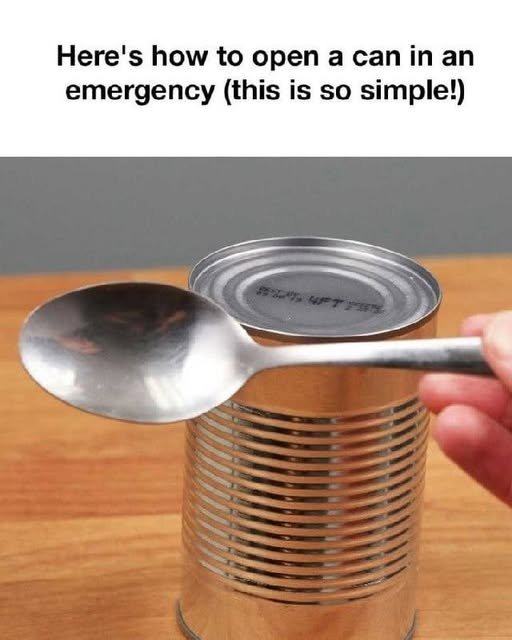
Method 1: Use a Metal Spoon (Safest Household Method)
What you’ll need:
- A sturdy metal spoon
- A stable, flat surface
Steps:
- Place the can on a solid, non-slip surface.
- Hold the can firmly with one hand.
- Grip the spoon so the tip of the bowl points downward.
- Position the tip on the inner edge of the can’s lid (where the lid meets the rim).
- Rub the spoon back and forth while applying steady downward pressure. This creates friction that gradually wears through the metal.
- Once a small hole forms, continue pressing and rocking the spoon to enlarge it.
- Move around the rim, repeating the process until most of the lid is separated.
- Carefully lift the lid using the spoon or another utensil. The edges will be very sharp.
Method 2: Use Concrete or Rough Stone (Emergency Outdoors)
If you’re outside and don’t have tools:
- Find a flat, rough surface such as concrete or an unpolished stone.
- Turn the can upside down so the sealed rim touches the rough surface.
- Rub the can back and forth while applying light, even pressure.
- After a minute or two, check the rim. You want to wear away the seal, not crush the can.
- Once moisture appears around the edge, stop rubbing.
- Gently squeeze the sides of the can. The lid should loosen enough to pry open.
Method 3: Use a Pocket Knife (Only if You Have Experience)
If you have a sturdy pocket knife:
- Place the can on a stable surface.
- Carefully puncture the lid near the edge.
- Make additional punctures around the rim until the lid can be bent back.
- Keep your hands away from the cutting edge and the sharp metal.
Important Safety Tips
- Watch for sharp edges. The cut lid and rim can easily cause cuts.
- Wear gloves if available, or use a towel to protect your hands.
- Stabilize the can before applying force.
- Avoid excessive force, which can cause the tool to slip.
- Discard damaged food. If the can becomes badly dented, punctured in an unintended place, or the contents appear contaminated, do not eat the food.
What Not to Do
- Don’t strike the can with excessive force using random objects.
- Don’t use fragile kitchen knives that can snap or slip.
- Don’t leave sharp, partially opened lids exposed where someone could be injured.
These methods are intended for situations where a proper can opener isn’t available. When possible, using a standard can opener is the safest and easiest option.