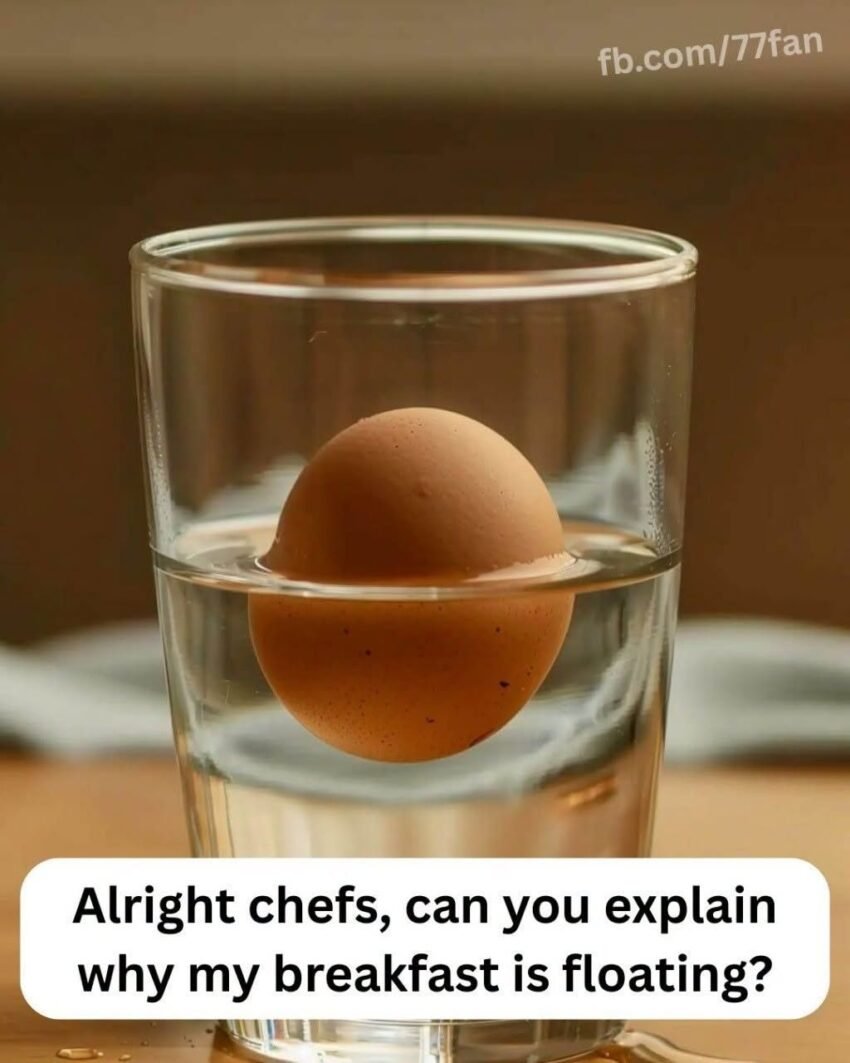
If your breakfast is “floating,” the reason depends on what you mean. Here are the most common explanations:
1. Food floating in water
Some foods float because they are less dense than water. Density is the amount of mass packed into a given volume.
Foods float when:
- They contain air pockets (bread, pancakes, some pastries).
- They have a high fat content, since fat is less dense than water (some cheeses or bacon).
- Their structure traps gases during cooking (waffles, muffins).
Foods sink when they are denser than water, such as many fruits, cooked potatoes, or eggs (though egg freshness affects this).
2. Cereal floating in milk
Breakfast cereals float because:
- Tiny air pockets are trapped inside the cereal during manufacturing.
- Milk exerts an upward buoyant force that exceeds the cereal’s weight.
- Over time, milk soaks into the cereal, replacing the air. The cereal becomes denser, loses buoyancy, and eventually sinks.
3. Oil or butter floating
Butter, cream, or cooking oil float because fat is less dense than water. They also don’t mix well with water because fats are hydrophobic (they repel water).
The science: buoyancy
The key principle is Archimedes’ principle:
- Every object in a fluid experiences an upward buoyant force equal to the weight of the fluid it displaces.
- If the buoyant force is greater than or equal to the object’s weight, it floats.
- If it’s smaller, the object sinks.
Example
Imagine a bowl of cereal:
- You pour milk over the cereal.
- The cereal initially floats because of trapped air.
- Milk slowly fills the air spaces.
- The cereal becomes heavier and denser.
- Eventually, many pieces sink to the bottom.
If you meant a specific breakfast food (like eggs, toast, pancakes, or fruit), let me know which one, and I can explain why that particular food floats.