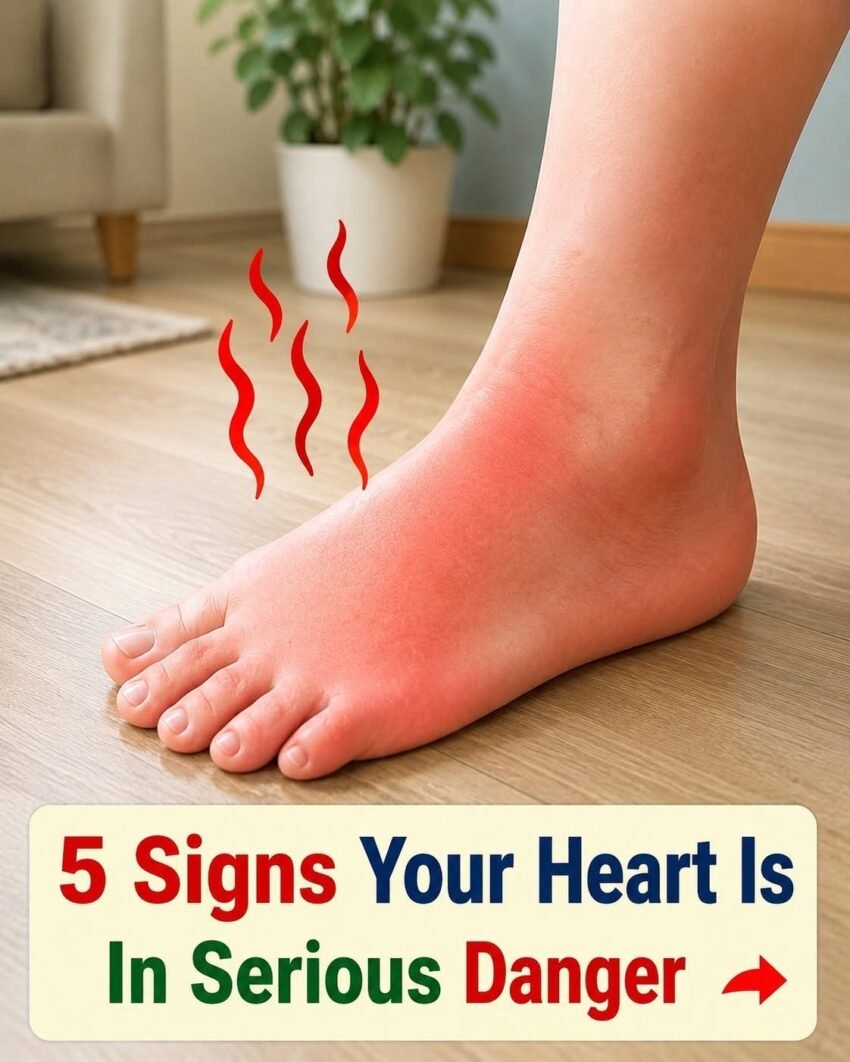
Your heart can sometimes give warning signs days or even weeks before a serious event such as a heart attack, although not everyone experiences them. These symptoms should never be ignored, especially if they are new, persistent, or worsening.
1. Chest Pain or Pressure (Angina)
This is the most common warning sign of heart disease.
What it feels like:
- Pressure, squeezing, tightness, heaviness, or burning in the center or left side of the chest.
- The discomfort may last a few minutes or come and go.
- It can spread to the arms, shoulders, neck, jaw, or back.
Why it happens:
Chest pain often occurs because the heart muscle is not getting enough oxygen-rich blood due to narrowed or blocked arteries.
When it is most concerning:
- During physical activity or emotional stress.
- Pain that lasts more than a few minutes.
- Pain accompanied by sweating, nausea, or shortness of breath.
2. Unusual Fatigue
Feeling extremely tired without a clear reason can be an early warning sign, particularly in women.
Signs include:
- Feeling exhausted after simple daily activities.
- Needing more rest than usual.
- Persistent fatigue lasting several days or weeks.
Why it happens:
When the heart cannot pump blood efficiently, the body diverts blood away from muscles and other tissues, causing tiredness.
When to seek medical advice:
If fatigue is new, severe, or occurs along with other symptoms like chest discomfort or breathlessness.
3. Shortness of Breath
Difficulty breathing can occur before or during a heart attack.
Symptoms:
- Becoming breathless while walking short distances.
- Trouble breathing while lying flat.
- Waking up at night gasping for air.
Why it happens:
A weakened heart may cause fluid to build up in the lungs, making breathing difficult.
Don’t ignore:
Shortness of breath without obvious causes such as exercise or a respiratory infection.
4. Pain in Other Parts of the Body
Heart-related pain isn’t always felt in the chest.
Common locations:
- Left arm (most classic)
- Both arms
- Jaw
- Neck
- Shoulders
- Upper back
- Upper abdomen
Why it happens:
The brain sometimes interprets pain from the heart as coming from nearby nerves, a phenomenon called referred pain.
Important note:
Women are somewhat more likely than men to experience pain in the jaw, back, or neck instead of classic chest pain.
5. Cold Sweats, Nausea, or Dizziness
These symptoms can occur because the body’s stress response is activated when the heart isn’t receiving enough blood.
Warning signs:
- Sudden cold sweat
- Feeling faint or lightheaded
- Nausea or vomiting
- Pale or clammy skin
Why it happens:
Reduced blood flow and changes in blood pressure can trigger these symptoms.
Other Early Warning Signs
Some people also notice:
- Swelling in the feet, ankles, or legs.
- Rapid or irregular heartbeat.
- Persistent indigestion or heartburn-like discomfort.
- Difficulty sleeping.
- Reduced ability to exercise.
- Unexplained anxiety or a feeling that “something isn’t right.”
Can a Heart Attack Really Give a Month of Warning?
Sometimes, yes. Research suggests that some people experience warning symptoms days or weeks before a heart attack, including:
- Mild chest discomfort that comes and goes.
- Increasing fatigue.
- Shortness of breath.
- Reduced exercise tolerance.
However, many heart attacks occur suddenly without clear warning, so the absence of early symptoms does not mean someone is safe.
Risk Factors
You may be at higher risk if you have:
- High blood pressure
- High cholesterol
- Diabetes
- Smoking history
- Obesity
- Family history of heart disease
- Physical inactivity
- Chronic stress
- Older age
What to Do If You Notice These Symptoms
If symptoms are persistent or recurring:
- Schedule a prompt evaluation with a healthcare professional.
- Do not ignore symptoms that are getting worse.
- Follow advice about testing, which may include an electrocardiogram (ECG), blood tests, or imaging, depending on your situation.
Call your local emergency services immediately if you experience:
- Chest pain or pressure lasting more than a few minutes or recurring.
- Chest pain that spreads to the arm, jaw, neck, shoulder, or back.
- Severe shortness of breath.
- Fainting or loss of consciousness.
- Chest discomfort accompanied by cold sweats, nausea, or dizziness.
These symptoms may indicate a heart attack, and prompt treatment can save heart muscle and lives.
Key takeaway
While some people receive warning signs weeks before a heart attack, others do not. Any new, unexplained chest discomfort, shortness of breath, unusual fatigue, or pain radiating to the arm, jaw, neck, or back deserves prompt medical attention. Early evaluation can help identify heart problems before they become life-threatening.