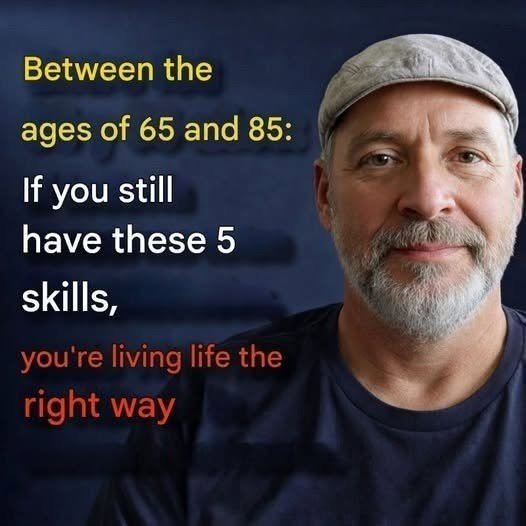
Aging well between 65 and 85 years old is not just about living longer—it’s about maintaining the abilities that allow you to live independently, stay connected, and enjoy life. While everyone ages differently, research in geriatric medicine suggests that if you still have the following five skills, you’re likely aging better than many people your age.
1. You Can Walk Confidently and Keep Your Balance
Walking is one of the strongest indicators of healthy aging.
People who can:
- Walk at a normal pace without assistance
- Climb stairs safely
- Stand on one leg for several seconds
- Recover their balance if they stumble
generally have better overall health.
Why it matters
Good mobility requires:
- Strong muscles
- Healthy bones
- A well-functioning nervous system
- Good vision
- Healthy joints
Poor balance increases the risk of falls, which are a major cause of injury in older adults.
Ways to maintain it
- Walk 20–30 minutes most days.
- Practice balance exercises (such as standing on one foot while holding a sturdy surface if needed).
- Strength-train 2–3 times per week.
- Stretch regularly.
- Have vision and hearing checked.
2. Your Mind Stays Sharp
Some slowing of memory is common with age, but healthy aging means your brain still works well enough for everyday life.
Signs of good cognitive health include:
- Remembering appointments with reminders or calendars.
- Following conversations.
- Learning new skills.
- Solving everyday problems.
- Managing medications and finances.
- Making sound decisions.
Why it matters
The brain continues to form new connections throughout life. Mental activity helps preserve cognitive function.
Ways to maintain it
- Read books and newspapers.
- Learn a language or musical instrument.
- Do puzzles or strategy games.
- Stay socially active.
- Get enough sleep.
- Control blood pressure, diabetes, and cholesterol.
3. You Can Take Care of Yourself Independently
One hallmark of healthy aging is maintaining independence in daily activities.
Examples include:
- Bathing
- Dressing
- Cooking meals
- Shopping
- Driving safely or using transportation
- Cleaning your home
- Taking medications correctly
- Managing money
Why it matters
These activities require a combination of:
- Physical strength
- Memory
- Vision
- Judgment
- Coordination
Maintaining independence is strongly associated with better quality of life.
Ways to maintain it
- Stay physically active.
- Keep your home organized and free of tripping hazards.
- Use assistive devices if needed—they can help preserve independence.
- Review medications regularly with your healthcare provider.
4. You Stay Socially Connected and Emotionally Resilient
Healthy aging isn’t only physical.
People who continue to:
- Spend time with family and friends
- Participate in hobbies
- Volunteer
- Attend community or religious activities
- Maintain meaningful relationships
often experience better mental and physical health.
Why it matters
Social connection is associated with:
- Lower rates of depression
- Better memory
- Reduced stress
- Improved immune function
- Longer life expectancy
Emotional resilience—the ability to adapt to life’s challenges—is also important, especially after retirement, illness, or the loss of loved ones.
Ways to maintain it
- Call or visit friends regularly.
- Join clubs or community groups.
- Stay involved in hobbies.
- Practice gratitude or mindfulness if you find them helpful.
- Seek professional support if persistent sadness or anxiety develops.
5. You Continue to Learn and Adapt
People who age well often remain curious and open to change.
Examples include:
- Learning to use new technology
- Trying new hobbies
- Traveling or exploring new places
- Adapting after health changes
- Continuing to set personal goals
Why it matters
Being adaptable helps maintain confidence and independence. Lifelong learning also supports brain health by challenging the mind.
Ways to maintain it
- Take classes online or in your community.
- Learn digital skills, such as using smartphones or video calls.
- Read about new topics.
- Try creative activities like painting, gardening, or woodworking.
Additional Signs of Healthy Aging
Other positive indicators include:
- Sleeping 7–9 hours most nights.
- Maintaining a healthy weight.
- Managing chronic conditions effectively.
- Eating a balanced diet rich in fruits, vegetables, whole grains, lean protein, and healthy fats.
- Having good hearing and vision, with corrective devices if needed.
- Recovering reasonably well after illness or surgery.
What the Research Shows
Studies consistently find that healthy aging is supported by:
- Regular physical activity
- A nutritious diet (such as Mediterranean-style eating patterns)
- Avoiding tobacco
- Limiting alcohol
- Managing blood pressure, cholesterol, and blood sugar
- Staying mentally and socially engaged
- Getting preventive healthcare and recommended vaccinations
A Few Important Notes
Even if someone has arthritis, uses a cane, or lives with a chronic illness, they can still be aging well. Healthy aging is not about being disease-free—it’s about maintaining the highest possible level of physical, mental, and social function for your circumstances.
Likewise, losing one of these skills does not mean healthy aging is no longer possible. Many declines can be slowed or improved with exercise, rehabilitation, medical treatment, assistive devices, and social support.
The Bottom Line
If, between the ages of 65 and 85, you can:
- Walk confidently and maintain your balance.
- Keep your mind sharp for everyday tasks.
- Live independently and manage daily activities.
- Stay socially connected and emotionally resilient.
- Continue learning and adapting to change.
then you are demonstrating many of the characteristics associated with healthy aging. These skills support independence, well-being, and quality of life, and they can often be strengthened or maintained through healthy habits and appropriate medical care.