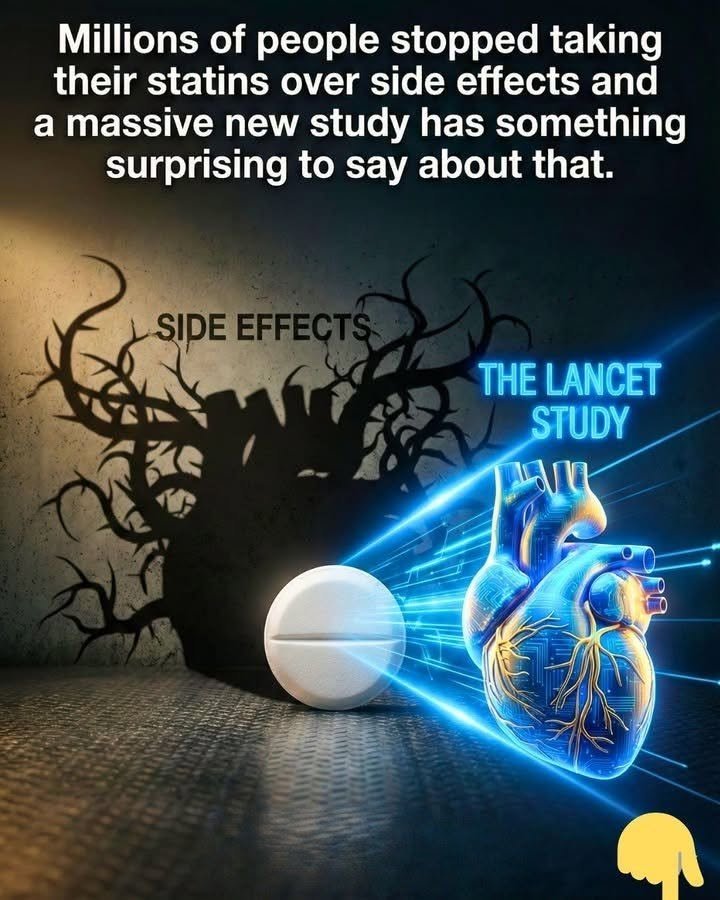
The claim refers to a large body of research showing that many symptoms people blame on statins may not actually be caused by the statin itself. The key idea is called the “nocebo effect”: when people expect a medicine to cause problems, they may experience real symptoms even when the active drug is not responsible.
A recent large analysis involving roughly 150,000 participants has received attention because it examined side effects in randomized, placebo-controlled statin trials—the strongest type of evidence for determining whether a drug causes harm. The findings suggested that most symptoms commonly attributed to statins occurred at similar rates in people taking placebo pills.
What did the researchers find?
1. Many “statin side effects” were not actually caused by statins
People often stop statins because of:
- Muscle aches or weakness
- Tiredness
- Memory concerns
- Sleep problems
- Mood changes
- Digestive symptoms
- Joint or body pain
However, when researchers compare statin users with placebo users, many of these symptoms appear about equally often in both groups, suggesting that the medication itself is not the main cause in many cases.
2. Muscle symptoms are real — but the risk is often overestimated
Muscle pain is the most common complaint linked to statins. Studies show that:
- Mild muscle symptoms can occur.
- Serious muscle injury (called myopathy or rhabdomyolysis) is very rare.
- Many people who previously stopped statins because of muscle symptoms can later tolerate a statin again.
3. The placebo effect works both ways
A famous trial called SAMSON (Self-Assessment Method for Statin Side-effects Or Nocebo) studied people who had stopped statins because of symptoms. Participants took months containing:
- A statin tablet
- A placebo tablet
- No tablet
They reported similar symptom levels during statin and placebo months, but fewer symptoms during months with no tablets. The researchers concluded that most symptoms were related to the act of taking a tablet rather than the statin molecule itself.
4. Are statins completely risk-free?
No. Statins do have proven possible effects:
- Small increase in blood sugar/diabetes risk, especially in people already at risk
- Mild liver enzyme increases in some people
- Rare serious muscle injury
But for many people at elevated risk of heart attack or stroke, the reduction in cardiovascular events is considered to outweigh these risks.
Why do people stop taking statins if many symptoms are not caused by them?
Several factors contribute:
- Timing confusion
A person starts a statin, then notices pain weeks later and naturally connects the two. - Background symptoms
Muscle aches, fatigue, and pain become more common with age and other health conditions. - Fear created by warnings and stories
Reading about possible side effects can increase awareness of normal sensations and make them more noticeable. - Individual experiences differ
Some people genuinely do not tolerate certain statins or doses.
What should someone do if they think a statin is causing problems?
Doctors often use approaches such as:
- Checking for other causes of symptoms (thyroid problems, vitamin deficiencies, exercise-related injury, drug interactions)
- Trying a different statin
- Lowering the dose
- Taking it less frequently in selected cases
- Adding non-statin cholesterol-lowering medicines when appropriate
A person should not stop a prescribed statin without discussing it with their healthcare professional, especially if they have had a heart attack, stroke, diabetes, or high cardiovascular risk.
Bottom line: The newer evidence does not say “statin side effects are imaginary.” It says that a large proportion of symptoms blamed on statins are probably not directly caused by the drug, and the true serious risks appear to be much less common than many people fear.