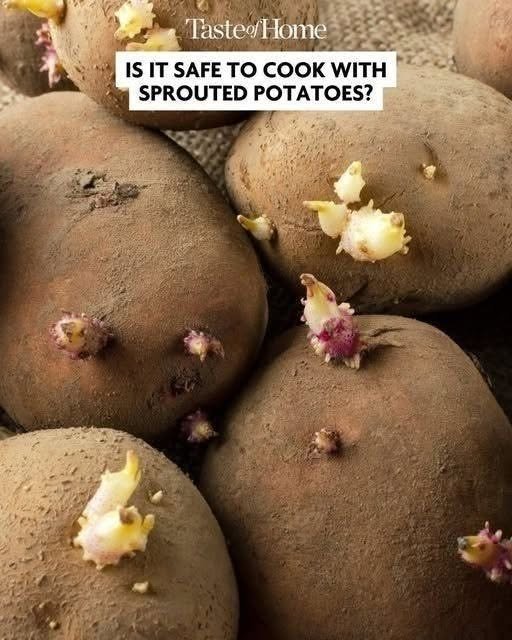
Yes, you can eat sprouted potatoes in some cases, but whether they’re safe depends on how much they’ve sprouted and whether they’ve turned green.
Why Do Potatoes Sprout?
Potatoes naturally sprout as they age. Warm temperatures, light, and moisture encourage sprouts to grow. As this happens, potatoes produce higher amounts of natural compounds called glycoalkaloids (primarily solanine and chaconine), which can be harmful in large amounts.
When Are Sprouted Potatoes Safe to Eat?
You can usually eat a potato if:
- It is still firm.
- It has only a few small sprouts.
- There are no large green areas.
- It doesn’t have a bitter taste or foul smell.
Before cooking:
- Remove all sprouts with a knife.
- Cut away any green portions.
- Peel the potato deeply.
- Wash thoroughly before cooking.
When Should You Throw Them Away?
Discard the potato if it:
- Has many long sprouts.
- Is soft, shriveled, or moldy.
- Has extensive green coloring.
- Tastes bitter.
- Smells unpleasant.
These signs indicate higher levels of glycoalkaloids that cooking cannot reliably remove.
Can Cooking Make Sprouted Potatoes Safe?
No. Boiling, baking, frying, or microwaving does not destroy glycoalkaloids. The safest approach is to remove sprouts and green areas, or discard heavily sprouted potatoes.
Symptoms of Potato Glycoalkaloid Poisoning
Eating potatoes with high glycoalkaloid levels may cause:
- Nausea
- Vomiting
- Diarrhea
- Stomach cramps
- Headache
- Dizziness
In severe cases (which are rare), symptoms can include confusion or neurological effects and require immediate medical attention.
Who Should Be Extra Careful?
Young children, older adults, and pregnant individuals should avoid eating heavily sprouted or green potatoes because they may be more sensitive to glycoalkaloids.
How to Prevent Potatoes from Sprouting
- Store in a cool, dark, dry place (45–50°F or 7–10°C).
- Keep potatoes out of direct sunlight.
- Avoid storing them near onions, which release gases that speed sprouting.
- Use older potatoes first.
Crispy Roasted Potato Recipe (Using Safe, Lightly Sprouted Potatoes)
Ingredients
- 4 medium potatoes (sprouts and green parts removed)
- 2 tablespoons olive oil
- 1 teaspoon garlic powder
- 1 teaspoon paprika
- ½ teaspoon dried rosemary or thyme
- Salt and black pepper to taste
- Fresh parsley (optional)
Instructions
- Preheat the oven to 425°F (220°C).
- Peel the potatoes and remove all sprouts and any green areas.
- Cut into 1-inch cubes.
- Toss with olive oil, garlic powder, paprika, herbs, salt, and pepper.
- Spread in a single layer on a baking sheet.
- Roast for 35–45 minutes, turning halfway through, until golden brown and crispy.
- Garnish with chopped parsley and serve.
Serving Suggestions
- Grilled chicken or fish
- Roasted vegetables
- Eggs for breakfast
- Sour cream or garlic yogurt dip
Frequently Asked Questions
Can you plant sprouted potatoes?
Yes. Healthy sprouted potatoes can be planted to grow new potato plants.
Can you eat green potatoes?
It’s best to avoid them. Green color often indicates increased glycoalkaloid levels.
Can you eat potatoes with tiny sprouts?
Yes, if the potato is still firm and you completely remove the sprouts and any green areas before cooking.
Bottom Line
Lightly sprouted potatoes are often safe to eat after removing all sprouts and green parts, provided the potato remains firm and fresh. If a potato is heavily sprouted, green, soft, shriveled, moldy, or bitter, it’s safest to throw it away. When in doubt, replacing an old potato is a better choice than risking food poisoning.