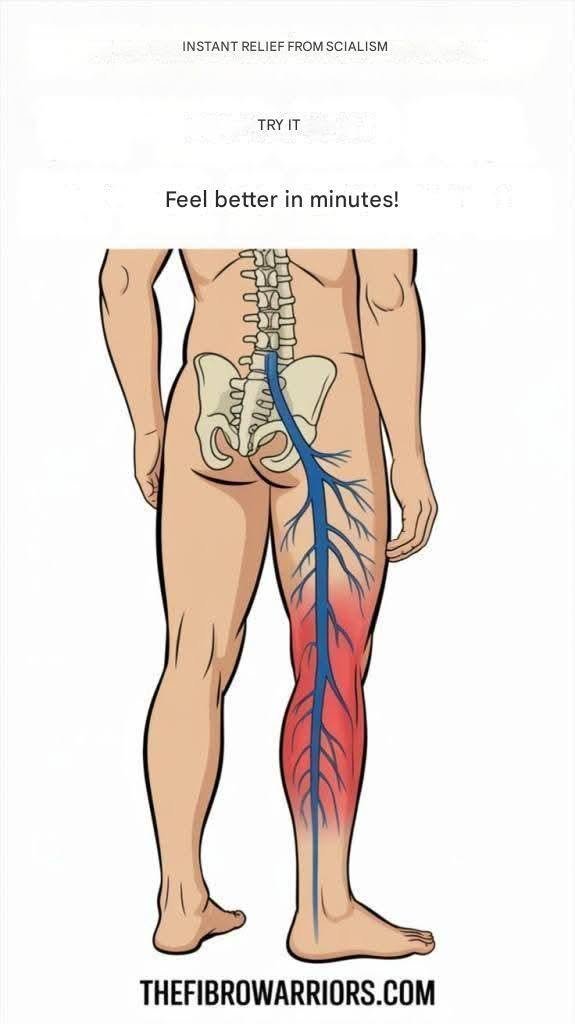
Sciatica is pain that occurs when the sciatic nerve is irritated or compressed. The pain often starts in the lower back or buttock and travels down one leg. While there’s no guaranteed way to eliminate sciatica in minutes, some techniques can provide quick, temporary relief.
1. Find a comfortable position
Try one of these positions for 5–15 minutes:
- Lie on your back with a pillow under your knees.
- Lie on your side with a pillow between your knees.
- Sit with good back support and keep both feet flat on the floor.
- Avoid prolonged sitting or standing if it worsens the pain.
2. Gentle nerve-gliding exercise
This exercise may help reduce nerve irritation.
- Sit upright in a chair.
- Straighten the affected leg slowly.
- Point your toes toward you.
- Lift your head slightly as you straighten the leg.
- Return to the starting position.
- Repeat 10–15 times without forcing the movement.
Stop if the pain becomes significantly worse.
3. Try gentle stretching
A few stretches that may help include:
- Knee-to-chest stretch
- Figure-4 (piriformis) stretch
- Seated hamstring stretch
- Cat-cow stretch
Hold each stretch for 20–30 seconds and avoid bouncing.
4. Walk for 5–10 minutes
Short, gentle walks can sometimes reduce stiffness and improve circulation. Avoid vigorous exercise during a painful flare.
5. Heat or cold therapy
- First 24–48 hours (if pain started suddenly): Apply a cold pack for 15–20 minutes every few hours.
- After 48 hours or for ongoing muscle tightness: Use a heating pad or warm compress for 15–20 minutes.
Do not place ice or heat directly on the skin.
6. Over-the-counter pain relief
If it’s safe for you, medications such as:
- Acetaminophen (paracetamol)
- Ibuprofen
- Naproxen
may help reduce pain. Follow the dosing instructions and avoid NSAIDs (ibuprofen, naproxen) if you have certain conditions such as stomach ulcers, kidney disease, or your healthcare provider has advised against them.
7. Avoid complete bed rest
Extended bed rest can slow recovery. Gentle movement throughout the day is generally more helpful than staying in bed.
Common causes of sciatica
- herniated disc
- spinal stenosis
- piriformis syndrome
- Degenerative changes in the spine
- Pregnancy (in some cases)
When to seek medical care
Contact a healthcare professional if:
- Pain lasts longer than a few weeks.
- Pain is severe or keeps getting worse.
- You develop numbness or weakness in the leg.
- The pain follows a significant injury.
Seek emergency medical attention immediately if you have:
- Loss of bowel or bladder control.
- Numbness in the groin or saddle area.
- Sudden, severe weakness in one or both legs.
- Severe pain with fever or unexplained weight loss.
Tips to help prevent future flare-ups
- Maintain good posture.
- Strengthen your core muscles.
- Stretch regularly.
- Lift heavy objects with your legs rather than your back.
- Stay physically active and maintain a healthy weight.
Most episodes of sciatica improve over several weeks with conservative care, but persistent or recurrent symptoms should be evaluated by a healthcare professional to identify the underlying cause and determine the most appropriate treatment.