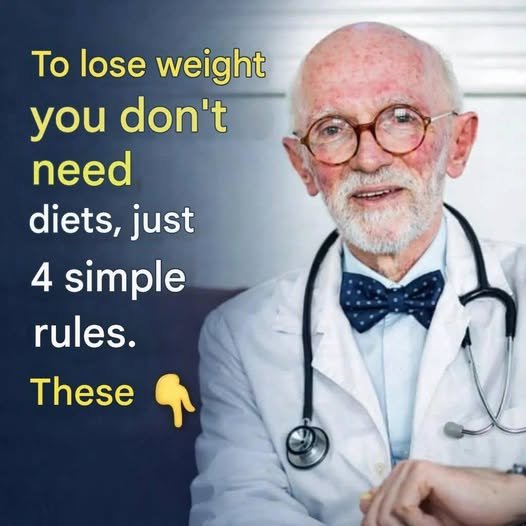
Franco Berrino is an Italian physician, epidemiologist, and former director of the Department of Preventive and Predictive Medicine at the National Cancer Institute in Milan. He is well known for promoting long-term healthy eating habits rather than short-term restrictive diets.
In a recent article, Berrino argued that lasting weight loss comes from sustainable daily habits, not “crash diets” or calorie obsession. He summarized his approach in four simple rules.
1. Chew your food thoroughly
Berrino emphasizes that how you eat is as important as what you eat.
Why?
- Eating slowly gives your brain time to receive fullness signals.
- Thorough chewing may increase satiety hormones (such as CCK and GLP-1) while reducing the hunger hormone ghrelin.
- People who eat quickly often consume more calories before feeling full.
How to practice it
- Put your fork down between bites.
- Chew each mouthful until it is well broken down.
- Avoid eating while distracted by television or your phone.
- Aim to make meals last about 20–30 minutes.
Potential benefit
- You naturally eat less without feeling deprived.
2. Eat earlier in the day and avoid late-night meals
Berrino recommends aligning meals with the body’s natural circadian rhythm.
He suggests:
- Eat a light dinner.
- Finish dinner several hours before bedtime.
- Leave around 14 hours between dinner and breakfast (for example, dinner at 7:00 p.m. and breakfast at 9:00 a.m.).
Why?
Research suggests that people who eat late at night are more likely to gain weight, even when total calorie intake is similar. Poor sleep and night-shift work are also associated with increased obesity risk.
3. Choose foods that naturally help with weight control
Rather than counting calories, Berrino encourages eating foods that are filling, nutrient-rich, and minimally processed.
He recommends:
Vegetables
- Almost all vegetables.
- Potatoes are less emphasized because they have a higher glycemic effect than most vegetables.
Whole grains
- Brown rice
- Oats
- Barley
- Whole-wheat bread (made with genuine whole grain)
Legumes
- Beans
- Lentils
- Chickpeas
- Peas
Fruit
- Eat a variety of fruits.
- Consume sweeter fruits like grapes, figs, and bananas in moderation.
Nuts and seeds
- Almonds
- Walnuts
- Pistachios
- Hazelnuts
- Pumpkin and sunflower seeds
Fermented foods
- Yogurt
- Kefir
- Fermented vegetables
These foods are generally:
- High in fiber
- More filling
- Lower in glycemic impact
- Supportive of a healthy gut microbiome, which may play a role in weight regulation.
4. Limit foods that promote weight gain
Berrino advises reducing ultra-processed foods, which are consistently linked with weight gain in many studies.
He specifically mentions limiting:
- Potato chips
- Sugary drinks
- Processed meats (hot dogs, sausages, salami)
- Red meat
- Refined white flour products
- Commercial pastries and sweets
- Butter (consume sparingly)
He also argues that the problem is not carbohydrates themselves, but refined carbohydrates and excess added sugar. Instead of high-protein fad diets, he favors eating more whole grains and legumes while reducing animal protein intake.
Berrino’s overall philosophy
His central message is:
- Don’t rely on temporary diets.
- Build lifelong healthy habits.
- Eat slowly.
- Eat mostly whole, minimally processed plant foods.
- Avoid obsessing over calorie counting.
- Stay physically active and maintain healthy sleep habits.
What does the scientific evidence say?
Many of Berrino’s recommendations are consistent with current nutrition research:
- Eating slowly can improve fullness and may reduce calorie intake.
- Diets rich in vegetables, legumes, whole grains, and other minimally processed foods are associated with better long-term weight management.
- Reducing ultra-processed foods is supported by substantial evidence.
- Regular physical activity and adequate sleep are also important for maintaining a healthy weight.
However, no single set of four rules works for everyone. Weight loss is influenced by many factors, including total energy intake, physical activity, sleep, genetics, medications, and underlying health conditions. Berrino’s advice is best viewed as a practical framework for healthier eating habits rather than a guaranteed weight-loss formula.