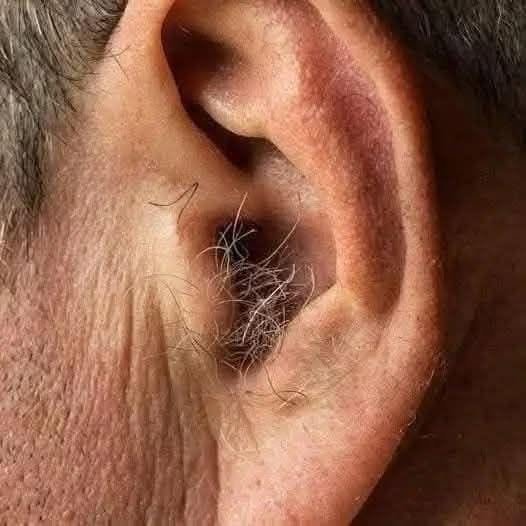
Hair growing on your ears is a normal part of how the human body develops and ages. It happens because of hair follicles, hormones, and genetics. Here is the detailed explanation:
1. Everyone has ear hair follicles
Your ears naturally contain tiny hair follicles (the structures in your skin that produce hair). These follicles help protect the ear by:
- Trapping dust, dirt, and small particles
- Helping prevent insects and foreign objects from entering the ear canal
- Supporting the skin’s normal function
Most people have very fine, nearly invisible hair on their ears.
2. Why does ear hair become noticeable?
As people get older, especially after puberty and often more noticeably in men, some ear hairs become thicker and longer because of changes in androgens (male sex hormones, especially testosterone and its related hormone DHT — dihydrotestosterone).
These hormones can:
- Stimulate certain hair follicles to grow larger hairs
- Change thin “vellus” hairs (soft, fine hairs) into thicker “terminal” hairs
This is why older adults may develop visible hair:
- On the outer ear
- Around the ear opening
- Sometimes inside the ear canal
3. Why is it more common in men?
Men generally have higher levels of androgens, so hormone-sensitive hair follicles are more likely to produce thicker ear hair. However, women can also develop ear hair, especially with aging or hormonal changes.
4. Is ear hair a sign of a health problem?
Usually, no. Ear hair is a normal body feature. It does not mean:
- Your body is unhealthy
- You have too much testosterone
- You are dirty
However, sudden unusual hair growth in many areas of the body can sometimes be related to hormonal changes and may be worth discussing with a healthcare professional.
5. Why does the body keep growing hair there?
Human hair growth is partly a leftover feature from evolution. Hair can provide small protective benefits, such as:
- Reducing exposure of sensitive skin areas
- Helping block particles from entering openings
- Providing some sensory function through movement of the hairs
6. Should you remove ear hair?
If you do not like the appearance, you can safely trim visible outer ear hair with:
- Small electric ear trimmers
- Scissors designed for grooming (used carefully)
Avoid putting sharp objects deep into the ear canal because the skin there is delicate and can be injured.
In short: ear hair grows because your ear skin has hair follicles, and aging plus hormones can make some of those hairs thicker and more visible. It is a normal biological process.