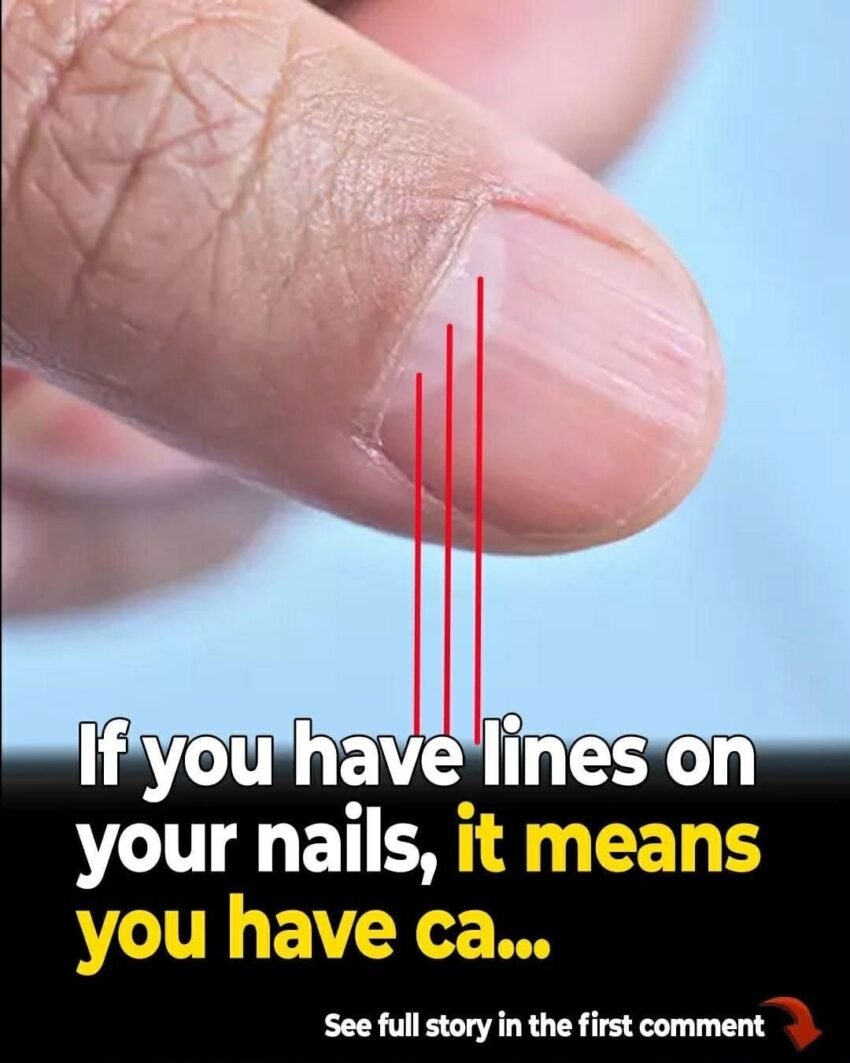
The claim that a doctor can look at a “telltale sign” in your fingernails and predict your life expectancy is a popular health headline, but it needs careful interpretation. Fingernails cannot accurately predict how long a person will live. However, nails can sometimes reveal clues about overall health, nutritional status, circulation, aging, or certain diseases that may affect health outcomes.
One nail feature often discussed in these claims is nail ridging, changes in nail color, or a pattern called “Terry’s nails.” Another commonly mentioned sign is the appearance of a pale half-moon area (lunula) or changes in nail growth. These signs are not “life expectancy predictors” by themselves, but they may be associated with medical conditions.
1. Terry’s Nails (White Nails With a Dark Band)
What it looks like:
- Most of the nail plate becomes white or pale.
- A pink or brown-red band may appear near the nail tip.
- The half-moon area at the base may become less visible.
Possible associations:
- Liver disease (especially cirrhosis)
- Heart failure
- Diabetes
- Kidney disease
- Aging-related changes
Why it matters:
These conditions can influence health and longevity, but seeing Terry’s nails does not mean someone has a shortened lifespan. It is only a possible clue that a doctor may investigate.
2. Nail Clubbing (Rounded, Enlarged Fingertips)
What it looks like:
- Fingertips become wider and rounder.
- Nails curve downward around the fingertip.
- The angle where the nail meets the skin changes.
Possible causes:
- Chronic lung diseases
- Certain heart conditions
- Inflammatory bowel disease
- Some cancers
Health significance:
Nail clubbing can sometimes indicate a serious underlying condition, so it deserves medical evaluation.
3. Beau’s Lines (Horizontal Grooves)
What they look like:
- Deep horizontal lines or indentations across the nails.
Possible triggers:
- Severe illness
- High fever
- Major surgery
- Severe stress on the body
- Nutritional problems
- Chemotherapy
These lines show that nail growth was temporarily interrupted. They do not predict lifespan.
4. Brittle or Slow-Growing Nails
Changes may be linked with:
- Iron deficiency
- Thyroid problems
- Poor nutrition
- Aging
- Frequent chemical exposure
Because nails grow slowly, they can sometimes provide a record of past health changes.
5. Nail Color Changes
Examples:
Yellow nails
- Fungal infection
- Smoking-related staining
- Certain lung conditions
- “Yellow nail syndrome” (rare)
Blue nails
- Reduced oxygen levels
- Circulation problems
Dark streaks
- Often harmless pigmentation
- Rarely may indicate melanoma under the nail
Can Fingernails Really Predict Life Expectancy?
No. A person’s lifespan depends on many factors, including:
- Genetics
- Blood pressure
- Cholesterol levels
- Smoking and alcohol use
- Physical activity
- Diet
- Sleep quality
- Mental health
- Access to healthcare
- Existing diseases
A nail change may act like a warning light on a dashboard—it can suggest something needs checking, but it cannot tell how far the “car” will travel.
When Should You See a Doctor About Nail Changes?
Seek medical advice if you notice:
- A new dark line under one nail
- Sudden changes in nail shape
- Nail clubbing
- Nails turning blue
- Nails separating from the skin
- Rapid unexplained changes
- Nail changes along with weight loss, fatigue, breathing problems, or swelling
Bottom line:
Fingernails can provide health clues, but there is no scientifically proven nail sign that predicts your exact life expectancy. The most useful role of nail examination is helping doctors identify possible health problems early.