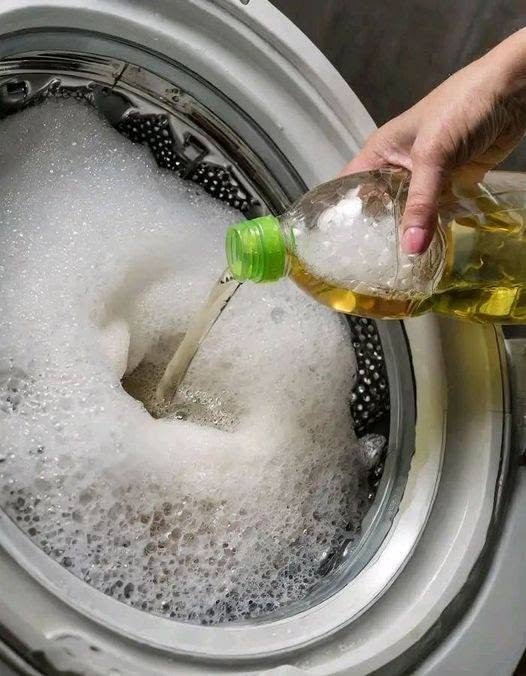
Here’s how to use it effectively:
- For softer towels: Add ½ to 1 cup of distilled white vinegar to the fabric softener dispenser or the rinse cycle. It helps rinse away detergent residue that can make towels feel stiff.
- For brighter whites: Add ½ to 1 cup of distilled white vinegar during the rinse cycle. This can help remove residue that dulls white fabrics, especially in areas with hard water.
- To reduce odors: Soak smelly clothes in a mixture of 1 cup vinegar and enough cool water to cover them for 30–60 minutes before washing.
- To clean the washing machine: Run an empty hot-water cycle with 2 cups of distilled white vinegar occasionally (unless your washer’s manufacturer advises against it).
A few important cautions:
- Never mix vinegar with chlorine bleach. Combining acidic substances with bleach can release hazardous chlorine gas.
- Don’t pour vinegar directly onto delicate fabrics like silk or some specialty materials.
- Use distilled white vinegar, not apple cider or flavored vinegars, which can leave residue or stains.
- Avoid using vinegar too frequently if your washing machine’s manufacturer recommends against it, as repeated exposure may contribute to wear on certain rubber seals in some machines.
If your goal is truly whiter whites, a good laundry detergent, the correct water temperature for the fabric, and an oxygen bleach (for bleach-safe items) are generally more effective than vinegar alone. Vinegar works best as a rinse aid rather than a whitening agent.