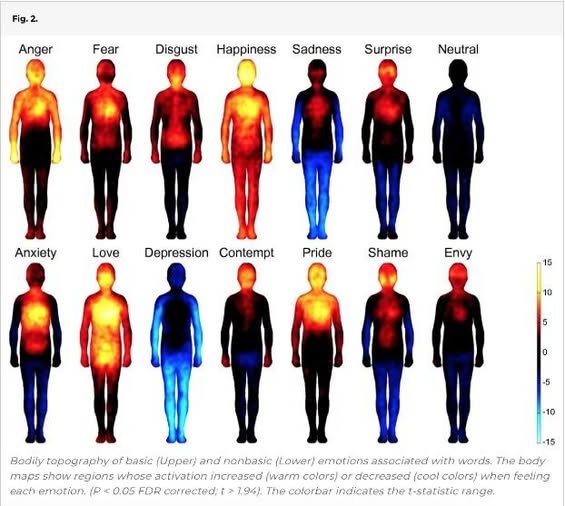
If you’re looking for a visual heat map of where people tend to feel different emotions in their bodies, you’ll need to be logged in to generate images. Once you’re logged in, I can generate a clear, labeled body heat map for you.
In the meantime, here’s a detailed summary based on findings from psychological research, especially studies where participants colored body silhouettes to indicate where they feel emotions most strongly.
| Emotion | Areas of Increased Sensation | Areas of Decreased Sensation |
|---|---|---|
| Happiness | Entire body, especially chest, face, arms, and legs | None or very little |
| Love | Chest (heart), face, arms, whole body feels warm | Few or no decreases |
| Anger | Head, face, neck, chest, hands, arms | Legs may feel less active |
| Fear | Chest (racing heart), throat, head | Legs and arms may feel weak or numb |
| Anxiety | Chest, stomach, throat, head | Hands and feet sometimes feel cold |
| Sadness | Throat (lump), chest, eyes | Arms and legs often feel heavy or low-energy |
| Depression | Mild chest sensations | Widespread decrease across arms, legs, and body (low energy) |
| Disgust | Stomach, throat | Little elsewhere |
| Shame | Face (blushing), chest | Limbs may feel less active |
| Surprise | Head, chest | Short-lived, little decrease |
| Pride | Chest, head, face | Minimal decreases |
| Embarrassment | Face, neck, chest | Sometimes reduced sensation in limbs |
| Jealousy | Chest, stomach, head | Variable |
| Calmness | Gentle warmth in chest and body | No major decreases |
General body heat map patterns
- 🔴 Head & Face: Anger, embarrassment, shame, surprise, happiness
- 🔴 Chest: Love, happiness, anger, fear, anxiety, pride
- 🔴 Stomach: Anxiety, disgust, jealousy, nervousness
- 🔴 Hands & Arms: Anger (clenched fists), excitement, happiness
- 🔴 Legs: Happiness and excitement increase activity; fear and sadness often reduce sensations
- 🔵 Whole-body low activity: Sadness and depression are associated with reduced sensations throughout much of the body.
Why this happens
These sensations are linked to changes in the autonomic nervous system:
- Fear: Increased heart rate and adrenaline prepare the body for “fight or flight.”
- Anger: Increased blood flow to the face and arms prepares for action.
- Happiness: Increased circulation and muscle activation create a whole-body energized feeling.
- Sadness: Reduced energy and muscle activity can make the limbs feel heavy.
- Anxiety: Muscle tension and digestive changes are commonly felt in the chest and stomach.
Important note
These maps show average patterns reported by many participants. They are not universal—people can experience emotions differently depending on their physiology, culture, and personal experiences.
The most well-known research on this topic is by Lauri Nummenmaa and colleagues, who found that people from different cultures reported remarkably similar body sensation patterns for many emotions.