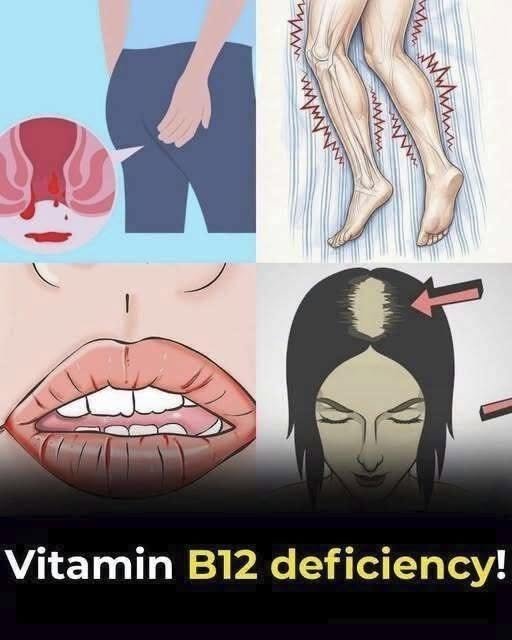
Absolutely. Vitamin B12 deficiency can affect much more than energy levels—it can involve the blood, nerves, brain, mouth, digestion, and muscles. The symptoms often develop gradually, and neurological symptoms can occur even when a person does not have anemia.
One important point: these signs do not prove that you have B12 deficiency. Many have other possible causes, so testing is important before assuming B12 is the problem.
8 Strange Signs Your Body May Be Begging for Vitamin B12
1. 🧦 Tingling, Numbness, or “Pins and Needles”
One of the more unusual signs is a persistent tingling, prickling, burning, or numb sensation, especially in the hands, feet, fingers, or toes.
You might describe it as:
- “My feet feel asleep.”
- A crawling or buzzing sensation under the skin
- Mild burning in the hands or feet
- Reduced sensitivity to touch
- Random electric-like sensations
Why can this happen? B12 is important for maintaining the nervous system. When deficiency becomes significant, nerves can be affected, producing abnormal sensations.
Importantly, neurological symptoms can occur even without B12-deficiency anemia, which is one reason they shouldn’t simply be ignored.
When to pay attention: If tingling or numbness is persistent, progressively worsening, or accompanied by weakness or balance problems, speak with a healthcare professional rather than simply taking supplements on your own.
2. 👅 A Strange, Sore, Smooth or Red Tongue
Your tongue can sometimes provide a surprisingly visible clue.
B12 deficiency may cause glossitis, meaning inflammation of the tongue. The tongue may become:
- Redder than usual
- Sore or tender
- Smooth-looking
- Burning or uncomfortable
- Sensitive when eating spicy or acidic foods
Some people may also develop mouth ulcers.
This happens because B12 is involved in normal cell production, including rapidly renewing cells in the mouth.
A sore tongue isn’t specific to B12 deficiency, however. Iron deficiency, folate deficiency, infections, medications, irritation, and other conditions can cause similar symptoms.
3. 🧠 Your Memory, Concentration, or Thinking Feels “Foggy”
Another potentially overlooked sign is a change in mental functioning.
You may notice:
- Forgetting things more frequently
- Difficulty concentrating
- Trouble finding the right word
- Feeling mentally “foggy”
- Difficulty understanding information
- Changes in judgment
- Confusion in more severe cases
B12 deficiency can affect the nervous system and has been associated with cognitive and psychological changes. Severe, prolonged deficiency can produce significant neurological problems.
However, brain fog by itself does not mean you are deficient in B12. Poor sleep, stress, medications, thyroid disorders, anemia, depression, and many other issues can produce similar symptoms.
4. ⚖️ You Suddenly Feel Unsteady or Clumsy
This can be particularly important because people sometimes dismiss it as simply “getting older” or being tired.
B12-related neurological problems can affect balance and coordination. You might notice:
- Feeling unsteady when walking
- More frequent stumbling
- Difficulty walking in a straight line
- Feeling unusually clumsy
- Trouble with coordination
In more advanced cases, neurological impairment can interfere with walking and physical coordination.
This is a symptom worth discussing with a healthcare professional, particularly if it is new or getting worse.
5. 😴 Extreme Fatigue Even After Sleeping
Fatigue is one of the classic symptoms rather than a truly strange one—but it is easy to overlook.
You might feel:
- Drained throughout the day
- Weak after ordinary activities
- Like you need to sleep constantly
- Short of energy despite getting adequate sleep
- Less physically capable than usual
B12 helps the body make healthy red blood cells. A deficiency can cause megaloblastic anemia, in which abnormal, enlarged red blood cells don’t function normally. Reduced oxygen delivery can contribute to tiredness and weakness.
Some people can have B12 deficiency without anemia, so a normal-looking blood count doesn’t necessarily explain every B12-related neurological symptom.
6. ❤️ Your Heart Seems to Race or Pound
Some people with B12 deficiency may experience heart palpitations—the sensation that the heart is racing, pounding, fluttering, or beating unusually strongly.
This can happen particularly when B12 deficiency has contributed to significant anemia. The body may compensate for reduced oxygen-carrying capacity by increasing cardiac output.
Other possible symptoms of B12/folate deficiency anemia include:
- Rapid heartbeat
- Shortness of breath
- Headaches
- Weakness
- Fatigue
- Pale skin
But palpitations have many possible causes, including anxiety, caffeine, medications, thyroid problems, heart rhythm disorders, dehydration, and other forms of anemia. Don’t automatically attribute them to B12.
7. 👁️ Unusual Vision Problems
Although less commonly discussed, B12 deficiency can be associated with vision problems.
Possible symptoms can include changes in vision or difficulty seeing normally. B12 deficiency can affect the nervous system, including pathways involved in vision.
A new or sudden change in vision should not be assumed to be a vitamin deficiency. It deserves prompt medical evaluation because eye and neurological conditions can also cause visual changes.
8. 😔 Mood Changes, Anxiety, or Unusual Irritability
B12 deficiency can sometimes be associated with psychological or mood changes, including:
- Low mood
- Depression
- Anxiety
- Irritability
- Confusion
- Changes in memory or thinking
The nervous system requires B12 for normal function, which is one reason neurological and psychological symptoms can appear when deficiency becomes significant.
That doesn’t mean depression or anxiety automatically indicates low B12. These conditions are common and have many causes. B12 testing can be useful when symptoms and risk factors make deficiency plausible.
Why Does B12 Deficiency Happen?
Not getting enough B12 isn’t always caused by simply “not eating enough B12.”
Your body has to absorb B12 properly. B12 from food is attached to protein and requires stomach acid to release it, followed by binding to a stomach protein called intrinsic factor so it can be absorbed in the intestine.
Potential causes include:
- Eating little or no animal-derived food without reliable B12-fortified foods or supplementation
- Pernicious anemia
- Problems involving the stomach or intestines
- Certain gastrointestinal surgeries
- Some intestinal diseases
- Long-term use of certain medications, including metformin and proton-pump inhibitors
- Problems producing or using intrinsic factor
Interestingly, the body stores a large amount of B12—roughly 1,000–2,000 times the amount typically consumed in a day—so deficiency symptoms can take years to appear in some people.
How Do You Know If You Actually Have a B12 Deficiency?
Symptoms alone aren’t enough.
A healthcare professional can evaluate your symptoms and use blood testing, which may include:
- Vitamin B12 level
- Complete blood count/hemoglobin
- Red blood cell size
- Folate level
- Additional testing when necessary to investigate the cause
Sometimes further testing is needed when the initial B12 result doesn’t fully explain the symptoms.
⚠️ Don’t ignore neurological symptoms
Persistent numbness, tingling, balance problems, weakness, vision changes, or cognitive changes deserve medical attention. Prolonged B12 deficiency can cause neurological damage, and some neurological complications may become irreversible if treatment is delayed.
Also, don’t assume that taking folic acid alone will solve the problem. Folate can improve some blood-related manifestations while an underlying B12 deficiency remains untreated, potentially allowing neurological damage to continue.
Bottom Line
The 8 possible warning signs are:
- Tingling or numbness in the hands or feet
- A red, smooth, sore or burning tongue
- Memory problems or brain fog
- Poor balance or unusual clumsiness
- Extreme tiredness and weakness
- Heart palpitations or breathlessness, particularly with anemia
- Vision changes
- Mood or psychological changes
These symptoms can have many explanations, so they shouldn’t be used as a self-diagnosis. If several occur together—or if neurological symptoms are developing—getting evaluated for B12 deficiency is sensible.
If you’d like, I can also give you a detailed list of the best B12 foods, daily B12 requirements by age, B12 deficiency blood-test ranges, and which people are most at risk.