Absolutely. If you mean you want a detailed, informative explanation of the topic “You Have a Lot of Gas and Nobody Explains It Properly… Here’s What Your Body Might Actually Be Telling You,” here is a medically grounded version.
You Have a Lot of Gas and Nobody Explains It Properly: What Your Body Might Actually Be Telling You
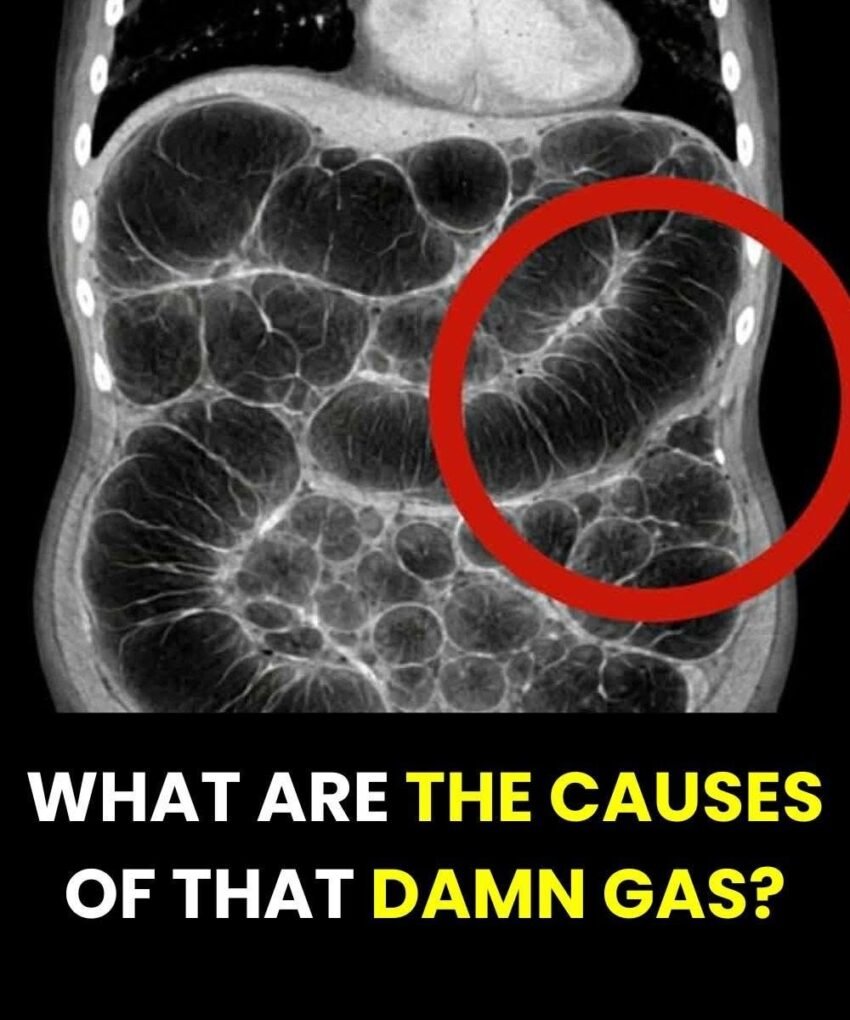
Gas is embarrassing for many people, but biologically, it is completely normal. Everyone produces and passes intestinal gas. The important question is not simply “How much gas do I have?” but rather “Why am I having these symptoms, and have they changed?”
According to the National Institute of Diabetes and Digestive and Kidney Diseases (NIDDK), common gas-related symptoms include burping, abdominal bloating or distention, and passing gas. People may experience symptoms because they actually have more gas, because gas is moving differently through the digestive tract, or because their gut is unusually sensitive to a normal amount of gas.
1. Your body may simply be swallowing more air
One surprisingly common explanation is aerophagia, meaning swallowing excess air.
You can swallow more air when you:
- Eat very quickly
- Drink through a straw
- Chew gum
- Suck on hard candy
- Drink carbonated beverages
- Talk frequently while eating
- Smoke
- Eat while rushing or moving around
Some of that swallowed air comes back up as burping. Some can travel farther through the digestive tract and eventually leave as intestinal gas.
So if your main problem is constant burping, the issue may not necessarily be something wrong with your stomach. Your eating and breathing habits may be contributing.
2. Your gut bacteria may be breaking down carbohydrates
Another major source of intestinal gas is your gut microbiome.
Your small intestine does not completely digest every carbohydrate you consume. When some carbohydrates reach the large intestine, bacteria break them down through fermentation. Gas is a natural by-product of this process.
This means that foods that are perfectly healthy for one person can cause significant gas in another.
Potential triggers include:
- Beans, peas and lentils
- Broccoli and cauliflower
- Certain fruits
- Whole grains
- Dairy products
- Foods containing large amounts of fructose
- Sugar-free products containing sweeteners such as sorbitol, mannitol, xylitol, erythritol or maltitol
Fiber deserves special attention. Fiber is important for health, but suddenly increasing your fiber intake can increase gas and bloating in some people.
The lesson isn’t “stop eating fiber.” Rather, your symptoms may be telling you that your digestive system needs a different amount, type, or pace of dietary change.
3. Lactose intolerance could be part of the story
If gas, bloating, abdominal discomfort or diarrhea repeatedly appear after consuming dairy, lactose intolerance is one possibility.
Lactose is a carbohydrate found in milk and many dairy products. When someone doesn’t adequately digest lactose, it can reach the large intestine, where bacteria ferment it and produce gas.
The important clue is the pattern:
“I consistently feel bloated and gassy after certain dairy foods.”
That pattern is more informative than simply concluding that you “have a sensitive stomach.”
However, symptoms after dairy don’t automatically prove lactose intolerance. Other digestive conditions can produce similar symptoms.
4. Your body may be reacting to fructose or other poorly absorbed carbohydrates
Fructose is another carbohydrate that can cause digestive symptoms in some people.
Certain fruits, fruit juices, sweetened beverages and foods containing high-fructose corn syrup can contribute to symptoms in susceptible individuals. NIDDK also notes that certain carbohydrates collectively known as FODMAPs can be difficult for some people to digest and may contribute to symptoms, particularly in people with irritable bowel syndrome (IBS).
This is one reason why simply saying “beans cause gas” doesn’t tell the whole story.
Your symptoms can depend on:
- The particular carbohydrate
- How much you consume
- What else you ate
- Your gut bacteria
- How quickly you ate
- Your underlying digestive health
5. Constipation can make gas feel much worse
Sometimes the problem isn’t that your body is suddenly manufacturing enormous amounts of gas.
It may be that gas isn’t moving through your intestines comfortably.
Constipation can accompany bloating and gas symptoms, and problems with intestinal movement can make people feel particularly uncomfortable. NIDDK specifically lists constipation among conditions that can be associated with troublesome gas symptoms.
You may notice:
- Infrequent bowel movements
- Hard stools
- Straining
- A feeling that you haven’t completely emptied your bowels
- Abdominal pressure
- Bloating that improves after a bowel movement
If those symptoms occur together, focusing exclusively on “gas” may miss the bigger picture.
6. IBS can make normal amounts of gas feel extremely uncomfortable
This is an important point that often gets overlooked.
Having severe bloating does not necessarily mean you have an enormous amount of gas.
Some people have increased sensitivity to normal amounts of gas or have altered communication between the digestive tract and brain. Functional gastrointestinal disorders—including IBS and functional bloating—can cause significant discomfort and bloating.
This can create a frustrating situation:
You feel enormous pressure → you assume you must be producing huge quantities of gas → you eliminate more and more foods → your diet becomes increasingly restricted → but the underlying sensitivity or digestive problem remains.
That’s why identifying the underlying pattern can be more useful than simply trying to eliminate every food that has ever caused bloating.
7. SIBO is another possibility—but don’t automatically blame it
Small intestinal bacterial overgrowth (SIBO) involves an increased number or altered type of bacteria in the small intestine. These bacteria can produce additional gas and may be associated with symptoms such as diarrhea and weight loss.
But this is important:
Having gas does not automatically mean you have SIBO.
SIBO is one potential explanation among many. A clinician needs to consider your complete symptom pattern and medical history rather than diagnosing it from bloating alone.
8. Acid reflux and indigestion can overlap with gas symptoms
If your “gas” comes with:
- Frequent burping
- Upper-abdominal discomfort
- Burning
- Feeling full unusually quickly
- Nausea
- Heartburn
the problem could involve indigestion or reflux, rather than isolated intestinal gas.
Indigestion, also called dyspepsia, can cause upper-abdominal discomfort, bloating, nausea and belching.
That’s why describing your symptoms accurately to a healthcare professional matters.
“I’m gassy” is less informative than:
“I start burping after meals, become bloated within an hour, feel full very quickly, and sometimes have burning in my upper abdomen.”
The second description gives a clinician considerably more information.
What does the smell of your gas mean?
Gas odor can vary considerably.
Most intestinal gas consists of gases that are not particularly smelly. The unpleasant odor can come from small amounts of sulfur-containing compounds produced during digestion and bacterial fermentation. NIDDK notes that sulfur can contribute to the odor of flatus.
So bad-smelling gas by itself doesn’t necessarily mean something is seriously wrong.
What matters more is whether the odor is accompanied by persistent diarrhea, abdominal pain, weight loss, blood in the stool, or a significant change in your normal bowel habits.
What you eat isn’t the only thing that matters
Two people can eat the same meal and experience completely different amounts of gas.
Your symptoms can be influenced by:
Food composition → digestion → intestinal bacteria → intestinal movement → gut sensitivity → symptoms
That’s why there isn’t one universal “anti-gas diet.”
For some people, reducing certain carbohydrates helps. For others, eating more slowly makes a dramatic difference. Someone else may discover that a particular dairy product is the trigger.
Keeping a food and symptom diary can help identify patterns. NIDDK specifically notes that doctors may ask patients to record foods, drinks and the timing of symptoms when investigating gas problems.
What you can try first
For relatively mild symptoms, some practical changes include:
Eat more slowly
Slow down meals and chew thoroughly. Eating rapidly can increase swallowed air.
Reduce carbonated drinks
Soda, sparkling water and other fizzy drinks can increase the amount of gas entering the digestive tract.
Experiment rather than eliminate everything
Instead of removing 20 foods at once, identify one suspected trigger and observe what happens.
Consider portion size
A food may cause symptoms in a large quantity but be tolerated in a smaller portion.
Pay attention to constipation
If you’re constipated, addressing that issue may be more useful than simply taking products marketed for gas.
Keep a symptom diary
Record:
- What you ate
- Portion size
- When you ate
- When symptoms started
- Bloating
- Burping
- Passing gas
- Bowel movements
- Stool consistency
- Abdominal pain
- Diarrhea or constipation
This can reveal patterns that are difficult to remember otherwise.
Should you try a low-FODMAP diet?
A low-FODMAP diet can help some people with IBS-related symptoms, but it is not simply a universal “gas-free diet.”
FODMAPs are carbohydrates that can be difficult for some people to digest. NIDDK notes that healthcare professionals may recommend a low-FODMAP approach for a limited period in people with IBS.
Because the diet can be quite restrictive, it is generally better approached with guidance from a doctor or registered dietitian rather than permanently eliminating large numbers of foods on your own.
When gas is a reason to see a doctor
Occasional gas is normal. But persistent or troublesome symptoms deserve attention.
NIDDK recommends talking with a doctor if your gas symptoms bother you, change suddenly, or occur together with symptoms such as abdominal pain, constipation, diarrhea or weight loss.
You should seek medical evaluation particularly if you experience things such as:
- Unexplained weight loss
- Blood in your stool
- Black/tarry stools
- Severe or persistent abdominal pain
- Persistent vomiting
- Difficulty swallowing
- Significant or persistent abdominal swelling
- Major changes in bowel habits
- Loss of appetite
- Yellowing of the skin or eyes
- Chest pain or shortness of breath
These symptoms shouldn’t simply be dismissed as “gas.”
The bigger message
Having a lot of gas doesn’t automatically mean that something is seriously wrong.
Sometimes your body is simply telling you:
“You’re swallowing a lot of air.”
Sometimes:
“I’m fermenting more of these carbohydrates than you’re comfortable with.”
Sometimes:
“This particular food isn’t agreeing with you.”
And sometimes persistent gas and bloating are clues to something that deserves medical evaluation, such as IBS, lactose intolerance, constipation, celiac disease, reflux, or another gastrointestinal condition.
The most useful approach is therefore not to panic about every episode of gas—or to assume that every symptom is caused by “bad gut bacteria.”
Instead, look for the pattern: what you eat, when symptoms occur, what your bowel movements are like, whether symptoms are new, and whether other warning signs are present.
Gas is a symptom, not a diagnosis. Your body may be giving you information, but you have to look at the whole pattern to understand what it is saying.