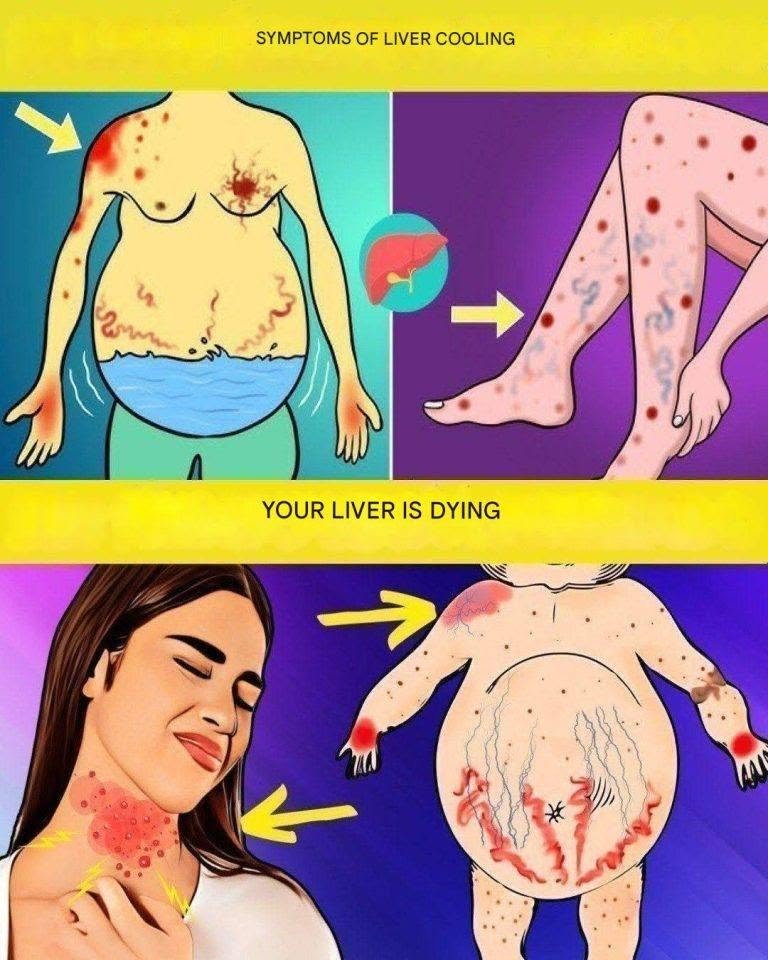
If you’re looking for 17 signs that may indicate a liver problem, here is a detailed, medically grounded overview. One important point first: liver disease can be silent, particularly in its early stages. Some people have significant liver damage without noticeable symptoms, so symptoms alone cannot determine whether the liver is healthy.
17 possible signs of liver problems
1. Persistent tiredness or weakness
Unusual, ongoing fatigue can occur with liver disease. You may feel exhausted even after adequate sleep or have less energy for normal activities. Fatigue is common in several liver conditions, including cirrhosis and fatty liver disease.
Important: Fatigue is very nonspecific and can also result from anemia, thyroid problems, infections, poor sleep, stress, medications, and many other conditions.
2. Loss of appetite
A damaged or inflamed liver can be associated with reduced appetite. You may notice that foods you normally enjoy no longer seem appealing. Loss of appetite can occur with hepatitis and advanced liver disease.
3. Unintentional weight loss
Losing weight without intentionally changing your diet or exercise can occur with significant liver disease. It can be related to poor appetite, nausea, altered metabolism, or muscle loss.
Unexplained weight loss should be evaluated because it has many possible causes beyond liver disease.
4. Nausea or vomiting
Nausea, and sometimes vomiting, can occur with liver inflammation or more advanced liver disease. It is particularly important when it occurs together with other symptoms such as abdominal discomfort, jaundice, dark urine, or loss of appetite.
5. Discomfort or pain in the upper-right abdomen
The liver is located primarily in the upper-right portion of the abdomen. Liver inflammation or enlargement can cause discomfort or pain in this region.
However, pain in the upper-right abdomen can also come from the gallbladder, stomach, intestines, muscles, or other organs.
6. Itchy skin
Persistent itching, particularly without an obvious skin rash, can occur with certain liver and bile-duct disorders. It can become severe in some conditions involving impaired bile flow.
7. Yellow skin or yellow eyes — jaundice
Jaundice is one of the most recognizable signs of liver or bile-flow problems. The whites of the eyes and skin become yellow because bilirubin accumulates in the bloodstream.
Jaundice can have causes other than liver disease, so it requires medical evaluation.
8. Dark urine
Urine becoming unusually dark—sometimes described as tea- or cola-colored—can occur when bilirubin levels rise. Dark urine can accompany hepatitis and other liver or bile-flow problems.
Dehydration can also make urine darker, so dark urine by itself does not prove liver disease.
9. Pale, gray, or clay-colored stool
Healthy bile contributes to the normal brown color of stool. When bile isn’t reaching the intestine normally, stools may become unusually pale or clay-colored.
This is particularly concerning when it occurs together with dark urine and yellow eyes/skin.
10. Easy bruising or bleeding
The liver produces many proteins involved in blood clotting. Significant liver dysfunction can therefore contribute to bruising or bleeding more easily than usual.
There are many other explanations for easy bruising, including medications and blood disorders.
11. Swelling of the ankles, feet, or legs
Fluid can accumulate in the lower limbs, producing swelling called edema. This can occur in advanced liver disease and cirrhosis.
12. Abdominal swelling
A progressively enlarged or swollen abdomen can result from ascites, which is accumulation of fluid inside the abdomen. Ascites is generally a sign of more advanced liver disease rather than an early symptom.
13. Spider-like blood vessels on the skin
Small blood vessels can become more visible and form spider-like patterns, known as spider angiomas. They can occur with cirrhosis and other conditions.
Having one or two such spots doesn’t necessarily mean you have liver disease.
14. Redness of the palms
Some people with cirrhosis develop unusually red palms, called palmar erythema. It is a possible physical sign of chronic liver disease but is not diagnostic on its own.
15. Muscle loss, weakness, or cramps
Advanced liver disease can be associated with loss of muscle mass and weakness. Muscle cramps can also occur.
This can be more noticeable as liver disease progresses.
16. Confusion, difficulty concentrating, or unusual sleepiness
In advanced liver disease, the liver may become less able to remove certain substances from the blood. These can affect brain function, causing hepatic encephalopathy.
Possible changes include:
- confusion
- difficulty thinking
- memory problems
- personality or behavior changes
- excessive sleepiness
- disturbed sleep
- difficulty speaking clearly
These symptoms can indicate significant liver dysfunction and require medical attention.
17. Vomiting blood or black/tarry stools
This is a medical emergency, particularly in someone with known or suspected cirrhosis. Advanced liver disease can cause enlarged veins (varices) in the esophagus or stomach. If these veins rupture, severe internal bleeding can occur.
Vomiting blood or passing black, tar-like stools should not be watched at home.
A very important point about fatty liver
One of the most common liver conditions—metabolic dysfunction-associated steatotic liver disease (MASLD), formerly called nonalcoholic fatty liver disease (NAFLD)—often causes few or no symptoms. Some people only have fatigue or discomfort in the upper-right abdomen.
So, feeling healthy does not necessarily mean your liver is healthy.
Risk factors can include overweight/obesity, insulin resistance, and type 2 diabetes, among others.
When should you see a doctor?
Arrange a medical evaluation if you have persistent symptoms such as unexplained fatigue, weight loss, abdominal discomfort, itching, repeated nausea, unusual bruising, or swelling.
Seek urgent medical attention for symptoms such as:
- vomiting blood
- black/tarry stools
- new severe confusion or extreme drowsiness
- significant yellowing of the skin/eyes
- severe abdominal swelling or severe abdominal pain
Advanced liver disease can cause potentially life-threatening complications.
How is liver disease checked?
A doctor may use your medical history and examination along with blood tests and imaging. Depending on the situation, testing may look for liver injury or impaired liver function and may investigate causes such as viral hepatitis.
Commonly discussed blood tests include liver enzymes and bilirubin, along with tests such as albumin and clotting measures; imaging such as ultrasound may also be used depending on the circumstances.
Bottom line: The combination of yellow eyes/skin + dark urine + pale stools, or abdominal swelling + leg swelling + confusion/bleeding, is much more concerning than any single nonspecific symptom such as tiredness.
If you tell me which of these 17 signs you are experiencing, your age, and how long you’ve had them, I can explain what they could mean and what would typically be checked.