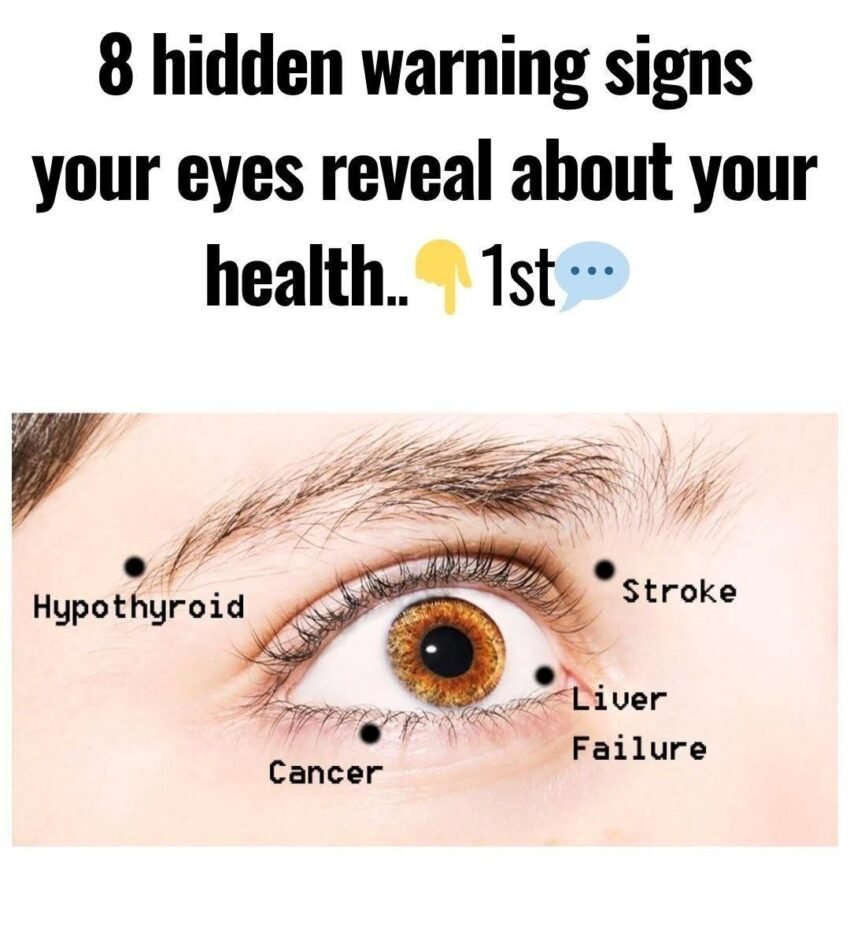
Here are eight eye clues worth knowing about:
1. Yellowing of the whites of the eyes
If the white part of your eye becomes noticeably yellow, this can be a sign of jaundice, which occurs when bilirubin builds up in the body. Causes can involve the liver, gallbladder, bile ducts, or breakdown of red blood cells.
What to do: New or unexplained yellowing deserves medical evaluation rather than being treated as a cosmetic change.
2. Bulging or unusually prominent eyes
Eyes that appear to protrude can sometimes be associated with Graves’ disease/thyroid eye disease. Other clues can include puffy eyelids, redness, dryness, light sensitivity, double vision, or difficulty moving the eyes.
What to do: New eye bulging should be evaluated, particularly if it comes with vision changes, eye pain, or other thyroid-related symptoms.
3. Blurred or fluctuating vision
Vision that repeatedly becomes blurry—or changes between clear and blurry—can have many causes. Diabetes is an important one, because elevated blood sugar can damage the tiny blood vessels supplying the retina. Diabetic retinopathy may cause blurry or fluctuating vision, floaters, dark areas, or eventually vision loss.
Importantly, diabetic retinopathy can exist before you notice symptoms, so people with diabetes need regular dilated eye examinations.
4. A sudden increase in floaters or flashes
Occasional floaters can be harmless, but a sudden shower of new floaters, flashes of light, or a dark curtain/shadow across your vision can signal a retinal problem, including retinal detachment.
This is an urgent warning sign. Sudden changes in vision should not be watched at home for several days.
5. A red, painful eye
Redness can result from something relatively minor, such as irritation or dry eye, but significant redness accompanied by pain or vision changes can indicate a more serious eye problem.
The National Eye Institute advises seeking prompt eye care for intense eye pain, vision changes, blurry vision, or very red, watery eyes.
6. A cloudy or hazy appearance
Cloudy vision can be associated with conditions affecting the cornea or lens, including cataracts. Cataracts cause the normally clear lens to become cloudy and can gradually make vision hazy or blurry.
Cloudiness isn’t necessarily an indication of a systemic disease, but a progressive change in vision warrants an eye examination.
7. Changes in the field of vision
Losing the ability to see objects at the sides of your vision can be a warning sign of an eye or optic-nerve disorder. Glaucoma, for example, can damage the optic nerve and eventually cause peripheral vision loss.
One challenge is that glaucoma can progress without noticeable symptoms in its early stages. That’s why an eye examination—not simply checking your vision at home—is so important.
8. Persistent headaches, eye strain, or difficulty focusing
Frequent headaches, tired eyes, or eye strain—especially after reading, prolonged screen use, or driving—can sometimes indicate an uncorrected vision problem or another eye issue. The National Eye Institute specifically lists headaches and eye strain among symptoms that can indicate you need an eye examination.
These symptoms aren’t specific to eye disease, however. Headaches have many possible causes, so persistent or severe headaches should be assessed in their broader context.
The bigger picture
Your eyes can indeed provide clues about your health. Diabetes and high blood pressure, for example, increase the risk of several eye diseases, and changes in the retina can sometimes reflect damage to small blood vessels.
But there’s a crucial misconception to avoid: you don’t necessarily need to be able to see a warning sign for an eye problem to exist. Many eye diseases have no early warning symptoms. A comprehensive dilated eye examination is one of the best ways to detect problems early, before vision loss occurs.
Seek urgent medical/eye care for sudden vision loss, a sudden curtain or shadow over your vision, a sudden burst of floaters or flashes, severe eye pain, or a markedly red eye accompanied by vision changes.
So, rather than thinking of your eyes as a diagnostic tool, it’s better to think of them as early-warning signals that can tell you when it’s worth getting checked.