ChatGPT said:
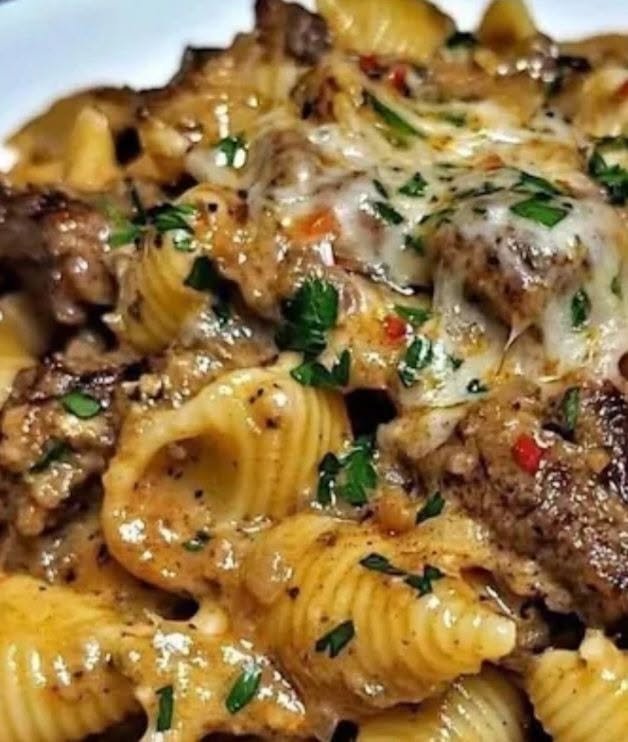
Creamy Paprika Steak Shells
Creamy Paprika Steak Shells is a rich, comforting pasta dish made with tender seared steak, medium pasta shells, garlic, paprika, beef broth, cream, and Parmesan. The shell shape is especially good because it catches the creamy sauce inside each piece. Several versions of the recipe use sirloin or ribeye and finish the sauce with Parmesan.
What the dish tastes like
The flavor is savory, creamy, mildly smoky, garlicky, and slightly sweet from the paprika. The browned steak provides a deep beefy flavor, while Parmesan adds saltiness and nuttiness. Smoked paprika gives the dish an earthy, smoky character; sweet paprika produces a milder, more traditional paprika flavor.
Ingredients — serves 4
- 10–12 oz medium pasta shells
- 1 lb sirloin steak, thinly sliced against the grain or cut into small pieces
- 1 tablespoon olive oil
- 1 tablespoon butter
- 1 small yellow onion, finely chopped
- 3 cloves garlic, minced
- 1 tablespoon smoked paprika
- ½ teaspoon sweet paprika
- ¾ cup beef broth
- ¾ cup heavy cream
- ½ cup freshly grated Parmesan
- ½ teaspoon black pepper
- 1 teaspoon salt, divided, or to taste
- ¼ cup reserved pasta water, as needed
- Fresh parsley, for garnish
This ingredient balance is based on several published versions of the dish; quantities vary somewhat between recipes.
Detailed preparation
1. Prepare the steak
Take the steak out of the refrigerator about 15 minutes before cooking. Pat it dry with paper towels.
Slice against the grain. This is important because cutting across the muscle fibers makes the finished steak easier to chew.
Season with salt, black pepper, and a small amount of paprika.
2. Cook the pasta
Bring a large pot of generously salted water to a boil.
Add the shells and cook until al dente, following the package timing. Before draining, reserve about ¼–½ cup of the pasta water.
The pasta water contains starch that can help loosen and emulsify the sauce later. Published versions of the recipe specifically recommend reserving pasta water for adjusting the sauce.
3. Sear the steak
Heat a large skillet over medium-high to high heat.
Add olive oil and butter. Once hot, add the steak in a single layer. Avoid overcrowding the pan; cook in batches if necessary.
Sear for approximately 1–3 minutes per side, depending on the thickness of the pieces.
You want a browned exterior while keeping the inside tender. Remove the steak to a plate as soon as it is browned.
Don’t cook the steak completely through at this stage. It will return to the sauce later and continue cooking.
4. Cook the onion and garlic
Reduce the heat to medium.
Using the same skillet, add the chopped onion. Cook for about 3–4 minutes until softened.
Add the minced garlic and cook for about 30 seconds.
The browned bits left behind from the steak are valuable—they provide concentrated flavor to the sauce. Deglazing those bits with broth is one of the key techniques used in this dish.
5. Add the paprika
Stir in the smoked and sweet paprika.
Cook for approximately 20–30 seconds, stirring constantly.
Don’t let the paprika burn. Briefly heating it releases its aroma and gives the sauce its characteristic reddish-orange color.
6. Deglaze with beef broth
Pour in the beef broth.
Immediately scrape the bottom of the skillet with a wooden spoon or spatula to loosen the browned steak pieces.
Allow the broth to simmer for about 2 minutes.
7. Create the cream sauce
Lower the heat to medium-low and add the heavy cream.
Stir continuously as the cream combines with the broth and paprika.
Let it gently simmer for approximately 3–5 minutes, until it begins to thicken.
Avoid a violent boil. Gentle simmering produces a smoother cream sauce.
8. Add Parmesan
Reduce the heat to low.
Add freshly grated Parmesan and stir until completely melted.
Freshly grated Parmesan is preferable because it generally melts more smoothly than heavily processed pre-shredded cheese.
Taste the sauce and adjust the salt and pepper.
9. Combine the pasta and steak
Add the cooked shells to the skillet.
Return the steak and any juices that collected on the plate.
Gently toss everything together for 1–2 minutes.
If the sauce is too thick, add reserved pasta water one tablespoon at a time until you reach the consistency you want.
10. Finish and serve
Turn off the heat.
Finish with chopped fresh parsley and additional Parmesan.
For a little brightness, a very small squeeze of lemon can work well because the acidity cuts through the richness of the cream and cheese.
Why the recipe works
Steak + paprika: The beef provides a strong savory foundation, while paprika contributes warmth, color, and either smokiness or mild sweetness.
Beef broth + cream: Broth reinforces the beef flavor while cream provides richness and a smooth mouthfeel.
Parmesan: It adds salt, umami, and body to the sauce.
Shell pasta: The curved pockets of shell pasta hold onto the sauce, so you get creamy sauce with practically every bite.
Tips for the best result
- Don’t overcrowd the steak pan. Crowding causes the meat to steam instead of sear.
- Use sirloin or ribeye. Both are commonly recommended because they stay relatively tender when quickly seared.
- Slice against the grain for more tender steak.
- Don’t overcook the steak. Remove it from the pan promptly and let the sauce finish the cooking.
- Use freshly grated Parmesan for the smoothest sauce.
- Don’t boil the cream aggressively. Keep it at a gentle simmer.
- Reserve pasta water. It’s useful if the sauce becomes excessively thick.
- Taste at the end. Parmesan and beef broth can already contain significant salt, so add additional salt gradually.
Easy variations
Spicy version
Add a pinch of cayenne, red-pepper flakes, or hot paprika. One published version specifically recommends cayenne or hot sauce for additional heat.
Mushroom version
Sauté sliced cremini mushrooms after cooking the steak, then continue with the onion and sauce.
Pepper version
Add sliced bell peppers with the onion for sweetness, color, and extra texture.
Lighter version
Use half-and-half instead of heavy cream. The sauce will be less rich but still creamy.
Different pasta
If you don’t have shells, penne, fusilli, or farfalle can work. Shells are simply especially effective at catching the sauce.
Approximate timing
- Prep: 10–15 minutes
- Cooking: 20–25 minutes
- Total: roughly 30–40 minutes
- Yield: about 4 servings
Published versions range from about 30 to 40 minutes depending on the method and ingredient quantities.
Storage and reheating
Store leftovers in an airtight container in the refrigerator for up to about 3–4 days.
The sauce will thicken considerably when chilled. When reheating, add a small splash of beef broth, milk, cream, or water and warm gently, stirring frequently. This helps restore the creamy consistency.
Bottom line: The key to excellent Creamy Paprika Steak Shells is quickly searing the steak, building the sauce in the same pan, gently simmering the paprika cream, and tossing the shells directly into the sauce. That gives you tender beef and pasta coated with a rich, smoky Parmesan sauce rather than simply pasta with sauce poured over it.