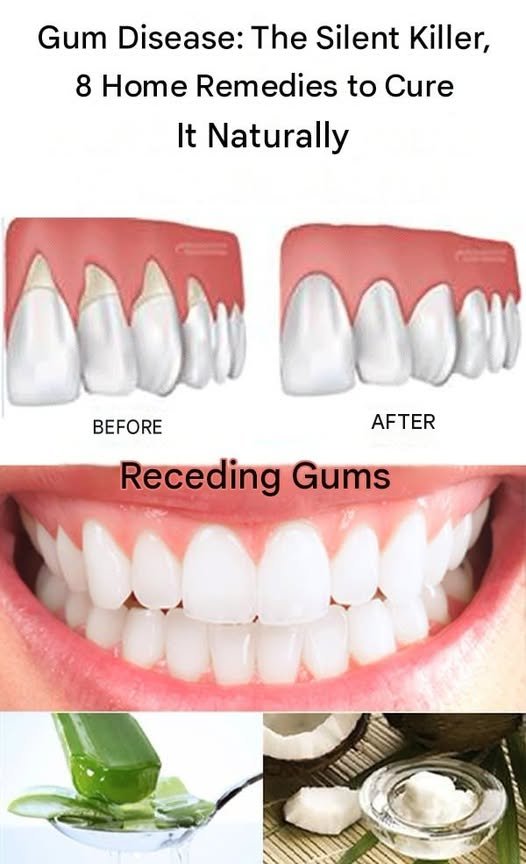
Gum disease is sometimes called a “silent” disease because it can progress with little pain, particularly in its early stages. However, home remedies cannot reliably cure established periodontitis. Early gingivitis can often be reversed with good daily plaque control, while periodontitis—with loss of supporting bone—needs professional dental treatment.
First, understand the two main stages
- Gingivitis: red, swollen, tender, or bleeding gums caused mainly by plaque. It is generally reversible with improved oral hygiene and professional cleaning.
- Periodontitis: infection/inflammation that damages the tissues and bone supporting the teeth. It can cause gum recession, persistent bad breath, painful chewing, loose teeth, and eventually tooth loss. Damage from established periodontitis cannot simply be reversed with home remedies.
8 safe, natural/home approaches that can help
1. Brush gently twice a day
This is the most important home measure.
- Brush twice daily for about 2 minutes.
- Use a soft-bristled toothbrush and fluoride toothpaste.
- Aim the bristles toward the gumline.
- Use gentle, small circular motions rather than aggressive scrubbing.
- Clean the outer, inner, and chewing surfaces of every tooth.
- Replace the toothbrush when the bristles become worn.
Brushing removes the plaque that drives gingival inflammation. Aggressive brushing, however, can irritate gums and contribute to recession.
2. Clean between your teeth every day
A toothbrush cannot adequately clean the spaces between teeth.
Use whichever method you can perform consistently:
- Dental floss
- Interdental brushes
- A water flosser
- Another interdental cleaner recommended by your dentist
With floss, gently slide it between the teeth rather than snapping it into the gums. Curve it around each tooth in a “C” shape and move it gently up and down.
If your gums bleed when you first begin cleaning between your teeth, don’t automatically assume that flossing is damaging them. Inflamed gums commonly bleed. Persistent or heavy bleeding should be assessed by a dentist.
3. Rinse with plain water after meals
This is a simple, low-risk habit.
After eating, particularly when you cannot brush immediately, rinse your mouth thoroughly with water and spit it out. This can help remove loose food debris and dilute acids and sugars.
It does not replace brushing and interdental cleaning, but it is a useful addition to your routine.
4. Stay well hydrated
Adequate water intake helps maintain saliva, which naturally helps cleanse the mouth.
If you frequently have a dry mouth:
- Drink water regularly.
- Limit sugary drinks.
- Consider sugar-free gum if appropriate for you.
- Discuss persistent dry mouth with a healthcare professional or dentist.
Dry mouth can increase oral-health problems, so addressing it is worthwhile.
5. Reduce sugar and frequent snacking
A diet high in added sugars can contribute to oral disease.
Try to:
- Reduce sugary drinks.
- Limit sweets and sticky sugary foods.
- Avoid constantly sipping sweetened beverages.
- Choose balanced meals containing vegetables, fruits, whole grains, protein, and other nutritious foods.
- Drink water between meals.
This isn’t a direct “cure” for periodontitis, but it supports overall oral health and reduces conditions that promote dental disease.
6. Stop smoking and tobacco use
If you smoke or use tobacco, quitting is one of the most valuable things you can do for your gums.
Smoking is a major risk factor for periodontal disease and can also make treatment less successful.
This is considerably more important than trying exotic herbal remedies.
7. Consider an evidence-based mouthwash
If you want a mouth rinse, choose one based on evidence rather than assuming that “natural” automatically means safer or more effective.
The American Dental Association notes that certain antimicrobial mouthrinses can reduce gingivitis risk. Examples include products containing cetylpyridinium chloride or specific combinations of essential oils.
A mouthwash is an addition, not a substitute for brushing, interdental cleaning, or professional dental care.
8. Have professional plaque and tartar removed
This may sound less like a “home remedy,” but it is crucial.
Plaque can harden into tartar/calculus, and brushing and flossing cannot remove established tartar. A dentist or dental hygienist needs to remove it professionally.
If you already have periodontitis, treatment may include scaling and root planing (deep cleaning) and, depending on severity, medication or surgical treatment.
What about oil pulling, salt water, turmeric, hydrogen peroxide, or baking soda?
Be cautious with internet claims that these can “cure” gum disease.
Some household rinses or substances may temporarily make the mouth feel cleaner, but there isn’t good evidence that they can eliminate tartar or reverse the bone loss of periodontitis.
In particular, don’t routinely rinse with concentrated hydrogen peroxide, aggressively scrub gums with baking soda, or use undiluted essential oils. These can irritate or injure oral tissues.
Likewise, oil pulling should not replace proven periodontal treatment.
When you should see a dentist promptly
Don’t rely on home treatment alone if you have:
- Gums that bleed repeatedly
- Persistent gum swelling or redness
- Gums pulling away from teeth
- Teeth that feel loose
- New spaces between teeth
- Persistent bad breath or bad taste
- Pain when chewing
- Pus around the gums
- Significant gum recession
- A tooth becoming loose
These can indicate more advanced periodontal disease.
If you have facial swelling, fever, severe dental pain, difficulty swallowing/breathing, or rapidly increasing swelling, seek urgent dental/medical care rather than trying home remedies.
A practical daily routine
Morning:
Brush for 2 minutes with fluoride toothpaste → spit rather than aggressively rinsing → eat breakfast.
After meals:
Rinse with water when convenient.
Evening:
Clean between your teeth → brush for 2 minutes with fluoride toothpaste.
Regularly:
Have dental examinations and professional cleanings according to your dentist’s recommendation.
Bottom line: If you have mild gingivitis, consistent home care can often bring the gums back to health. If you have periodontitis, natural/home methods can support treatment but cannot cure the underlying bone and tissue destruction. Getting the disease diagnosed early gives you a much better chance of keeping your teeth.