-
The Surprising Link Between Chicken Color and Quality
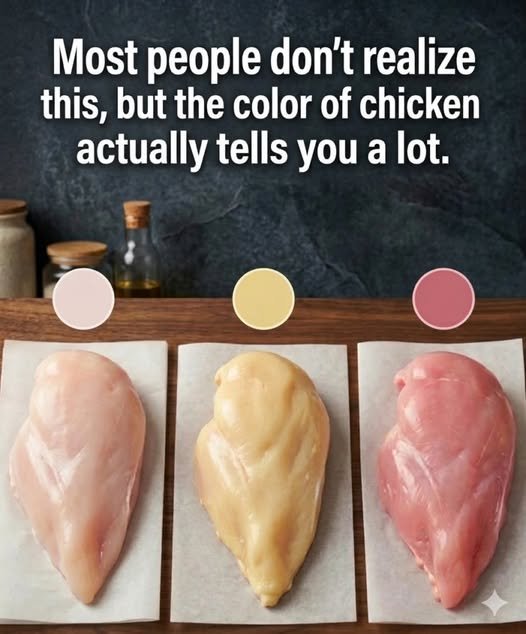
Chicken color can tell you something about the meat, but it is not the simple “white = good, pink = bad” rule many people assume. Chicken’s appearance is influenced by muscle type, age, oxygen exposure, processing, diet, freezing, and cooking. Most importantly, color by itself is not a reliable test of safety or freshness.
1. Why chicken has different colors
The main reason chicken meat varies in color is the amount and chemical state of myoglobin, a protein in muscle that stores oxygen.
Chicken breast is generally light because breast muscles contain relatively little myoglobin. Legs and thighs are darker because those muscles are used more continuously and contain more myoglobin.
This is why the same chicken can naturally have:
- Pale or pinkish breast meat
- Darker red-brown thigh meat
- Slightly purple meat in some packaged conditions
- Different shades depending on how much oxygen reaches the surface
So, darker chicken does not automatically mean older or lower quality.
2. The surprising part: pink chicken isn’t necessarily unsafe
One of the biggest misconceptions is that pink chicken always means it is undercooked.
That isn’t necessarily true.
Chicken can remain pink after reaching a safe cooking temperature because of chemical reactions involving pigments in the meat. USDA explains that oven gases can react with hemoglobin and produce a pink appearance, particularly in younger birds. Smoking can also produce a persistent pink color.
Therefore:
Pink appearance ≠ automatically unsafe.
At the same time:
White appearance ≠ proof that chicken is safely cooked.
The reliable way to determine whether chicken is cooked safely is to measure its internal temperature with a food thermometer. USDA recommends 165°F (73.9°C) for poultry.
3. What about raw chicken turning darker?
Raw chicken can change color simply because of its exposure to oxygen.
When meat is protected from oxygen, pigments can produce darker purplish-red shades. When oxygen reaches the surface, the pigments undergo chemical changes that can make the meat appear brighter. Continued oxidation can eventually produce brownish colors.
Importantly, USDA notes that color change alone does not necessarily mean the meat has spoiled.
This is why judging chicken exclusively by color can be misleading.
4. When color can become a warning sign
Although color alone isn’t enough to establish spoilage, color becomes more concerning when it occurs together with other signs of deterioration.
Look for combinations such as:
- An unpleasant or unusual odor
- A sticky or tacky surface
- A slimy texture
- Significant deterioration in appearance
- Unusual discoloration accompanied by other spoilage signs
USDA specifically identifies off odors, sticky/tacky texture, and sliminess as signs that poultry should not be used.
In other words, use your senses together rather than treating one particular color as a safety test.
5. The pink liquid in a package isn’t necessarily blood
Another surprising connection between chicken color and perceived quality involves the liquid that sometimes collects inside the package.
Many people see pink liquid and assume it is blood. In reality, USDA explains that it is mostly water absorbed by the chicken during chilling, with only a small amount of blood remaining in the muscle tissue.
Consequently, seeing pinkish liquid doesn’t automatically mean:
“This chicken is bloody and therefore poor quality.”
It can simply be a normal consequence of processing and chilling.
6. Yellow chicken skin doesn’t necessarily mean better chicken
The color of chicken skin can also be deceptive.
Some chickens have noticeably yellow skin. This can result from genetics and carotenoid pigments in the bird’s diet. USDA’s poultry grading guidance specifically states that the intensity of yellow skin is not itself a quality factor.
So a strongly yellow chicken isn’t automatically:
- Fresher
- More nutritious
- Higher quality
- More naturally raised
The color can simply reflect pigmentation.
7. Color can actually tell you something about processing
Here’s where the connection becomes more interesting.
Color can sometimes reveal clues about what happened to the meat during processing or storage.
For example, freezing can affect poultry’s appearance and texture. USDA notes that slow freezing can create larger ice crystals, which can damage muscle cells, increase moisture loss, and produce softer texture and greater drip loss after thawing. Freezing can also contribute to darker bones and changes in meat appearance.
Therefore, appearance can sometimes be an indicator of processing history, even though it isn’t a direct measure of safety.
8. Quality is more than color
Professional poultry grading doesn’t simply ask, “What color is the chicken?”
USDA quality evaluation considers multiple characteristics, including:
- Conformation and shape
- Fleshing
- Skin condition
- Bruising
- Cuts and tears
- Discoloration
- Freezing defects
- Overall appearance
For example, excessive bruising or certain defects can reduce the quality grade, while slight discoloration may still be acceptable.
This illustrates an important principle:
Color is one visual characteristic—not a complete quality measurement.
9. White striping is another example of appearance and quality being connected
There is an especially interesting phenomenon called white striping in chicken breast.
It appears as visible white lines running along the muscle. Research summarized by the University of Georgia Cooperative Extension indicates that severe white striping is associated with increased fat content and can negatively affect eating quality, including tenderness. It is particularly associated with broilers that reach high body weights rapidly.
This is different from ordinary pink or red coloration.
It demonstrates that some visual characteristics really can correlate with meat quality, but you need to understand what the particular visual characteristic represents.
10. Why cooked chicken can still look red near the bone
Sometimes chicken looks dark red or pink around the bone after cooking.
This can happen particularly with young broiler chickens because their bones haven’t completely calcified. Pigment from the bone marrow can move through the relatively porous bone and darken the surrounding meat during cooking. USDA says this darkening is safe when the poultry has otherwise been properly cooked.
So:
Dark meat near the bone ≠ automatically raw chicken.
Again, temperature is a much better indicator of doneness than appearance.
11. What color should you actually look for when buying chicken?
For raw chicken, don’t focus on finding one “perfect” color.
Instead, evaluate the whole package:
Good signs:
- Normal-looking meat for the particular cut
- No strong unpleasant odor
- No slimy or excessively sticky surface
- Packaging appears intact
- No obvious extensive deterioration
- Appropriate refrigeration
Potential warning signs:
- Strong off odor
- Slimy or unusually sticky texture
- Significant deterioration
- Extensive abnormal discoloration combined with other spoilage characteristics
A small color variation by itself isn’t enough to condemn the chicken.
12. Freshness and color are not the same thing
There’s another important distinction: freshness has a specific meaning on U.S. poultry labeling.
USDA defines “fresh” poultry as whole poultry or cuts that have never been below 26°F (-3.3°C), the temperature at which poultry freezes.
Thus, the word “fresh” and the visual color of the meat are not interchangeable concepts.
A chicken breast can look attractive but still require proper storage and handling. Conversely, a chicken breast with a somewhat unusual color may not necessarily be spoiled.
13. The best rule: separate quality from safety
This is probably the most important takeaway.
Color can provide clues about appearance and sometimes quality, but it cannot reliably establish food safety.
Think of it this way:
What you observe What it may mean Pink raw chicken Often normal Darker thigh meat Normal muscle difference Purple/red raw meat Can be related to oxygen exposure Brownish color May result from oxidation; color alone doesn’t prove spoilage Pink cooked chicken Can occur even after safe cooking Pink liquid in package Mostly water from chilling, not simply blood Yellow skin Often related to genetics/diet; not automatically higher quality Dark meat around cooked bone Can result from bone marrow pigments White striping Can be associated with poorer texture and higher fat Color + bad odor/slimy texture Much more concerning for spoilage Bottom line
The surprising link between chicken color and quality is that color is informative but far less definitive than people think.
A chicken’s color can be affected by myoglobin, oxygen, age, muscle activity, diet, processing, freezing, cooking, and even the interaction between bone pigments and meat. Some visual traits, such as severe white striping or significant bruising, can be associated with reduced eating quality. But ordinary pinkness, darker meat, yellow skin, or certain color changes do not automatically mean the chicken is unsafe or inferior.
For food safety, rely on proper refrigeration, handling, and a thermometer—not color alone. Chicken should reach 165°F (73.9°C) internally. If you’d like, I can also explain the science of chicken color at the molecular level (myoglobin, oxygen, metmyoglobin, pH, and cooking chemistry) in detail.