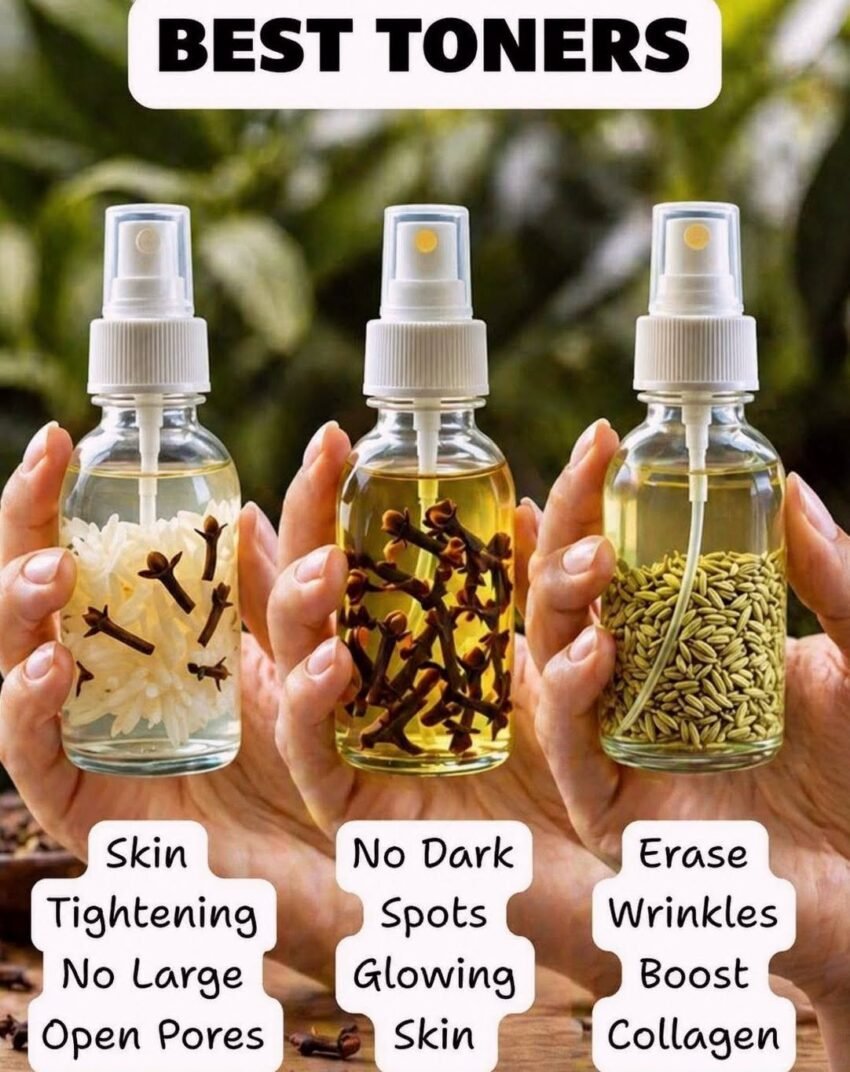
If you mean DIY collagen-boosting toners, the safest approach is to make a toner that supports hydration and the skin barrier rather than putting actual collagen powder into it. Topical collagen has limited ability to penetrate deeply, while ingredients such as glycerin, hyaluronic acid, niacinamide, and antioxidants are more practical for a toner.
1. Best overall: Hydrating “Collagen Support” Toner
Ingredients
- ½ cup (120 mL) distilled water
- 1 tablespoon pure aloe-vera gel
- 1 teaspoon glycerin
- 1 teaspoon rose water, optional
- 2–3 drops hyaluronic-acid serum, optional
Recipe
- Put the distilled water into a clean, sterilized bottle.
- Add aloe vera and glycerin.
- Add rose water if your skin tolerates fragrance.
- Add the hyaluronic-acid serum.
- Shake gently until combined.
How to use: After cleansing, apply a small amount with clean hands or a cotton pad. Follow with moisturizer.
Why I like it: It focuses on hydration, which can temporarily make fine lines look softer and skin look plumper.
Shelf life: Because this is homemade and contains no proper cosmetic preservative, refrigerate it and discard after 2–3 days.
2. Green-tea antioxidant toner
Ingredients
- ½ cup distilled water
- 1 green-tea bag
- 1 teaspoon glycerin
- 1 tablespoon aloe vera
Recipe
- Brew the green tea in the distilled water.
- Allow it to cool completely.
- Mix in glycerin and aloe.
- Transfer to a clean bottle.
- Refrigerate.
Use once or twice daily if your skin tolerates it.
3. Niacinamide + hydration toner
For a more anti-aging/firming-oriented routine, I would actually choose a properly formulated niacinamide toner rather than trying to DIY the niacinamide concentration. Incorrect concentrations or poor preservation can irritate the skin.
A useful routine is:
Cleanser → hydrating toner → niacinamide serum → moisturizer → SPF
And sunscreen is particularly important if your goal is preserving collagen and preventing premature photoaging.
Important collagen note
If by “collagen toner” you mean a toner containing collagen, don’t expect the collagen itself to rebuild your skin’s collagen. Topical collagen molecules have limited penetration, so these products are primarily useful as moisturizing/film-forming ingredients.
There is some evidence for oral hydrolyzed collagen, but the evidence is mixed: a 2026 systematic review found improvements in hydration, elasticity and wrinkles in many trials, while also noting that most studies had substantial risk of bias.
For a homemade toner, my pick is #1 because it’s simple, hydrating, and less likely to irritate skin than DIY acidic toners.
If you meant “best collagen toners to buy” rather than DIY recipes, I can also compare the best commercial collagen/anti-aging toners by ingredients, price, skin type, and actual collagen-boosting evidence.