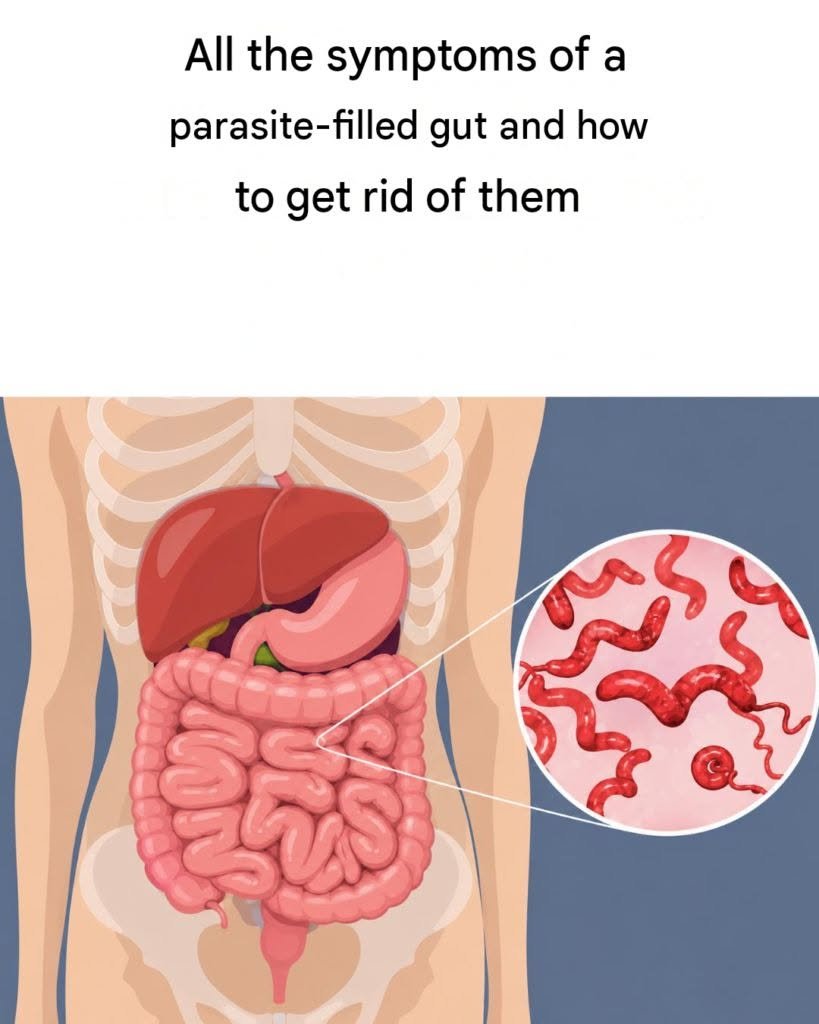
If you mean intestinal parasites (worms or protozoa living in the digestive tract), there isn’t one single set of symptoms. Different parasites can cause very different problems, and many of the symptoms overlap with IBS, food intolerance, celiac disease, inflammatory bowel disease, bacterial infections, and other conditions. So symptoms alone cannot reliably establish that you have parasites.
Common symptoms of intestinal parasites
Possible symptoms include:
- Diarrhea, particularly persistent or recurrent diarrhea
- Abdominal cramps or pain
- Bloating and excessive gas
- Nausea, sometimes vomiting
- Changes in appetite
- Unexplained weight loss
- Fatigue, weakness, or reduced stamina
- Loose, greasy, foul-smelling or floating stools, particularly with malabsorption such as Giardia infection
- Fever, occasionally
- Mucus or blood in the stool with certain infections
- Iron-deficiency anemia, particularly with blood-feeding intestinal worms such as hookworm
- Nutritional deficiencies or poor weight gain when an infection interferes with nutrient absorption
- Dehydration from prolonged diarrhea or vomiting
- Anal itching, especially at night, which is particularly characteristic of pinworm
- Occasionally, visible worms or worm segments in stool—although absence of visible worms does not rule out infection.
Giardia, for example, commonly produces foul-smelling, greasy stools that may float, abdominal cramps, nausea, and dehydration. Symptoms can persist for weeks and sometimes considerably longer.
Symptoms that don’t necessarily mean parasites
Things such as bloating, gas, constipation, fatigue, cravings for sweets, a coated tongue, or generalized abdominal discomfort are not specific evidence of parasites. They can occur with many gastrointestinal conditions.
In particular, the idea that symptoms such as sugar cravings, teeth grinding, skin problems, or “toxins in the gut” prove a parasite infection isn’t medically reliable.
Which parasites cause what?
Giardia
Usually associated with:
- Watery or greasy diarrhea
- Very foul-smelling stools
- Floating stools
- Bloating and gas
- Abdominal cramps
- Nausea
- Fatigue
- Dehydration
- Sometimes prolonged problems with digestion or nutrient absorption
It can be acquired from contaminated water, food, infected people, swimming water, or certain animal/environmental exposures.
Pinworm
The classic symptom is:
- Intense itching around the anus, particularly at night
You may also have restless sleep, irritation, or occasionally abdominal discomfort.
Hookworm
May cause:
- Abdominal discomfort
- Diarrhea
- Fatigue and weakness
- Iron-deficiency anemia
- Poor nutrition or weight loss in heavier/prolonged infections
Ascaris and other intestinal roundworms
Possible symptoms include:
- Abdominal discomfort or pain
- Diarrhea
- Poor nutrition
- Weight loss
- Occasionally intestinal obstruction in heavy infections
Tapeworms
Some people have no symptoms. Others can experience:
- Abdominal discomfort
- Nausea
- Changes in appetite
- Diarrhea or constipation
- Weight loss
- Passage of worm segments in stool
The exact symptoms depend on the species.
How to actually find out whether you have parasites
This is the most important part: don’t assume you have parasites and start a “parasite cleanse.”
A clinician can determine whether testing makes sense based on your symptoms, travel history, exposures, medications, immune status, and other factors. Stool testing can look for parasites and their eggs, and other tests may be appropriate depending on the suspected organi
Depending on the situation, testing may include:
- Stool ova-and-parasite examination
- Stool antigen testing
- Molecular/PCR stool testing
- Specific testing for Giardia or Cryptosporidium
- The pinworm “tape test” when pinworm is suspected
- Blood tests, particularly when anemia or certain tissue-invasive parasites are possible
- Occasionally, endoscopy or other investigations when persistent symptoms aren’t explained by routine testing.
A physician may also investigate non-parasitic causes. Chronic diarrhea, for example, can arise from celiac disease, Crohn’s disease, ulcerative colitis, IBS, lactose intolerance, medication effects, infections, and other disorders
How parasites are treated
Treatment depends on the exact parasite. There isn’t one medication that safely eliminates every intestinal parasite.
Examples include:
- Giardia: specific prescription antiparasitic treatment may be used.
- Pinworm: specific antihelminthic treatment is used, often with treatment of household contacts and hygiene measures to prevent reinfection.
- Hookworm/roundworm: different antihelminthic medications may be prescribed.
- Tapeworm: treatment depends on the species.
- Some infections require additional treatment or follow-up testing.
That’s why taking a random “dewormer” can be the wrong approach. The appropriate medication, dose, duration, and whether household members need treatment depend on the organism.
What you can safely do meanwhile
If you’re experiencing diarrhea or vomiting:
- Prioritize hydration and electrolytes. Oral rehydration solution is particularly useful when you’re losing significant fluid.
- Eat normally as tolerated rather than deliberately starving yourself.
- Wash your hands thoroughly after using the bathroom and before preparing food.
- Don’t prepare food for other people while actively experiencing infectious diarrhea.
- Wash produce carefully.
- Avoid untreated drinking water.
- If you’ve recently traveled, tell your clinician where you went and when.
- Mention camping, well water, swimming in lakes/rivers, childcare exposure, animal exposure, and household members with similar symptoms.
- Don’t rely on herbal “parasite cleanses,” fasting, coffee enemas, essential oils, or large doses of supplements. They aren’t substitutes for identifying and treating an infection and can themselves cause harm.
Probiotics are sometimes suggested for diarrhea, but evidence for their effectiveness varies; they aren’t a treatment that reliably eradicates intestinal parasites.
When you should get medical attention promptly
Seek medical care promptly if you have:
- Blood or pus in your stool
- Black, tarry stool
- Severe or worsening abdominal pain
- High fever
- Repeated vomiting
- Significant dehydration
- Confusion, fainting, or severe weakness
- Six or more loose stools in a day
- Persistent diarrhea
- Significant unexplained weight loss
- Symptoms that keep returning
- Symptoms after significant international travel
- Known exposure to a parasite
- Symptoms while pregnant or if you have a weakened immune system
These can indicate a serious infection, dehydration, intestinal disease, or gastrointestinal bleeding—not necessarily parasites.
If you suspect parasites specifically
If you tell me your exact symptoms, how long you’ve had them, your age, whether you’ve had recent travel/camping/untreated water exposure, what your stools look like, whether you’ve lost weight, and whether you’ve actually seen anything unusual in the stool, I can help you narrow down which parasites (if any) fit and what testing/treatment would normally be appropriate.