ChatGPT said:
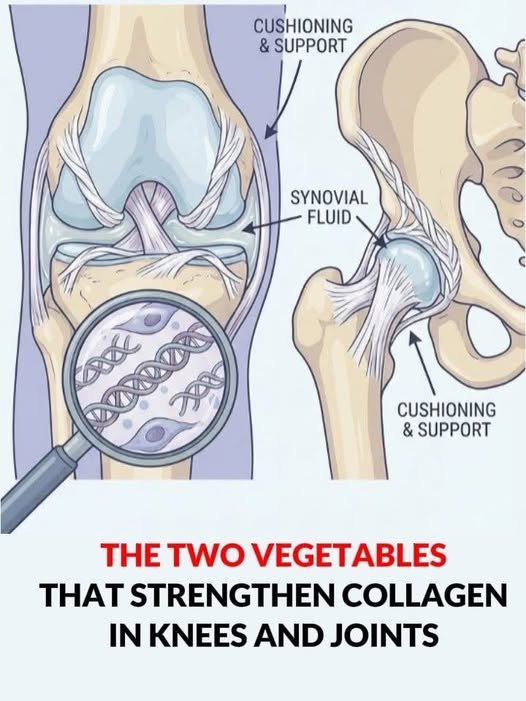
If you’ve heard that “two vegetables can rebuild collagen in your knees and joints,” there is a useful idea behind the claim—but it needs an important correction: no vegetable has been proven to rebuild worn-out knee cartilage by itself. What certain vegetables can do is provide nutrients your body needs to make collagen and support connective tissue, particularly vitamin C.
1. Red bell peppers 🫑
Red bell peppers are one of the strongest vegetable sources of vitamin C. Vitamin C is required for collagen biosynthesis; without adequate vitamin C, collagen production and connective-tissue strength are impaired.
Why this matters for your knees:
- Collagen is a major structural protein in connective tissues, including cartilage and tendons.
- Vitamin C acts as a cofactor for enzymes involved in producing properly structured collagen.
- Red peppers also provide antioxidants and carotenoids that may help protect tissues from oxidative stress.
- One cup of chopped raw red pepper provides a substantial amount of vitamin C, making it an efficient way to obtain this nutrient from food.
The important distinction is that vitamin C supports your body’s collagen-making machinery; it doesn’t directly turn a pepper into new cartilage.
2. Broccoli 🥦
Broccoli is another excellent choice because it provides vitamin C, along with carotenoids, vitamin K, folate, fiber and various plant compounds.
Broccoli and other cruciferous vegetables—including cabbage, cauliflower, Brussels sprouts and bok choy—also contain sulforaphane. Laboratory and animal research suggests sulforaphane may influence inflammatory pathways and cartilage degradation, although this does not establish that eating broccoli can reverse human knee osteoarthritis.
Broccoli therefore offers a combination of:
- Vitamin C → supports collagen synthesis.
- Antioxidants → help protect cells from oxidative stress.
- Sulforaphane and other phytochemicals → potentially relevant to inflammation and cartilage metabolism.
How collagen actually works
Think of collagen production as a construction project:
Protein/amino acids + vitamin C + other nutrients → collagen synthesis → connective-tissue maintenance
Vitamin C is particularly important because it participates in the biochemical processing of collagen. Severe vitamin C deficiency can cause weakened connective tissue and even joint pain.
However, eating extra vitamin C doesn’t necessarily mean your knee will grow new cartilage. Research on vitamin C intake and osteoarthritis has produced mixed results. One meta-analysis found that higher vitamin C intake did not clearly prevent knee osteoarthritis, although other observational research has suggested an association between higher vitamin C intake and reduced cartilage loss or osteoarthritis progression.
A better “joint-support” plate
Rather than relying on two vegetables alone, combine them with adequate protein and a variety of plant foods:
- 🫑 Red bell pepper — vitamin C
- 🥦 Broccoli — vitamin C and phytochemicals
- 🥬 Leafy greens — vitamin C and other micronutrients
- 🫘 Beans/lentils — protein and minerals
- 🐟 Fish or another protein source — amino acids needed to build body proteins
- 🥜 Nuts/seeds — healthy fats and minerals
- 🍊 Citrus/kiwi/berries — additional vitamin C
Adequate protein is important because collagen itself is a protein. Your body needs amino acids as the raw materials, while vitamin C helps with collagen synthesis.
Can these vegetables reverse knee arthritis?
No—not by themselves. Osteoarthritis involves deterioration of cartilage and other joint tissues, and there currently isn’t a food that can reliably restore a severely damaged joint to its original condition.
Food is best viewed as supportive nutrition, not a replacement for treatment. Exercise, maintaining a healthy body weight when appropriate, strengthening the muscles around the knee, and medical treatment when necessary can be much more important for knee function and pain.
So, if you’re looking for the two vegetables most relevant to collagen production, I’d choose red bell peppers and broccoli, primarily because of their vitamin C content—not because they literally “rebuild” knee cartilage.