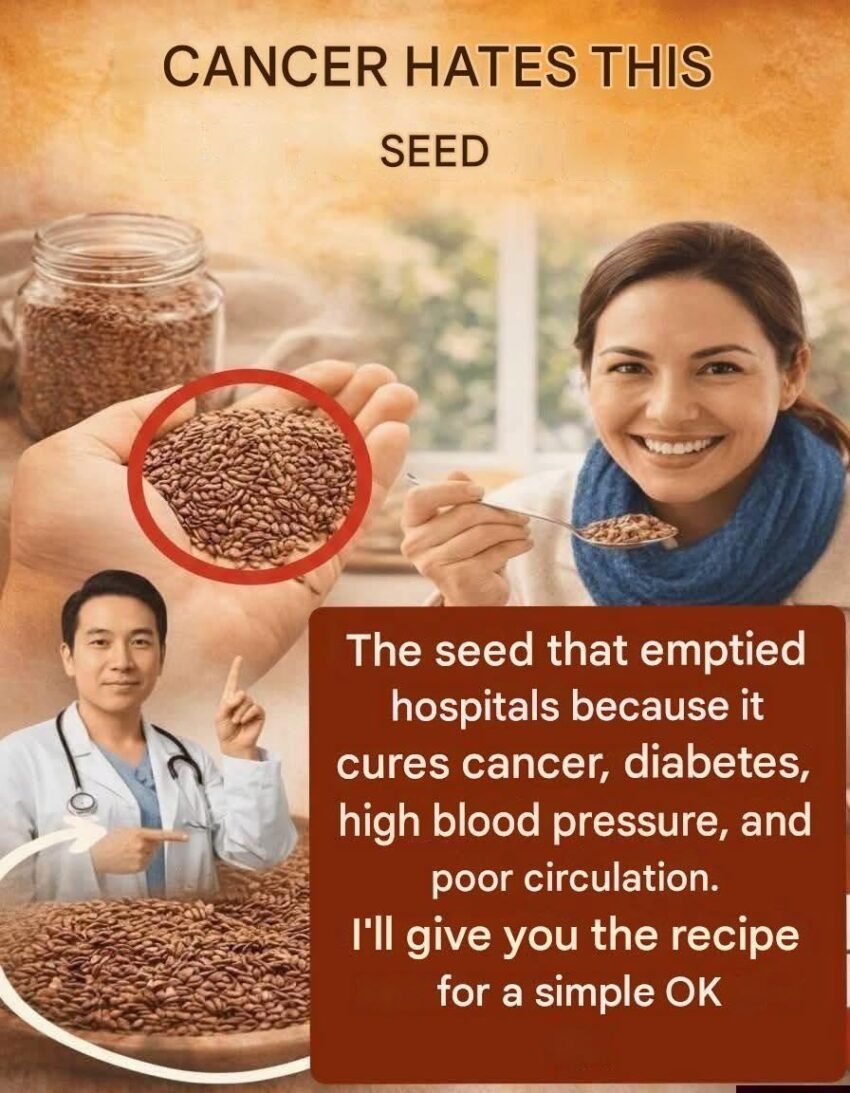
’re referring to the viral claim “These seeds destroy even the deadliest disease,” the important point is that there is no scientifically established seed that can destroy or cure a deadly disease such as cancer.
What the claim may be referring to
Certain seeds are often promoted online because they contain compounds that look promising in laboratory research. Examples include:
- Flaxseeds — rich in fiber, alpha-linolenic acid (ALA), and lignans. They are nutritious and may be associated with health benefits, but they have not been proven to cure cancer.
- Chia seeds — provide fiber, omega-3 ALA, protein, and minerals. They can be part of a healthy diet but are not a cancer treatment.
- Pumpkin seeds — provide protein, magnesium, zinc, and unsaturated fats. Again, they support nutrition rather than directly destroying disease.
- Sesame seeds — contain lignans and unsaturated fats and can be a nutritious food.
- Black seed (Nigella sativa) — contains compounds such as thymoquinone that have been investigated in laboratory and animal studies. Some experimental findings are interesting, but that is not the same as demonstrating a cure in humans.
Why you may hear that seeds “kill cancer cells”
A laboratory experiment can show that a chemical extracted from a seed damages cancer cells in a test tube. That does not establish that eating the seed will produce the same effect in a human.
There are several additional steps:
Seed → active compound → absorption → concentration in the body → effect on tumor → clinical benefit → improved survival
A substance can work at a particular concentration in cultured cells but fail to reach that concentration safely in a person’s body.
The National Cancer Institute states that there is currently no evidence that any particular food, diet, vitamin, mineral, supplement, herb, or combination can slow, cure, or prevent cancer from returning.
Seeds can still be valuable
That doesn’t mean seeds are unhealthy. Quite the opposite. The CDC includes nuts and seeds among nutritious protein foods and notes that seeds can contribute fiber and other nutrients to a healthy eating pattern.
A healthy diet can support someone during illness, help maintain strength and nutrition, and contribute to lowering the risk of some chronic diseases. But “supports health” and “destroys disease” are very different claims.
One important warning
If someone has cancer or another serious disease, replacing medical treatment with seeds, herbs, or supplements can be dangerous. Some supplements can also interfere with conventional cancer treatments.
If you tell me the name of the seeds you saw in the claim (for example, black seed, flaxseed, papaya seeds, apricot seeds, chia seeds, etc.), I can give you a detailed breakdown of their compounds, proposed mechanism, human clinical evidence, benefits, risks, dosage information, and whether the “deadliest disease” claim is actually true.