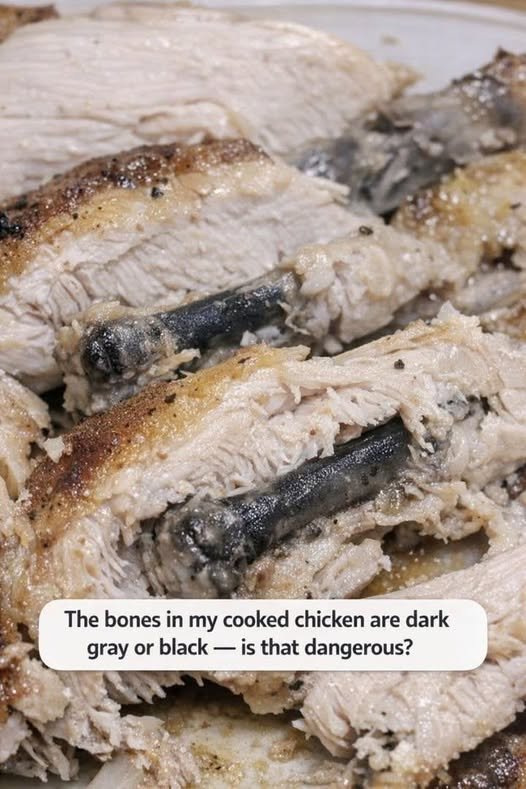
Are dark gray or black chicken bones dangerous?
Usually, no. Dark gray, purple, or even nearly black bones in cooked chicken are generally not a sign that the chicken is spoiled or unsafe. The USDA specifically identifies darkening around the bones as a common occurrence in young broiler chickens. Their bones are relatively porous because they have not fully hardened, allowing pigments from the bone marrow to seep into the bone and surrounding meat. Freezing the chicken can make this effect more noticeable.
Why do the bones turn black?
Young chickens have bones that are thinner and less fully calcified than those of older birds. As the chicken cooks, bone-marrow pigments can migrate through the porous bone, creating a dark gray, purple, brown, or black appearance. This can sometimes make the meat immediately next to the bone look darker or slightly pink as well.
Importantly, the USDA considers this an appearance issue rather than a food-safety problem. Even chicken that looks somewhat bloody or pink near the bone can be fully cooked and safe.
How can you tell whether the chicken is actually safe?
The color of the bone or meat isn’t a reliable way to determine whether chicken is safely cooked. The best method is a food thermometer.
- Chicken should reach 165°F (74°C) internally.
- For a whole chicken, check the thickest parts of the breast and the innermost thigh and wing, avoiding contact with the bone.
- Don’t rely on whether the meat looks white or whether the juices run clear; visual appearance alone cannot reliably establish safety.
When should you throw the chicken away?
Dark bones by themselves aren’t a reason to discard it. However, be cautious if the chicken also has an unpleasant/off smell, a slimy or sticky texture, or other obvious signs of spoilage. USDA notes that color changes alone don’t necessarily indicate spoilage; spoilage is more concerning when accompanied by these other characteristics.
Also, if you don’t know whether the chicken reached 165°F, particularly if it was thick, partially cooked, or handled improperly, don’t assume that the dark bone means it is cooked enough. Undercooked poultry can carry bacteria such as Salmonella and Campylobacter.
Bottom line
Black or dark gray chicken bones are usually harmless and are commonly caused by bone marrow pigment showing through the porous bones of young chickens. If the chicken reached 165°F (74°C) throughout and was properly stored and handled, the dark bones themselves are not dangerous.
If you tell me whether the chicken was fresh or frozen, how you cooked it, and whether the meat around the bone was pink/red, I can help you judge your particular chicken.