-
-
The phrase you quoted appears to come from a recent article promoting heavy cream as the alternative to milk or water in mashed potatoes. The article claims the technique came from a French-trained chef, but it does not identify the chef, so I would treat the “well-known chef” attribution cautiously.
What the tip actually means
The basic idea is:
Instead of thinning mashed potatoes primarily with milk or water, use warm heavy cream plus plenty of butter.
The reason is that mashed potatoes are largely starch. Adding a watery liquid can loosen the potatoes, but it doesn’t add much richness. Heavy cream contributes both water and fat, while butter adds still more fat. This produces a richer, more luxurious mouthfeel.
A good restaurant-style approach is:
- Potatoes: Use Yukon Gold for naturally buttery, creamy potatoes, or Russets for a lighter, fluffier mash.
- Butter: Use a generous amount. Butter is one of the major contributors to the luxurious texture.
- Heavy cream: Warm it before adding it to the potatoes.
- Salt: Season the cooking water and adjust the finished mash.
- Optional flavorings: Roasted garlic, herbs, browned butter, Parmesan, or white pepper can be added.
One published recipe from Bon Appétit, for example, heats cream separately and adds it to the cooked potatoes along with flavored butter. It also specifically recommends a ricer or food mill for a particularly silky texture.
Why warm cream matters
Don’t pour refrigerator-cold cream into hot potatoes if you’re aiming for the best texture.
Warm cream incorporates more easily and keeps the potatoes hot. Cold liquid can cool the potatoes and make it harder to achieve a smooth, cohesive mixture.
The important distinction, however, is that milk itself isn’t “wrong.” Professional recipes absolutely use milk, cream, or even reserved potato water. For example, Andy Cooks’ mashed-potato recipe uses milk and recommends adding a little more milk when reheating.
So “never use milk or water” is better understood as a style tip, not a universal culinary rule.
The bigger secret: don’t overwork the potatoes
This may actually be more important than the choice between milk and cream.
Potatoes contain starch. Excessive mechanical agitation releases that starch and can turn beautifully mashed potatoes into something sticky, gummy, or glue-like.
That’s why:
- A potato ricer or food mill gives exceptionally smooth results.
- A traditional potato masher works well for a more rustic texture.
- Avoid a blender, food processor, or aggressive mixing.
- Add your warm dairy gradually rather than flooding the potatoes with liquid.
Andy Cooks likewise warns that food processors and stick blenders can overwork the starch and produce gluey potatoes.
A restaurant-style formula
For approximately 4 servings, you could start with:
- 2 lb (900 g) Yukon Gold or Russet potatoes
- 6–8 oz (170–225 g) unsalted butter
- ½–¾ cup (120–180 ml) heavy cream
- Salt, generously
- Black or white pepper, optional
Method
- Peel the potatoes if desired and cut them into evenly sized pieces.
- Put them in cold, salted water and bring to a gentle boil.
- Cook until completely tender.
- Drain thoroughly.
- Let the potatoes sit for a minute or two so excess moisture can evaporate.
- Meanwhile, gently warm the heavy cream.
- Rice or mash the potatoes while they’re still hot.
- Incorporate the butter gradually.
- Add warm cream little by little until you reach the consistency you want.
- Taste and correct the salt.
The key is fat first, liquid gradually, and minimal agitation.
One important correction to the viral claim
You don’t actually have to eliminate water. In fact, reserved potato-cooking water can be useful when you need to loosen mashed potatoes without making them excessively rich. And even the article’s own “no milk or water” premise is more of a recipe philosophy than a rule.
If your goal is ultra-creamy, steakhouse/restaurant-style mashed potatoes: use warm heavy cream + lots of butter + a ricer, and don’t overmix. That’s the part of the “chef’s secret” that is genuinely useful.
ChatGPT is AI and can make mistakes.
-
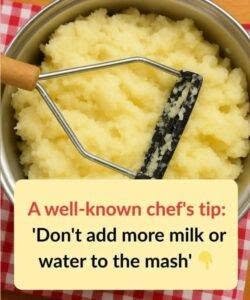
A well known chef’s tip: “Stop adding milk or water to your mashed potatoes
-
ChatGPT is AI and can make mistakes.