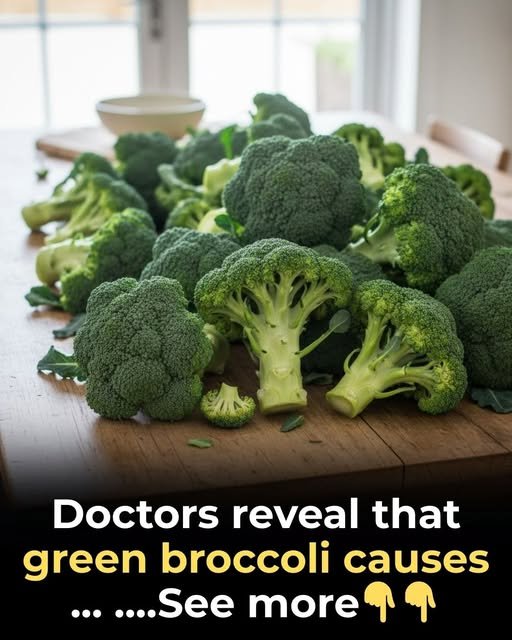
Absolutely. If you want a detailed blog/article about “Doctors Reveal the Truth About Green Broccoli” without any link references or citations, here is a clean version suitable for a website or blog.
Doctors Reveal the Truth About Green Broccoli: Benefits, Nutrition, Myths, and the Best Way to Eat It
Green broccoli is often described as a “superfood,” but how much of what we hear about broccoli is actually true? Doctors and nutrition experts generally agree that broccoli is a highly nutritious vegetable, but some popular claims about it go much further than the scientific evidence.
From supporting digestion to providing important vitamins and plant compounds, broccoli can be a valuable part of a healthy diet. However, it is not a miracle food or a cure for serious diseases.
Let’s take a closer look at what makes green broccoli so special and what you should really know before adding more of it to your diet.
What Makes Green Broccoli So Healthy?
Broccoli belongs to the cruciferous vegetable family, along with cauliflower, cabbage, kale, Brussels sprouts, radishes, and several other vegetables.
It contains a combination of:
- Vitamin C
- Vitamin K
- Folate
- Fiber
- Carotenoids
- Potassium and other minerals
- Various antioxidants and plant compounds
- Glucosinolates
One of the most interesting compounds associated with broccoli is sulforaphane. Sulforaphane is produced from another compound in broccoli called glucoraphanin.
Scientists have studied sulforaphane extensively because of its effects on cellular protective pathways. However, it is important to understand that laboratory research does not automatically mean broccoli can prevent or cure a disease in humans.
1. Broccoli May Support Overall Health
One of the biggest advantages of broccoli is that it provides many nutrients while being relatively low in calories.
Eating vegetables such as broccoli regularly can help improve the overall nutritional quality of your diet. Rather than depending on one particular food, doctors generally recommend eating a variety of vegetables because different vegetables provide different nutrients and beneficial plant compounds.
Broccoli can therefore be an excellent addition to meals containing whole grains, beans, fish, eggs, lean proteins, fruits, nuts, and healthy fats.
2. Broccoli and Cancer: What Is the Truth?
This is where many exaggerated claims about broccoli appear.
Broccoli contains glucosinolates that can break down into compounds such as sulforaphane and indole-related compounds. Laboratory and animal studies have found that some of these substances can influence processes related to oxidative stress, inflammation, DNA protection, and abnormal cell growth.
This is scientifically interesting.
However, saying that “broccoli prevents cancer” or “broccoli kills cancer cells” is too simplistic.
Research in humans has produced mixed results. Some studies have suggested possible associations between higher consumption of cruciferous vegetables and lower risks of certain cancers, while other studies have not found a clear relationship.
Therefore, broccoli should be considered a nutritious food that may contribute to a healthy diet—not a cancer treatment.
Anyone diagnosed with cancer should follow the treatment recommended by their medical team rather than attempting to treat the disease with broccoli, juices, supplements, or other foods.
3. Sulforaphane: The Compound Everyone Talks About
Sulforaphane is one of the most researched compounds found in broccoli.
It belongs to a group of plant chemicals called isothiocyanates. Research has shown that sulforaphane can influence cellular defense mechanisms and enzymes involved in the body’s handling of certain potentially harmful compounds.
This is one reason broccoli has attracted so much attention from researchers.
But there is an important distinction:
A compound having a biological effect does not mean that eating broccoli will treat a disease.
The amount absorbed by the body can depend on factors such as the type of broccoli, preparation method, digestion, individual differences, and the presence of enzymes involved in producing sulforaphane.
4. Is Raw Broccoli Better Than Cooked Broccoli?
This is one of the most interesting questions about broccoli.
Raw broccoli contains the enzyme myrosinase, which helps convert glucoraphanin into sulforaphane.
Heat can reduce the activity of this enzyme. Therefore, heavily cooking broccoli may reduce the formation of some sulforaphane.
However, this does not mean cooked broccoli is unhealthy.
Cooking can make broccoli softer and easier for some people to eat and digest. It also remains an excellent source of nutrients.
For many people, lightly steaming broccoli is a practical choice. You can also include some raw broccoli in salads if you enjoy it and tolerate it well.
The important thing is not to become obsessed with one preparation method.
5. Broccoli and Digestion
Broccoli is a good source of dietary fiber.
Fiber is important for normal bowel function and can help support a healthy digestive system. Increasing fiber intake gradually may also help people who don’t normally eat many vegetables.
However, there is a downside for some people.
Broccoli can cause:
- Gas
- Bloating
- Abdominal discomfort
This is particularly common when someone suddenly eats a large quantity.
If broccoli causes digestive problems, try smaller portions and increase your intake gradually.
6. Broccoli May Support a Healthy Heart
Broccoli fits well into a heart-friendly eating pattern.
It provides fiber, vitamin C, potassium and various plant compounds while being relatively low in calories and saturated fat.
But broccoli shouldn’t be thought of as a treatment for heart disease.
A healthy cardiovascular diet involves the overall pattern of foods you eat, including vegetables, fruits, whole grains, legumes, nuts, fish or other appropriate protein sources, and healthy fats.
Replacing highly processed foods with nutritious vegetables such as broccoli can be a useful part of that overall strategy.
7. Broccoli and the Immune System
Broccoli is particularly well known for its vitamin C content.
Vitamin C contributes to normal immune function and also acts as an antioxidant.
However, eating broccoli does not make someone immune to infections.
Your immune system depends on many factors, including adequate nutrition, sleep, physical activity, age, underlying health, and exposure to infectious organisms.
Broccoli is one piece of a healthy lifestyle—not a substitute for medical care or vaccination when vaccination is appropriate.
8. Broccoli Can Support Bone Health
Broccoli contains vitamin K, which is important for normal blood clotting and bone metabolism.
It also provides vitamin C and other nutrients involved in maintaining normal body functions.
Eating a variety of vegetables can therefore contribute to an overall nutritious diet that supports bone health.
For strong bones, however, diet is only one factor. Adequate calcium, vitamin D, physical activity, and other lifestyle factors also matter.
9. Broccoli and Weight Management
Broccoli can be particularly useful for people trying to maintain a healthy weight.
It is relatively low in calories while providing fiber and volume. Foods with high volume and good nutritional value can help make meals more satisfying.
For example, adding broccoli to a meal can increase the amount of food on your plate without dramatically increasing calories.
But broccoli itself does not “burn fat.”
Successful weight management depends on overall calorie intake, food quality, physical activity, sleep, and long-term eating habits.
10. Can Broccoli “Detox” Your Body?
The word detox is frequently used in advertisements and social media posts about broccoli.
There is some science behind why this claim sounds convincing. Compounds derived from broccoli can influence enzymes involved in the body’s cellular defense and processing of certain chemicals.
But your body already has sophisticated systems for processing and eliminating waste, particularly through the liver, kidneys, lungs, digestive tract, and other physiological processes.
Eating broccoli does not magically remove toxins from your body.
So rather than saying broccoli is a “detox food,” it is more accurate to say that broccoli contains plant compounds that participate in biological pathways involved in cellular protection.
11. Is Broccoli Good for the Skin?
Broccoli provides vitamin C and other antioxidant compounds.
Vitamin C is important for collagen production, and collagen is a structural protein that contributes to healthy skin.
A diet rich in vegetables and fruits can therefore support overall nutritional health, which is beneficial for the skin.
However, eating broccoli alone will not eliminate wrinkles, acne, pigmentation, or other skin conditions.
Healthy skin depends on genetics, age, sun exposure, nutrition, hydration, sleep, skincare, and many other factors.
12. What About Broccoli Sprouts?
Broccoli sprouts are young broccoli plants that have attracted significant scientific interest.
They can contain high levels of glucoraphanin, the precursor to sulforaphane.
Because of this, broccoli sprouts and concentrated broccoli extracts are sometimes marketed as powerful health supplements.
But more is not necessarily better.
A supplement containing a concentrated plant compound is different from eating normal broccoli. Supplements can also have different doses and formulations, and their long-term effects may not be as well established as ordinary food consumption.
For most people, nutritious whole foods should remain the foundation of the diet.
13. Who Should Be Careful With Broccoli?
Broccoli is safe for most people, but there are some situations where individual advice may be useful.
People taking certain blood thinners
Broccoli contains vitamin K. People taking warfarin should generally keep their vitamin K intake reasonably consistent and follow their healthcare professional’s advice.
This does not automatically mean they need to avoid broccoli.
People with sensitive digestion
Large portions may cause gas and bloating. Reducing the portion size or cooking the broccoli lightly may make it easier to tolerate.
People with food allergies
Although uncommon, food allergies to broccoli and related vegetables can occur. Anyone who experiences symptoms of an allergic reaction after eating broccoli should seek appropriate medical advice.
14. The Biggest Broccoli Myths
Myth 1: Broccoli cures cancer
There is no evidence that eating broccoli can cure cancer.
Myth 2: You must eat broccoli raw
Not true. Raw broccoli has advantages for certain compounds, but cooked broccoli remains nutritious.
Myth 3: More broccoli means more health
Not necessarily. A balanced diet containing many different vegetables is better than consuming extreme quantities of one food.
Myth 4: Broccoli detoxes the body
This is an exaggerated description. Broccoli contains compounds that can affect cellular defense pathways, but it does not perform a magical detox.
Myth 5: Broccoli supplements are better than vegetables
There is no general reason to assume that a concentrated supplement is better than eating a varied diet.
Myth 6: Broccoli is dangerous for everyone with thyroid problems
This claim is also overly broad. Normal dietary consumption of cruciferous vegetables is generally not something that healthy people need to fear. Individual medical circumstances can be different, so people with specific thyroid conditions should follow their healthcare professional’s advice.
15. What Is the Best Way to Eat Broccoli?
There is no single perfect method.
Good options include:
- Lightly steaming broccoli
- Roasting it
- Adding it to stir-fries
- Eating raw broccoli in salads
- Adding chopped broccoli to soups
- Combining broccoli with eggs
- Serving it with fish or lean protein
- Adding it to whole-grain dishes
Try to avoid turning a healthy vegetable into an unhealthy meal by covering it with excessive amounts of butter, cheese, creamy sauces, or highly processed ingredients.
16. How Much Broccoli Should You Eat?
There is no scientifically established “magic amount” of broccoli that everyone needs to eat.
Instead, focus on regularly eating vegetables as part of a varied diet.
A serving of broccoli can be included several times a week, or more frequently if you enjoy it and tolerate it well.
The goal should be variety rather than obsession.
Include broccoli alongside other vegetables such as spinach, carrots, tomatoes, peppers, cauliflower, cabbage, green beans, and leafy greens.
The Bottom Line
Green broccoli deserves its reputation as a nutritious vegetable, but it should not be treated as a miracle cure.
It provides fiber, vitamins, minerals and several biologically active plant compounds, including glucosinolate-derived compounds such as sulforaphane.
Research into these compounds is promising, particularly in laboratory and experimental studies. However, evidence from human studies is more complicated, and broccoli has not been proven to cure cancer or other serious diseases.
The best way to think about broccoli is simple:
Eat it regularly, eat a variety of vegetables, and don’t expect one food to do everything.
A healthy diet is built from many nutritious foods over time. Broccoli can be an excellent part of that pattern—but it is not a replacement for medical treatment, a balanced diet, exercise, or other healthy lifestyle habits.
If you want, I can also turn this into a longer 2,000–3,000 word SEO blog post with a catchy introduction, FAQ section, meta title, meta description, and headings designed for Google search.