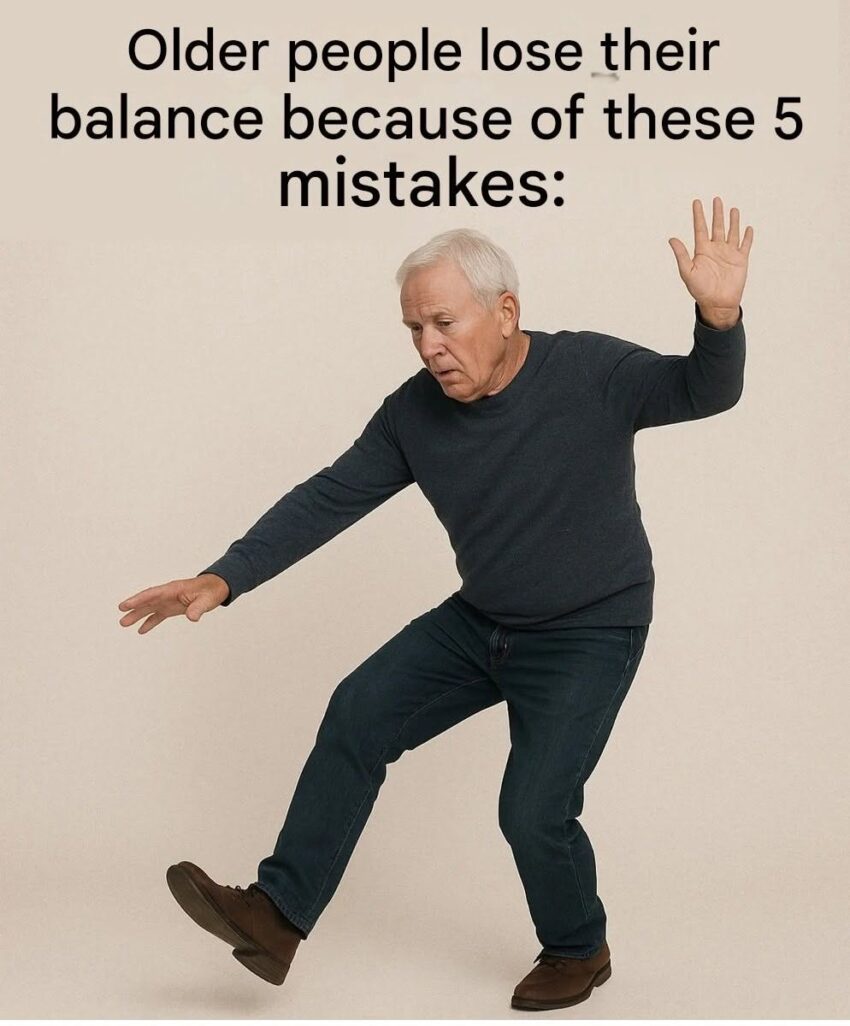
5 Common Mistakes That Cause Older People to Lose Their Balance
As people get older, balance can become more challenging because of changes in muscle strength, vision, hearing, reflexes, joint mobility, and the nervous system. However, many falls are preventable. Certain everyday habits can increase instability and make a person more likely to trip, slip, or lose their balance.
Here are five common mistakes, why they cause problems, and what can be done instead.
1. Getting Up Too Quickly
One of the most common problems is standing up suddenly from a bed, chair, or sofa.
When someone stands quickly, blood pressure can temporarily drop. This is called orthostatic (postural) hypotension. It can cause dizziness, lightheadedness, blurred vision, or weakness, making it easier to stumble or fall.
Why it happens
With aging, the body’s ability to quickly adjust blood pressure and blood flow can become less efficient. Certain medications, dehydration, illness, and prolonged sitting or lying down can make the problem worse.
Common situations
- Getting out of bed immediately after waking
- Standing quickly after sitting for a long time
- Getting up from the toilet at night
- Rising suddenly after a nap
- Standing immediately after bending over
Safer approach
Try to change positions gradually:
- Sit on the edge of the bed for a moment.
- Move your feet and ankles.
- Take a few slow breaths.
- Stand up while holding a stable surface if necessary.
- Pause before beginning to walk.
If dizziness or fainting happens repeatedly, it should be discussed with a healthcare professional because medications or an underlying medical condition may need attention.
2. Walking While Distracted
Another common mistake is trying to do several things at once while walking.
Older adults may be particularly vulnerable when they walk while:
- Looking at a phone
- Carrying too many objects
- Talking intensely with someone
- Turning their head repeatedly
- Reaching for something
- Looking upward or backward
- Walking while rushing
Walking requires coordination between the brain, eyes, muscles, joints, and inner ear. Dividing attention between walking and another task can reduce the ability to respond quickly to an unexpected obstacle.
Why this increases fall risk
A person may fail to notice:
- A rug edge
- A step or curb
- A wet floor
- Uneven pavement
- Furniture in a walkway
- A pet or object underfoot
They may also react more slowly if they suddenly lose their balance.
Safer approach
When walking, particularly on stairs or uneven surfaces, make walking the main task. Stop somewhere safe before using a phone, reaching for an object, or doing another activity.
3. Wearing Unsafe Footwear
Footwear can have a surprisingly large effect on stability.
Shoes that are loose, worn out, slippery, excessively soft, or poorly fitting can make it harder to maintain balance.
Examples of potentially problematic footwear
- Loose slippers
- Backless shoes
- Socks on smooth floors
- Shoes with worn-out soles
- High heels
- Shoes that are too large or too small
- Footwear without adequate support
Walking barefoot can also be problematic for some people, particularly if they have reduced sensation in their feet.
What makes footwear safer?
Generally, look for footwear that:
- Fits securely
- Has a reasonably low and stable heel
- Has good traction
- Doesn’t slide around on the foot
- Has a supportive, appropriately firm sole
- Is comfortable enough to encourage consistent use
The right footwear can help improve contact with the ground and reduce slipping.
4. Ignoring Muscle Weakness and Poor Balance
Some people assume that losing strength and balance is simply an unavoidable part of aging and therefore don’t work on it.
That’s a mistake.
Muscle strength, particularly in the legs and core, plays an important role in maintaining stability. Balance also depends on the ability to make quick, coordinated movements when the body begins to sway.
What can happen with inactivity?
A cycle can develop:
Less activity → weaker muscles → poorer balance → fear of falling → even less activity → further weakness.
For example, weak leg muscles can make it harder to:
- Get up from a chair
- Climb stairs
- Step over an obstacle
- Recover after a stumble
- Maintain stability while turning
- Walk on uneven surfaces
What can help?
Depending on the person’s health and abilities, activities may include:
- Walking
- Sit-to-stand exercises
- Leg-strengthening exercises
- Heel raises
- Balance exercises
- Tai chi
- Supervised strength training
For someone who already has significant balance problems, exercises should ideally be selected with guidance from a healthcare professional or physical therapist.
Important: Balance exercises should be performed in a safe environment, preferably with appropriate support available. Someone at high risk of falling should not attempt challenging balance exercises alone.
5. Making the Home a Hazardous Walking Environment
Sometimes the problem isn’t the person’s balance alone—the environment makes maintaining balance unnecessarily difficult.
A cluttered or poorly lit home can turn a small loss of balance into a serious fall.
Common household hazards
- Loose rugs
- Electrical cords across walkways
- Clutter on the floor
- Poor lighting
- Lack of stair handrails
- Slippery bathroom surfaces
- Objects frequently left on the stairs
- Furniture blocking pathways
- Uneven flooring
- Frequently used items stored too high or too low
Nighttime can be especially dangerous. A person who gets up to use the bathroom may be disoriented, sleepy, and walking in poor lighting.
Making the home safer
Consider:
- Removing or securing loose rugs
- Keeping walking paths clear
- Improving lighting
- Installing night-lights
- Using handrails on stairs
- Adding appropriate bathroom grab bars
- Keeping commonly used objects within easy reach
- Cleaning up spills immediately
- Making sure frequently used pathways are unobstructed
The goal is to reduce the number of situations in which a person has to react quickly to an unexpected obstacle.
Other Important Causes of Balance Problems
These five mistakes aren’t the only reasons an older person may lose balance. Balance problems can also be associated with:
- Vision problems
- Inner-ear disorders
- Neurological conditions
- Arthritis and joint problems
- Foot problems
- Low blood pressure
- Medication side effects
- Dehydration
- Vitamin or nutritional deficiencies
- Previous falls
- Muscle weakness
Some medications can cause dizziness or drowsiness, so an older person experiencing new balance problems should have their medications reviewed by a healthcare professional rather than stopping a medication on their own.
When Balance Problems Need Medical Attention
A new or worsening balance problem shouldn’t automatically be blamed on aging.
Medical evaluation is particularly important if someone:
- Falls repeatedly
- Has unexplained dizziness
- Faints or nearly faints
- Develops sudden difficulty walking
- Has new weakness or numbness
- Has difficulty speaking or seeing
- Develops a severe or sudden headache
- Becomes unusually confused
- Has a significant injury after a fall
Sudden loss of balance accompanied by symptoms such as facial drooping, arm weakness, speech difficulty, or severe sudden dizziness can be an emergency and may indicate a stroke. Seek emergency medical help immediately.
The key takeaway
Preventing falls isn’t about telling an older person to “just be more careful.” A better approach is to address the factors that make falls more likely:
Stand slowly + pay attention while walking + wear secure footwear + maintain strength and balance + make the home safer.
Together, these simple changes can substantially reduce everyday fall hazards and help older adults remain independent and confident.