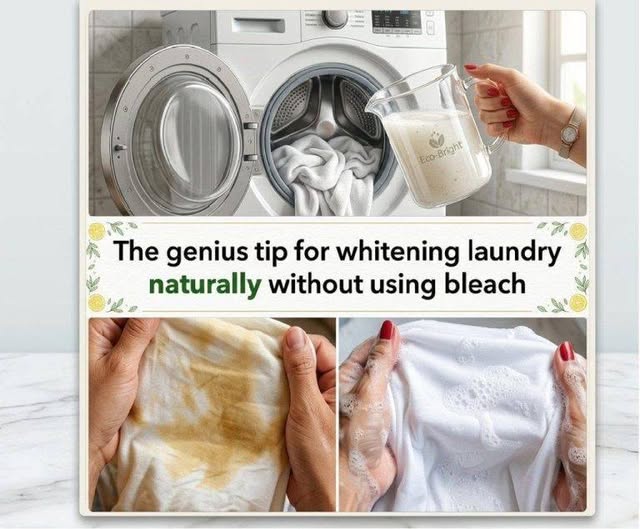
If you mean a “genius tip” for naturally whitening laundry without chlorine bleach, one of the most effective approaches is oxygen-based whitening with hydrogen peroxide, combined with good washing and sunlight.
🌿 Genius natural laundry-whitening method
1. Use 3% hydrogen peroxide
Hydrogen peroxide breaks down into water and oxygen and can help lift yellowing, body oils, and organic stains without chlorine bleach.
For a normal load:
- Add ½–1 cup of 3% hydrogen peroxide directly to the washing machine drum or detergent compartment, depending on your machine.
- Add your normal laundry detergent.
- Wash using the warmest temperature appropriate for the fabric.
For heavily yellowed white clothes, you can pre-soak them:
- Fill a basin with cool or lukewarm water.
- Add about ½ cup of 3% hydrogen peroxide per gallon (3.8 L) of water.
- Soak for 30–60 minutes.
- Rinse, then wash normally.
Important: Use ordinary 3% household hydrogen peroxide, not concentrated peroxide.
2. Add washing soda for extra cleaning power
For whites that look gray or dull, add ½ cup washing soda to the wash along with your detergent.
Washing soda (sodium carbonate) helps soften the water and remove greasy residue that can make white fabrics look dingy.
3. Let the sun do the final whitening
After washing, hang white cotton or linen items outside in direct sunlight.
Sunlight can naturally brighten whites because UV light helps break down some stains and yellowing. It also provides a mild bleaching effect without chlorine.
For delicate fabrics, avoid prolonged direct sunlight because it can weaken fibers or cause discoloration.
✨ A particularly useful trick for yellow armpits
For yellow sweat stains, make a paste from:
- Baking soda
- A small amount of 3% hydrogen peroxide
- A little liquid laundry detergent
Apply it to the stain, gently work it into the fabric, and leave it for roughly 15–30 minutes before washing.
Test the mixture on an inconspicuous area first, especially with colored or delicate fabrics.
🧺 What about baking soda, vinegar and lemon?
They can be useful, but they’re often misunderstood:
- Baking soda: Good for deodorizing and helping remove residue, but it isn’t a powerful bleach.
- White vinegar: Excellent for reducing detergent/mineral buildup and softening laundry, but don’t expect it to dramatically whiten heavily stained whites.
- Lemon juice: Its citric acid can help with some stains, and sunlight can enhance the effect, but it isn’t as reliable as oxygen-based whitening.
- Oxygen bleach: If you don’t mind a commercially produced, chlorine-free product, sodium percarbonate is generally much more effective for whitening than baking soda or vinegar.
⚠️ One important safety rule
Never mix hydrogen peroxide with chlorine bleach, ammonia, vinegar, or other cleaning chemicals. Use one whitening treatment at a time and rinse the fabric thoroughly before trying another.
Also check the garment’s care label first. Wool, silk, leather, and some delicate synthetic fabrics can be damaged by peroxide or strong alkaline cleaners.
Best overall combination:
3% hydrogen peroxide + normal detergent → thorough wash → sunshine drying.
This gives you a strong chlorine-free whitening routine while keeping the ingredients relatively simple.