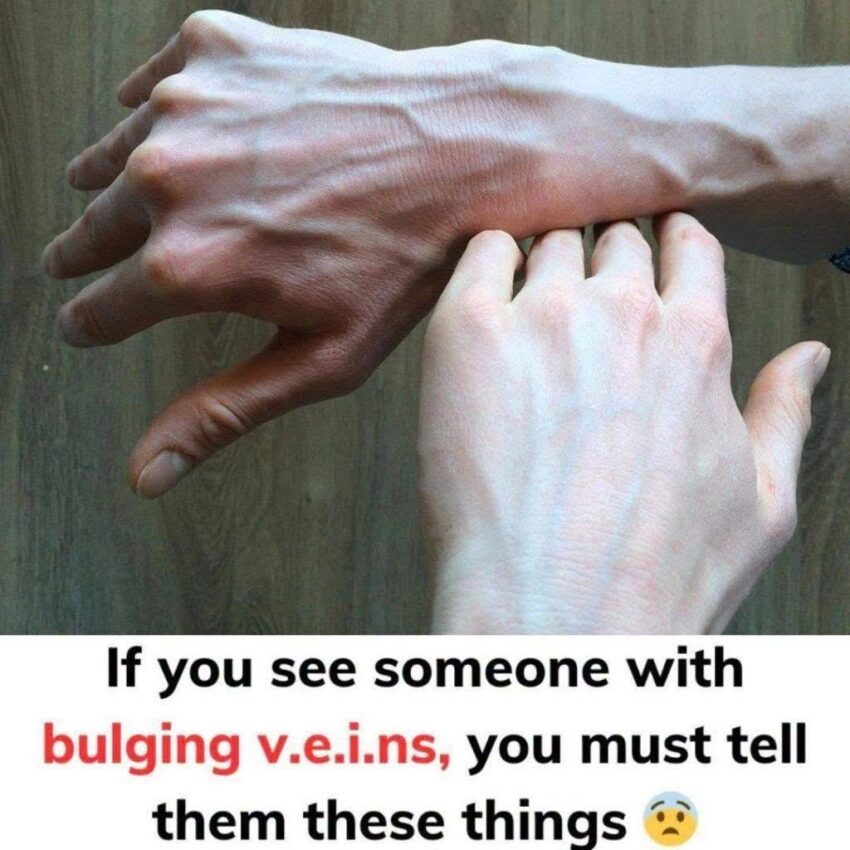
If you mean visible or “bulging” veins, they can be completely normal in some people, but sometimes they indicate an underlying problem. What to tell someone depends on where the veins are, how suddenly they appeared, and whether there are other symptoms.
Common reasons veins look bulging
- Exercise: Veins often become more prominent during or shortly after weightlifting or intense exercise because blood flow and pressure increase.
- Low body fat: With less tissue covering the veins, they can naturally be much more visible.
- Heat: Warm temperatures cause blood vessels near the skin to widen, making veins stand out.
- Dehydration: Fluid loss can make superficial veins appear more prominent.
- Genetics/normal anatomy: Some people naturally have prominent veins, especially on their hands, arms, feet, or legs.
- Aging: Skin becomes thinner and loses some of the tissue beneath it, making veins easier to see.
- Varicose veins: Enlarged, twisted, rope-like veins—usually in the legs—can occur when valves in the veins don’t work properly.
When to take it more seriously
Tell the person to seek prompt medical evaluation if a vein becomes newly prominent and is accompanied by:
- Pain, tenderness, warmth, or redness along the vein
- Significant swelling, particularly of one leg or one arm
- A hard or cord-like vein
- Skin discoloration
- Symptoms that appeared suddenly without an obvious explanation
These can occur with problems such as superficial thrombophlebitis or a deep-vein thrombosis (DVT).
🚨 Emergency symptoms
If someone has a swollen/painful limb plus sudden shortness of breath, chest pain, coughing up blood, fainting, severe dizziness, or a rapid heartbeat, they should seek emergency medical care immediately. A blood clot can sometimes travel to the lungs and cause a pulmonary embolism.
Also, bulging neck veins are different from ordinary prominent veins in the arms or hands. Persistent neck-vein distension, especially with shortness of breath, chest discomfort, swelling, or difficulty lying flat, warrants medical assessment because it can sometimes indicate a cardiovascular problem.
Important: Don’t diagnose someone simply by looking at their veins. If the prominence is new, unexplained, persistent, painful, or associated with swelling or other symptoms, a healthcare professional should evaluate it.