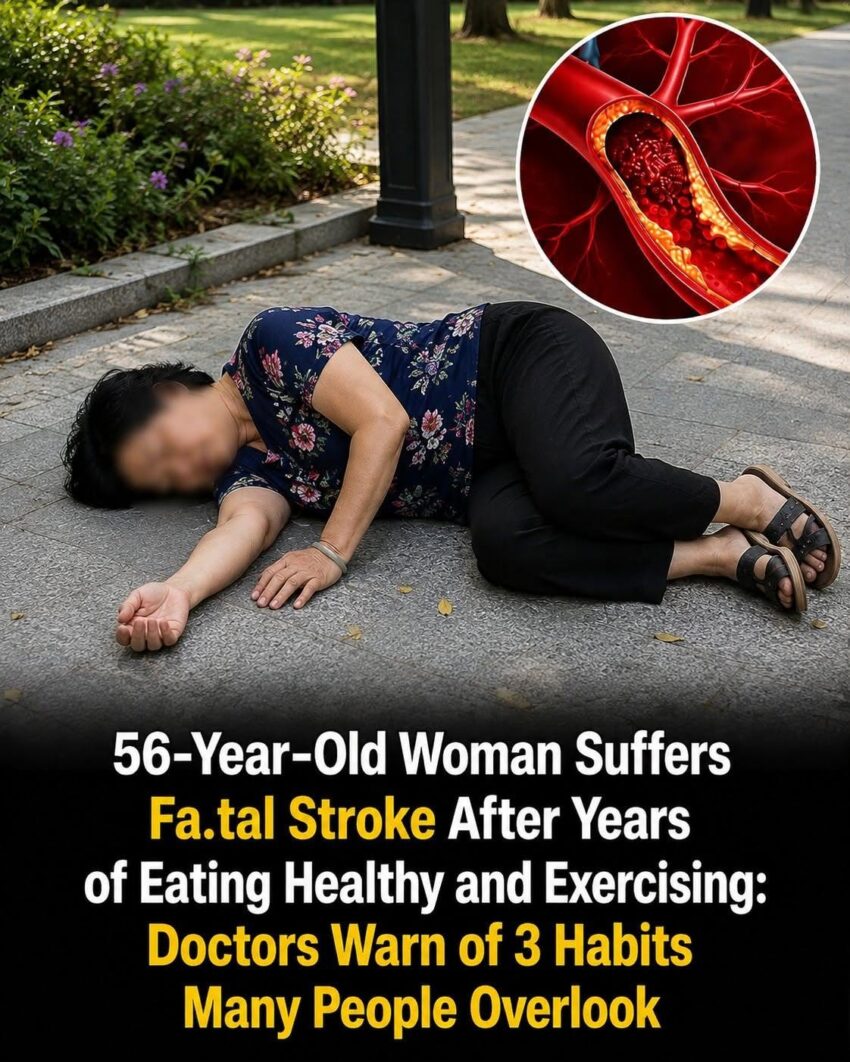
How can a 56-year-old woman suffer a fatal stroke despite years of healthy eating and exercise?
The story of a 56-year-old woman who reportedly died from a stroke despite maintaining a healthy diet and exercising for years raises an important medical question: Can someone who lives a healthy lifestyle still suffer a fatal stroke?
Yes. Unfortunately, a healthy lifestyle can substantially reduce the risk of stroke, but it cannot eliminate it completely. Some strokes occur because of hidden medical conditions, inherited risk factors, heart rhythm abnormalities, or blood vessel problems that may develop without obvious warning signs.
It is important to distinguish the reported story from the medical explanation. Without the woman’s name or the original article, I cannot confirm her identity, the precise cause of her stroke, or whether the headline accurately describes the circumstances of her death. The following explains the medical issues that could be relevant.
1. What does the original story actually say?
I found a webpage on TheBustedNews with the headline “56-Year-Old Woman Suffers Fatal Stroke After Years of Healthy Living: Doctors Warn of 3 Habits Many People Overlook.”
The article describes a woman who reportedly ate a balanced diet, exercised regularly, and appeared healthy before collapsing with a severe stroke. However, the webpage explicitly states that the story is fictional and was created for entertainment purposes. It does not establish that a real woman died in the circumstances described.
You can read the original article here: TheBustedNews — 56-Year-Old Woman Suffers Fatal Stroke .
So, the headline should not be treated as a verified medical news report. Nevertheless, the medical question behind it is real and worth understanding.
2. What is a stroke, and how can it be fatal?


A stroke happens when blood supply to part of the brain is interrupted or when a blood vessel in or around the brain ruptures. Brain cells begin to lose oxygen and nutrients, and damage can develop rapidly.
There are two major types.
Ischemic stroke — blocked blood vessel
This occurs when a clot or plaque obstructs an artery supplying the brain. It is the most common type of stroke. The clot may form within a diseased artery or travel to the brain from another part of the body, including the heart.

Hemorrhagic stroke — bleeding in or around the brain
This happens when a blood vessel ruptures. The bleeding can damage brain tissue, increase pressure inside the skull, and interfere with essential functions such as breathing and consciousness.
Both types can be life-threatening. However, without medical imaging and clinical records, it is impossible to determine which type occurred in a particular case.
3. Why might a healthy 56-year-old still experience a stroke?
Eating nutritious food and exercising regularly are important protective measures. But they cannot prevent every medical condition that affects the brain’s blood vessels.
A. High blood pressure without symptoms
High blood pressure is one of the most important controllable risk factors for stroke. A person can have elevated blood pressure for years without headaches, dizziness, or any other noticeable symptoms.
Over time, uncontrolled hypertension can damage artery walls and increase the risk of both blocked and ruptured blood vessels.
What matters: A person may eat well and exercise yet still have hypertension. Measuring blood pressure is much more reliable than judging it by how healthy someone feels.
B. High cholesterol and plaque buildup
Cholesterol is necessary for normal bodily functions, but excessive levels of certain blood lipids can contribute to plaque buildup in arteries.
Plaque may gradually narrow blood vessels supplying the brain. If a clot forms at a damaged plaque or blocks an already narrowed artery, an ischemic stroke can occur.
A person who eats a healthy diet can still have elevated LDL cholesterol because of genetics, inherited lipid disorders, age-related changes, or other medical factors. Blood testing is needed to assess cholesterol levels.
C. Atrial fibrillation and other heart conditions

Atrial fibrillation, often called AFib, is an irregular heart rhythm that can allow blood to pool in the heart. A clot can form, travel through the bloodstream, and block an artery in the brain.
Some people experience palpitations, fatigue, or breathlessness, while others have no obvious symptoms.
Exercise and a healthy diet do not rule out AFib or other heart conditions. When medically indicated, heart rhythm monitoring and other cardiac investigations can help detect these problems.
D. Genetic and family-history factors
Some people inherit a higher risk of stroke-related conditions, including certain lipid disorders and blood vessel abnormalities.
A family history of stroke, especially at a relatively young age, can be an important clue. Genetics do not make a stroke inevitable, but they may increase risk even when someone maintains healthy habits.
E. Age and changes associated with menopause
At 56, a woman may be postmenopausal. Stroke risk generally rises with age, and women can have additional risk factors associated with reproductive history and hormonal changes.
Relevant factors can include:
-
A history of high blood pressure during pregnancy or preeclampsia.
-
Early menopause or certain hormone therapies.
-
Migraine with aura.
-
Diabetes, hypertension, or atrial fibrillation.
These factors do not mean menopause itself causes every stroke. Individual medical history and other risk factors must be considered.
F. Less common blood vessel or clotting disorders
Some strokes are associated with conditions that are less common than hypertension or atherosclerosis. These can include:
-
Abnormalities such as aneurysms in brain arteries.
-
Inflammatory diseases affecting blood vessels.
-
Certain inherited or acquired clotting disorders.
-
Artery dissections, in which a tear develops in the wall of an artery.
These are possibilities doctors investigate when the patient’s age, symptoms, or test results suggest an unusual cause. There is no basis to assume that any of them caused the fictional woman’s reported stroke.
4. Could stress, poor sleep, or dehydration be the missing explanation?
These subjects often appear in online headlines about people who seem healthy but experience sudden medical emergencies. It is important to separate established risk factors from speculation.
|
Factor |
What is medically reasonable to say |
|---|---|
|
Chronic stress |
Can contribute indirectly to cardiovascular risk, including through elevated blood pressure and unhealthy coping habits. |
|
Poor sleep |
Sleep disorders, particularly sleep apnea, are associated with increased cardiovascular risk. |
|
Dehydration |
Severe dehydration can cause significant medical problems; its role in an individual stroke cannot be assumed without clinical evidence. |
|
Excessive alcohol |
Can raise blood pressure and increase stroke risk. |
|
Smoking |
Damages blood vessels and increases the risk of stroke. |
|
Overtraining |
Strenuous exercise is not inherently dangerous for healthy people, but sudden symptoms during exercise require urgent evaluation. |
The key point: It would be misleading to claim that one overlooked habit caused the woman’s death. The article does not document a real patient, diagnostic tests, or a confirmed cause of death.
5. What warning signs might appear before a stroke?
A stroke can occur suddenly, sometimes without any advance warning. In other cases, a person experiences a transient ischemic attack (TIA), sometimes called a mini-stroke. Symptoms may resolve, but a TIA is a medical emergency and should never be ignored.
Remember B.E. F.A.S.T.
B — Balance
Sudden loss of balance, coordination, or difficulty walking.
E — Eyes
Sudden loss of vision, blurred vision, or double vision.
F — Face
One side of the face droops or becomes numb.
A — Arms
Sudden weakness or numbness in one arm or one side of the body.
S — Speech
Slurred speech, confusion, or difficulty understanding words.
T — Time to call emergency services
Call 911 in the United States immediately if any of these symptoms occur. Sudden, severe headache without a known cause can also signal a medical emergency.
Source: CDC stroke warning signs and American Stroke Association guidance.
Do not wait to see whether symptoms improve, and do not drive the affected person to the hospital yourself if emergency services are available. Note when the symptoms began or when the person was last known to be well.
6. What can people over 50 do to reduce their stroke risk?
The goal is not to abandon healthy living because a stroke can still happen. The goal is to combine healthy habits with appropriate medical screening and treatment.

Monitor blood pressure
Check it regularly and discuss elevated readings with a healthcare professional. High blood pressure can remain unnoticed without measurement.

Check cholesterol and blood sugar
Periodic blood tests can identify risk factors that are not obvious from appearance, fitness, or body weight.

Continue regular physical activity
Walking, cycling, swimming, and appropriate strength training support cardiovascular health. Exercise should be suited to the person’s abilities and medical circumstances.

Maintain a heart-healthy diet
Emphasize vegetables, fruits, whole grains, legumes, nuts, and suitable sources of protein. Limit excess salt, saturated fat, and highly processed foods.

Review heart health and personal risk
Ask a clinician whether symptoms, family history, or medical history warrant heart rhythm testing or further investigation. Take prescribed medication as directed.
These measures can lower risk, although they cannot guarantee that a stroke will never occur.
Final takeaway
The story’s central message—that healthy eating and exercise cannot eliminate every risk of stroke—is medically correct. But its specific account of a 56-year-old woman’s fatal stroke is explicitly fictional, so the supposed cause of death and any claimed warning signs cannot be verified.
For a real person in their 50s, the most useful lesson is to combine a healthy lifestyle with regular checks of blood pressure, cholesterol, blood sugar, and other risk factors appropriate to their medical history.
Would you like me to explain the three overlooked habits mentioned in the headline specifically, or would you prefer a detailed medical explanation of how a stroke can happen suddenly in an otherwise healthy person?