-
Snake bite: Don’t panic — what to do immediately
A snake bite can be a medical emergency, but staying calm, keeping the person still, and getting emergency medical help quickly can save a life. Do not wait for symptoms to appear. Even a bite that looks small or painless can be dangerous.
1. What to do immediately: Step by step
Step 1 — Move away from the snake
-
Move to a safe distance so the snake cannot bite again.
-
Do not try to catch, kill, or handle it.
-
If safe, remember its color, pattern, and approximate size, or take a photo from a distance.
-
Never delay medical care to identify the snake.
Step 2 — Call emergency services
-
In the United States, call 911. Elsewhere, call your local emergency number.
-
Tell the dispatcher that a snake bite is suspected and give your exact location.
-
Request an ambulance. Do not let the person walk to the hospital if avoidable.
-
Do not wait to see whether swelling or other symptoms develop.
Step 3 — Keep the person still
-
Help them lie down in a comfortable, safe position.
-
Reassure them and encourage slow, normal breathing.
-
Keep the bitten arm or leg as still as possible; support it with a splint if available.
-
Avoid unnecessary movement because muscle activity can speed the spread of venom.
Step 4 — Remove tight items
-
Gently remove rings, watches, bracelets, and tight clothing near the bite.
-
Swelling can develop rapidly, making these items difficult to remove later.
-
Do not rub, massage, or squeeze the wound.
Step 5 — Monitor breathing and consciousness
-
Watch for difficulty breathing, faintness, confusion, vomiting, or rapidly increasing swelling.
-
If the person becomes unresponsive and is not breathing normally, start CPR and use an AED if available, following the emergency dispatcher’s instructions.
-
If they are unconscious but breathing normally, maintain their airway and follow the dispatcher’s instructions.
2. What NOT to do after a snake bite
These mistakes can make the injury worse or delay lifesaving treatment.
Do not tie a rope or tourniquet tightly around the limb.
It can restrict blood flow and worsen tissue damage.
Do not cut the wound or suck out venom.
Mouth suction and venom extraction kits do not reliably remove venom and can cause additional injury.
Do not apply ice or electric shocks.
These methods do not neutralize venom and may cause harm.
Do not give alcohol, caffeine, or unprescribed remedies.
Avoid aspirin, ibuprofen, and naproxen unless a treating clinician advises otherwise, because some snakebites cause bleeding problems.
Do not let the person walk, run, or exercise.
Movement can accelerate venom spread. Arrange transport by emergency medical services rather than allowing the person to walk to a hospital.
Do not wait for symptoms or try to catch the snake.
Venom effects may be delayed, and even a dead snake can cause injury if handled.
These precautions are consistent with guidance from the Centers for Disease Control and Prevention and the American Red Cross.
CDC+23. Should you apply a bandage?
The correct technique depends on where the bite occurred and which snakes live in that region. This distinction is important.
-
United States: For suspected rattlesnake, copperhead, or cottonmouth bites, do not apply a tight pressure bandage. Keep the limb still, supported, and in a comfortable neutral position while awaiting emergency care.
Red Cross+1 -
Australia: A pressure-immobilization bandage with a splint is recommended for suspected venomous snakebites. Apply it according to local emergency guidance, and leave it in place until medical professionals direct you to remove it.
Your Site Name+1 -
Other countries: Follow the local emergency service’s instructions because first-aid protocols vary by snake species and venom type.
Do not improvise a very tight bandage if you do not know the appropriate regional technique.
4. How to recognize dangerous snakebite symptoms
Symptoms can appear immediately or develop over time. The absence of symptoms does not mean the person is safe.
Local symptoms
-
Pain, redness, or swelling around the bite
-
Bruising, blistering, or bleeding
-
Increasing tenderness or discoloration
Whole-body symptoms
-
Nausea or vomiting
-
Dizziness, weakness, or sweating
-
Unusual bleeding or bruising
-
Abdominal pain or severe headache
Life-threatening warning signs
-
Difficulty breathing or swallowing
-
Drooping eyelids, blurred vision, or muscle weakness
-
Collapse, confusion, or loss of consciousness
-
Severe bleeding or signs of shock, such as pale clammy skin
If any of these symptoms occur, tell the emergency dispatcher immediately. Do not wait for all the symptoms to appear.
Red Cross+25. What should you do while waiting for the ambulance?
-
Keep the person lying or sitting still in a safe place.
-
Support the bitten limb with a splint or folded clothing, without tightly wrapping it.
-
If you are in the United States, gently wash the wound with soap and water if this does not delay emergency care, then cover it with a clean, dry dressing. In some countries, including Australia, first-aid protocols advise against washing the bite because venom residue may help identify the snake.
-
Note the time of the bite. If swelling develops, you can mark its edge and record the time, without delaying care.
-
Keep the person comfortably warm and monitor their breathing and responsiveness.
-
Do not let them drive themselves to the hospital.
If you are alone, call emergency services on speakerphone and follow the dispatcher’s directions.
CDC+26. What happens at the hospital?
Medical professionals may:
-
Examine the bite and monitor vital signs, breathing, and neurological function.
-
Perform blood tests to check for bleeding problems, organ injury, and other effects of venom.
-
Give antivenom when indicated. The correct antivenom depends on the snake species or regional venom type.
-
Provide intravenous fluids, breathing support, pain treatment, wound care, or other treatment as necessary.
-
Observe the patient for delayed symptoms, even if they initially feel well.
Antivenom can be lifesaving when needed, but it must be selected and administered by qualified medical professionals. Not every snakebite requires antivenom; the decision depends on clinical findings and local protocols.
Royal Children’s Hospital+27. Special situations
-
A child is bitten: Treat it as an emergency. Call an ambulance immediately, keep the child still, and do not wait for symptoms.
-
The bite is on the face, neck, or torso: Call emergency services immediately and avoid manipulating the wound.
-
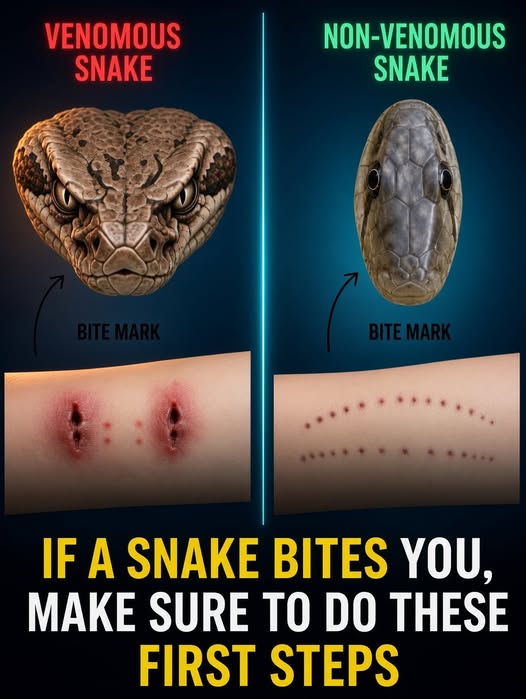
You cannot tell whether the snake is venomous: Treat the bite as potentially dangerous until a medical professional assesses it.
-
A pet is bitten: Keep the animal calm, carry it if safe, and contact an emergency veterinarian immediately.
8. Quick checklist to remember
Snakebite first-aid checklist
0 of 8
Remember: The three most important actions are to call for emergency medical help, keep the person still, and avoid harmful home remedies.
If a snakebite is happening right now, call your local emergency number before continuing to read.
One important question: Has someone actually been bitten, or are you preparing a first-aid guide? If someone has been bitten, which country did it happen in? That determines the safest bandaging technique and emergency advice.
-