Red spots on the skin: Causes, types, symptoms, and treatment
Red spots on the skin are small or large areas that look red, pink, purple, or reddish-brown. They can appear anywhere on the body, including the face, arms, legs, chest, back, and abdomen.
Red spots are a symptom, not a specific disease. They may result from harmless skin irritation, allergies, infections, inflammation, or tiny blood vessels leaking blood under the skin. The cause depends on the spots’ appearance, size, location, duration, and associated symptoms.
1. What do red spots on the skin look like?

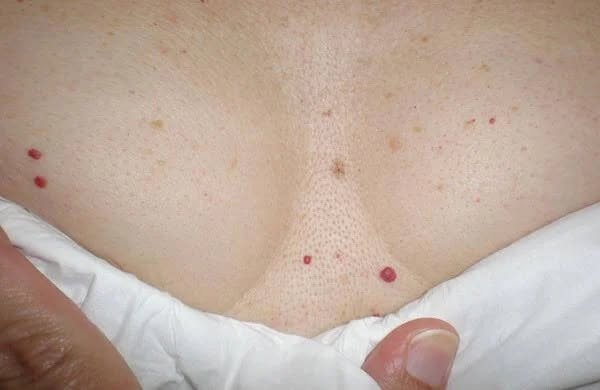
Cherry angiomas
Small, round, bright-red or cherry-red bumps caused by a collection of tiny blood vessels. They commonly appear on the trunk, arms, and shoulders, especially as people get older. They are usually harmless and do not generally require treatment.

Allergic or irritant rash
Red patches or small bumps that may itch, burn, or swell. Common triggers include soaps, cosmetics, detergents, plants, and certain metals. The rash often develops where the skin contacts the trigger.

Folliculitis
Small red pimples or bumps centered around hair follicles, sometimes with a white head or pus. It can occur after shaving, sweating, friction, or infection.

Petechiae
Tiny, flat red, purple, or brownish-red dots caused by bleeding from very small blood vessels under the skin. They generally do not fade when pressed. They may result from minor strain, certain infections, low platelet counts, or other medical conditions and sometimes need urgent evaluation.

Hives (urticaria)
Raised, itchy welts that can change shape or location and may disappear within hours. Triggers include infections, medications, foods, heat, and allergic reactions.
These images illustrate common appearances; a spot that looks similar may have a different cause.
2. What are the main causes of red spots?
Red spots can develop for several reasons.
|
Possible cause |
Typical signs |
|---|---|
|
Allergies |
Itching, redness, swelling, sometimes raised bumps |
|
Heat rash |
Tiny itchy or prickly bumps after sweating or hot weather |
|
Insect bites |
Individual itchy, swollen spots, sometimes in clusters |
|
Eczema |
Dry, itchy, inflamed, or scaly patches |
|
Skin infections |
Redness, warmth, pain, pus, or spreading inflammation |
|
Viral illnesses |
Widespread spots, sometimes with fever or other symptoms |
|
Cherry angiomas |
Persistent, smooth, bright-red spots, usually harmless |
|
Petechiae or purpura |
Flat red, purple, or brown spots from bleeding beneath the skin |
|
Medication reactions |
A new rash after starting a medicine or changing its dose |
|
Psoriasis |
Well-defined red or darker patches with scaling |
Other possibilities include rosacea, fungal infections, and inflammation of blood vessels. Some conditions are more likely depending on your age, medical history, and the area affected.
3. How can you tell whether red spots are dangerous?
One useful observation is whether the spots fade when you press them gently.
Spots that fade under pressure
Many ordinary inflammatory rashes and allergic reactions temporarily become lighter when pressed. This can be reassuring, but it does not prove that the cause is harmless.
Spots that do not fade under pressure
These may be petechiae or purpura, in which blood has leaked beneath the skin. If these spots are new and unexplained, seek prompt medical assessment. If they spread rapidly or occur with fever or feeling seriously unwell, seek emergency care.
A pressure test is not a diagnosis and should never delay urgent medical care.
Seek emergency help immediately if red spots occur with any of the following:
-
Difficulty breathing or swallowing, or swelling of the tongue or throat.
-
Fever with a rapidly spreading rash or purple, non-fading spots.
-
Confusion, fainting, severe weakness, or a severe headache with a stiff neck.
-
Extensive blistering, peeling skin, or sores involving the mouth or eyes.
A painful, rapidly spreading, or infected-looking rash also needs urgent medical evaluation.
4. How are red spots treated?
Treatment depends on the underlying cause. There is no single cream or medicine that treats every type of red spot.
-
For mild irritation: Stop using any new product that may be causing the reaction. Wash gently with lukewarm water and avoid scratching.
-
For itchy rashes: A cool compress and fragrance-free moisturizer may help. A pharmacist or clinician can advise whether an antihistamine or a suitable topical treatment is appropriate.
-
For heat rash: Keep the skin cool, wear loose clothing, and reduce sweating.
-
For folliculitis or suspected infection: Avoid squeezing the bumps. Some infections require prescription treatment.
-
For cherry angiomas: Treatment is usually unnecessary unless they bleed frequently, change in appearance, or bother you cosmetically.
-
For unexplained, non-fading spots: Get medically assessed rather than trying to treat them with creams at home.
Avoid starting steroid creams or antibiotics without knowing what type of rash you have. Some treatments can worsen particular skin conditions or delay the correct diagnosis.
5. How does a doctor identify the cause?
A doctor or dermatologist may examine the spots and ask:
-
When did they first appear?
-
Are they itchy, painful, raised, or flat?
-
Are they spreading or increasing in number?
-
Have you recently had a fever, infection, or started a new medication?
-
Do the spots fade when pressed?
Depending on the findings, the doctor may recommend blood tests, a skin scraping, or occasionally a skin biopsy. Blood tests can be especially important when unexplained spots may be related to bleeding or platelet problems.
6. Tell me a little about your red spots
I can help you narrow down the possible causes if you answer these questions.
1. What do the spots look like?
2. Do they itch or hurt?
3. Where are they appearing?
4. How long have you had them?
5. Do they fade when you press gently on them?
If you have a new rash with fever, rapidly spreading purple spots, or feel seriously unwell, do not wait to complete these questions—seek urgent medical care.