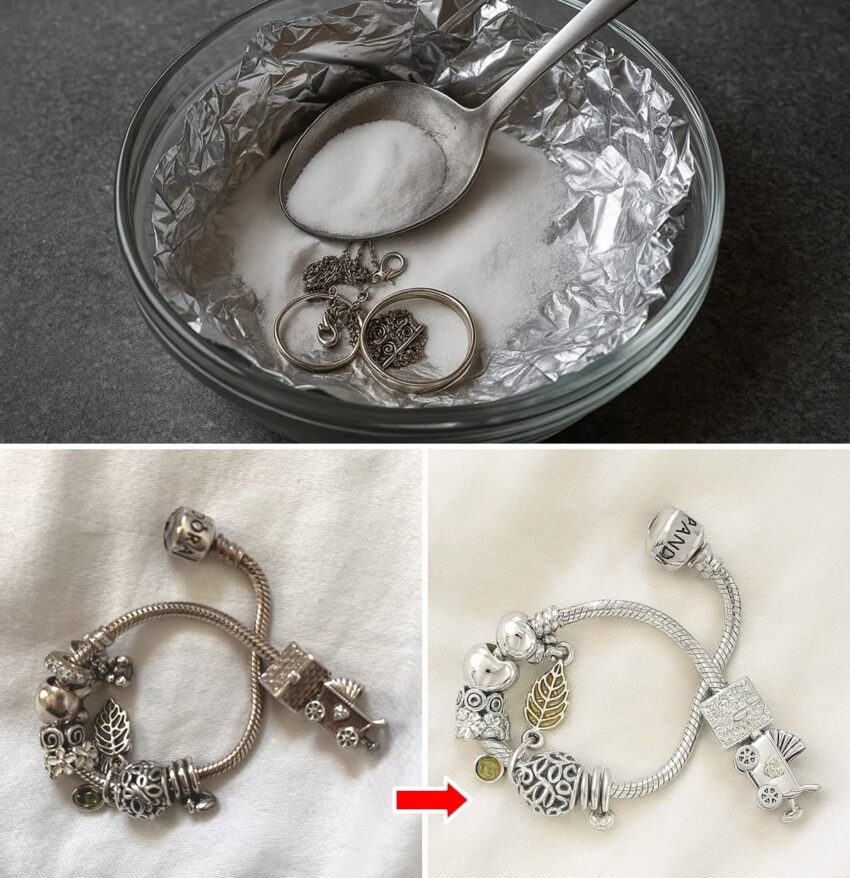
Blackened silver can usually be restored to a beautiful, bright, shiny finish at home. The best cleaning method depends on whether your silver is solid sterling silver, silver-plated, antique silver, or jewellery with gemstones.
Blackening is usually caused by tarnish, a chemical reaction between silver and sulfur compounds in the air. It forms a dark layer of silver sulfide on the surface.
Below are several effective methods, from gentle cleaning to more intensive tarnish removal.
1. Best home method: Baking soda and aluminium foil
Best for ordinary tarnished sterling silver


This method uses a chemical reaction to remove tarnish rather than simply scrubbing it away.
What you need
-
1 sheet of aluminium foil
-
1–2 tablespoons baking soda
-
1 tablespoon salt (optional)
-
Hot water
-
A glass or heat-safe bowl
-
Soft cotton cloth or microfiber cloth
Step-by-step instructions
Step 1: Prepare the bowl
-
Take a glass or heat-safe bowl.
-
Line the bottom with aluminium foil.
-
Keep the shiny side facing upwards.
Step 2: Add baking soda
-
Add 1–2 tablespoons of baking soda.
-
You can add 1 tablespoon of salt if desired.
Step 3: Add hot water
-
Pour hot water into the bowl.
-
Use enough water to cover the silver completely.
-
Do not use boiling water, especially for delicate or assembled pieces.
Step 4: Place the silver inside
-
Put the tarnished silver directly in contact with the aluminium foil.
-
Make sure the silver touches the foil.
-
Leave it for approximately 2–5 minutes, checking frequently.
Step 5: Remove and rinse
-
Remove the silver carefully.
-
Rinse thoroughly with clean, lukewarm water.
Step 6: Dry and polish
-
Dry immediately with a soft microfiber cloth.
-
Gently buff the surface until it shines.

How it works: The aluminium helps convert the silver sulfide tarnish back into silver through an electrochemical reaction. This can restore shine without aggressive rubbing.
Important: This method may remove intentional dark oxidation from decorative silverwork. Avoid it for antique pieces, silver with intentional patina, glued components, or jewellery containing pearls and delicate gemstones.
2. Baking soda paste method
For mild tarnish and small silver objects


What you need
-
2 tablespoons baking soda
-
A little water
-
Soft microfiber cloth
-
Clean water
Instructions
-
Mix baking soda with a little water to create a smooth paste.
-
Apply a small amount to the tarnished silver.
-
Gently rub using a soft, damp cloth.
-
Avoid applying too much pressure.
-
Rinse thoroughly with clean water.
-
Dry immediately.
-
Polish gently with a clean cloth.
Warning: Baking soda is mildly abrasive. Frequent rubbing can scratch silver, especially silver plating. Avoid this method on highly polished, antique or delicate decorative surfaces.
3. Mild dishwashing liquid method
Safest first step for most silver items

If your silver is dirty, greasy or dull, start with this method.
What you need
-
Mild liquid dish soap
-
Lukewarm water
-
Soft cotton cloth
-
Soft-bristled brush
Instructions
-
Mix a few drops of dishwashing liquid with lukewarm water.
-
Dip the silver into the solution if it has no delicate or glued components.
-
Gently clean the surface using a soft cloth.
-
Use a soft brush for small crevices.
-
Rinse with clean water.
-
Dry completely using a microfiber cloth.
This removes dirt, grease and surface deposits, but may not remove heavy black tarnish.
4. Commercial silver polish


If your silver is heavily blackened and you want a professional-looking shine, a good-quality silver polishing cream or silver polishing cloth can be effective.
How to use it
-
Choose a polish specifically designed for silver.
-
Read the manufacturer’s instructions.
-
Apply a small amount to a soft cloth.
-
Rub gently in straight strokes.
-
Pay attention to darkened areas.
-
Remove all polish residue as directed.
-
Buff with a clean, dry polishing cloth.
This is often a better choice for silver-plated items because you can control how much material is removed.
5. What NOT to use on silver
Some household cleaning products can permanently damage silver.
|
Avoid |
Why? |
|---|---|
|
Bleach |
Can cause severe silver damage |
|
Chlorine cleaners |
Can cause corrosion and discoloration |
|
Steel wool |
Scratches the surface |
|
Rough scrubbers |
Remove silver plating |
|
Toothpaste |
Can be too abrasive |
|
Strong acids |
Can damage silver and finishes |
|
Harsh chemical mixtures |
May create dangerous fumes or damage |
Never mix bleach with vinegar, ammonia or other cleaning products.
6. How to clean different types of silver
This is particularly important because not every silver item should be cleaned in the same way.

Sterling silver jewellery
Use mild soapy water or a silver polishing cloth. The aluminium method can work for plain sterling silver without stones or delicate components.

Silver-plated utensils and trays
Use mild soap and a silver-specific polish. Avoid vigorous rubbing and frequent chemical treatments because the silver coating is thin.

Antique silver
Use gentle cleaning only. Dark areas in engraved designs may be intentional patina. Avoid aggressive polishing.

Silver with pearls or gemstones
Use a slightly damp soft cloth. Avoid soaking, hot water and chemical treatments because some stones, pearls and adhesives can be damaged.

Silver coins and collectibles
Do not polish collectible coins. Cleaning can permanently reduce their value.
7. How to keep silver shiny for a long time
After cleaning, proper storage is very important.
-
Store silver in an airtight bag or anti-tarnish pouch.
-
Keep it away from humidity.
-
Avoid storing it near perfumes, cosmetics and household chemicals.
-
Wipe silver jewellery with a soft cloth after wearing.
-
Keep silver away from rubber, wool and materials that release sulfur compounds.
-
Avoid touching polished silver unnecessarily with wet or sweaty hands.
8. My recommendation: Which method should you choose?
|
Condition |
Recommended method |
|---|---|
|
Slightly blackened |
Mild dish soap |
|
Moderately blackened |
Silver polishing cloth |
|
Very blackened sterling silver |
Aluminium foil method |
|
Silver-plated objects |
Silver-specific polish |
|
Antique silver |
Professional silver conservator |
|
Silver with pearls or stones |
Gentle damp cloth |
Let me help you choose the best cleaning method
I would like to know what kind of silver you want to restore because the wrong cleaning method can damage its surface.
1. What kind of silver do you want to clean?
2. How black is it?
3. What finish do you want?
You can also upload a photograph of your blackened silver. I can help assess its condition and recommend the safest way to restore its original shine without unnecessarily damaging the silver.