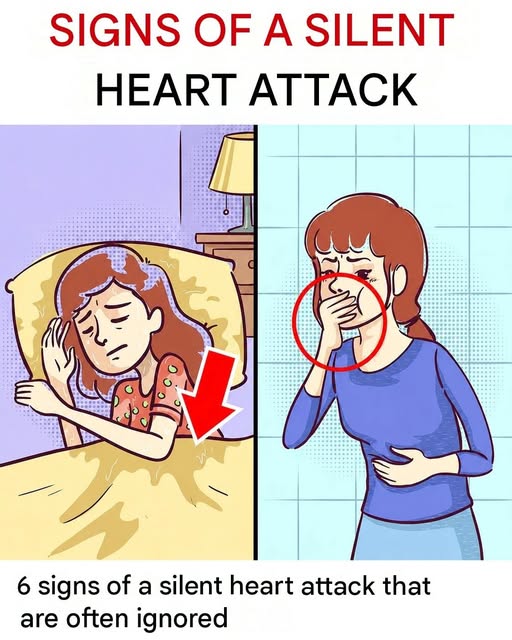
6 Often Overlooked Signs of a Silent Heart Attack
A silent heart attack is a heart attack that occurs without the typical severe chest pain or obvious warning signs. A person may mistake the symptoms for acidity, indigestion, tiredness, muscle pain, anxiety, or normal ageing.
Medically, it is called a silent myocardial infarction (silent MI).
It is particularly dangerous because someone may experience heart muscle damage without realizing that their heart has suffered an attack.
infarctus du myocarde – LAROUSSE
1. Unusual fatigue and unexplained exhaustion
Frequently overlooked
One of the less-recognized warning signs is extreme or unusual tiredness.
What it feels like:
Feeling exhausted after doing very little physical activity.
Waking up tired despite sleeping for 7–9 hours.
Feeling unusually weak while walking or climbing stairs.
Needing to sit down or rest more frequently.
Experiencing sudden exhaustion without an obvious reason.
Why it happens:
When blood flow to the heart muscle becomes restricted, the heart may pump less efficiently. The body can respond with unusual weakness and fatigue.
Important: Fatigue alone does not establish that someone has had a heart attack. But new, unexplained fatigue, particularly with breathlessness, sweating or nausea, deserves medical attention.
2. Mild discomfort in the upper stomach (mistaken for acidity)
Can resemble digestive problems
Some people experience discomfort in the upper abdomen rather than obvious chest pain.
Possible symptoms:
Pressure or tightness below the breastbone.
A sensation of fullness in the upper stomach.
Unusual indigestion after eating.
Burning or discomfort resembling acid reflux.
Nausea or an unsettled stomach.
Why it happens:
The heart and digestive organs have overlapping nerve pathways. Pain originating in the heart can sometimes be perceived in the upper abdomen.
A warning sign: If this discomfort is accompanied by sweating, breathlessness, dizziness or unusual weakness, do not assume it is gastric acidity.
3. Shortness of breath without significant physical activity
Essoufflement : quand faut-il consulter un cardiologue ?
Some people experience breathlessness without the typical chest pain.
What to notice:
Feeling short of breath while sitting.
Becoming breathless during ordinary household activities.
Difficulty walking a short distance.
Needing extra pillows to breathe comfortably while lying down.
Waking suddenly at night feeling unable to breathe.
Why it happens:
A heart attack can affect the heart’s pumping ability. This may cause pressure to build up in the lungs, making breathing difficult.
Sudden or severe breathlessness can be a medical emergency.
4. Pain or discomfort in the jaw, neck, shoulder or back
Signs of a Heart Attack: Pain Locations | Carda Health
Heart-related discomfort does not always remain in the chest.
It can spread to:
The lower jaw or teeth.
The neck.
Either shoulder.
One or both arms.
The upper back, particularly between the shoulder blades.
How it may feel:
Dull aching.
Pressure or heaviness.
Tightness.
Unexplained discomfort that comes and goes.
A sensation resembling muscle strain.
A particularly concerning pattern is new discomfort in these areas together with sweating, nausea or breathlessness.
5. Cold sweating, nausea and unexplained dizziness
Important warning combination
Some people experience symptoms that resemble food poisoning, anxiety or a sudden drop in blood pressure.
Possible signs:
Cold, clammy sweating without heat or exercise.
Nausea or vomiting.
Sudden lightheadedness.
Feeling faint or unusually weak.
A sudden sense of physical discomfort.
Why it happens:
During a heart attack, the body activates its stress-response system. This can produce sweating, nausea and changes in blood pressure or heart rhythm.
These symptoms are particularly concerning when several occur together.
6. Unusual sleep disturbances or waking with discomfort
Some people may notice unusual symptoms during the night or early morning.
What to look for:
Waking suddenly with unexplained breathlessness.
Feeling unusually sweaty during sleep.
Waking with nausea or upper-body discomfort.
Unexplained weakness upon waking.
New difficulty lying flat because of breathing discomfort.
These symptoms can have several causes, including heart failure and other heart conditions. They should not automatically be interpreted as a silent heart attack.
How can you know if you have already experienced a silent heart attack?
This is extremely important because symptoms may disappear even though heart muscle damage has occurred.
Doctors may recommend the following investigations:
Test
What it can reveal
ECG/EKG
Electrical changes suggesting previous or current heart damage
High-sensitivity troponin
Evidence of heart muscle injury, especially during an acute event
Echocardiogram
Areas of weakened or abnormal heart movement
Cardiac MRI
Scar tissue from previous heart muscle damage
Stress test
Evidence of reduced blood flow during exertion
Important: A normal ECG alone cannot reliably exclude a heart attack. Troponin testing may need to be repeated, depending on when symptoms began.
American Heart Association
+2
Who is more likely to experience a silent heart attack?
People with these risk factors deserve particular attention:
Diabetes or persistently high blood sugar.
High blood pressure.
High cholesterol.
Smoking or tobacco use.
Obesity and physical inactivity.
Previous heart attack.
Chronic kidney disease.
Family history of early heart disease.
Older age.
People with diabetes can have reduced awareness of pain because of nerve damage.
American Heart Association
+2
When should you seek emergency medical help?
Do not ignore these symptoms
If you currently experience unexplained chest pressure, breathlessness, cold sweating, faintness, or discomfort in the jaw, arm, back or upper abdomen, especially in combination, seek emergency medical care immediately.
In Pakistan, call Rescue 1122 where available. Do not drive yourself to hospital.
Do not wait for symptoms to become severe or disappear.
American Heart Association
+1
How to protect your heart
Check blood pressure regularly.
Monitor blood sugar and HbA1c if you have diabetes.
Check cholesterol.
Avoid smoking and tobacco.
Exercise regularly, as medically appropriate.
Maintain a healthy weight.
Follow prescribed medication consistently.
Get medical assessment for unexplained changes in exercise tolerance or breathing.
A few important questions
I can help you understand whether symptoms might warrant a heart evaluation, although symptoms alone cannot diagnose a silent heart attack.
Are you asking because:
You want to learn about silent heart attacks for general awareness?
You have unusual tiredness, acidity, gas or indigestion?
You experience breathlessness, dizziness or sweating?
You are concerned about a previous unnoticed heart attack?
You have diabetes, high blood pressure or high cholesterol?
You can tell me which situation applies, and I can explain the relevant warning signs and appropriate medical tests.
Medical sources for further reading:
American Heart Association – Silent ischemia and heart disease .
American Heart Association – Can you have a heart attack and not know it? .
NIH – Heart attack symptoms .