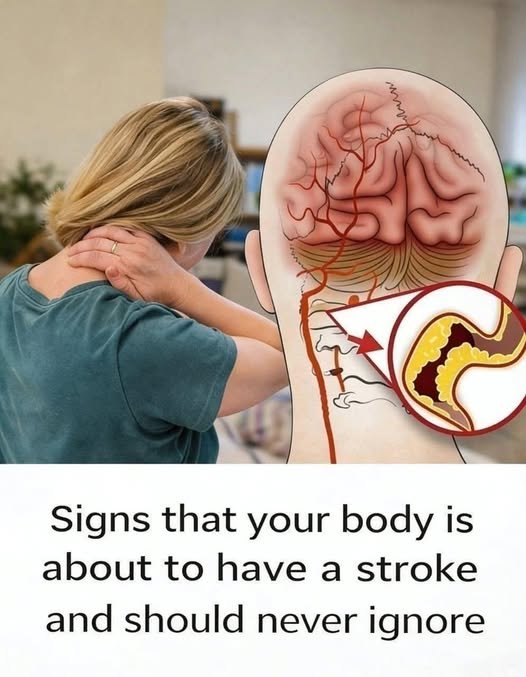
Here are 10 early warning signs that may indicate a stroke.
1. Sudden Weakness or Numbness on One Side of the Body
One of the most common signs is weakness or numbness affecting only one side of the body.
Symptoms include:
- One arm or leg feels heavy or difficult to move.
- One side of the face becomes numb.
- Difficulty gripping objects.
- Uneven smile or facial drooping.
Why it happens:
A stroke interrupts signals from the brain to muscles on one side of the body.
2. Facial Drooping
A person’s face may suddenly droop or become uneven.
What to look for:
- One corner of the mouth hangs lower.
- Difficulty smiling normally.
- Drooping eyelid.
- Saliva may leak from one side.
Simple test:
Ask the person to smile. If one side doesn’t move normally, seek emergency medical help immediately.
3. Trouble Speaking or Understanding Speech
Stroke often affects language centers in the brain.
Possible symptoms:
- Slurred speech.
- Speaking nonsensical words.
- Difficulty finding words.
- Unable to understand simple sentences.
- Confusion during conversation.
Even if speech returns to normal after a few minutes, it could be a warning sign called a transient ischemic attack (TIA), which also requires urgent evaluation.
4. Sudden Vision Problems
Stroke can affect one or both eyes.
Symptoms may include:
- Blurred vision.
- Double vision.
- Sudden loss of vision in one eye.
- Partial loss of vision.
- Difficulty focusing.
Some people describe it as a curtain coming over one eye.
5. Severe Sudden Headache
A sudden, severe headache—especially unlike any previous headache—can be a sign of a bleeding stroke.
Warning features:
- Extremely intense pain.
- Begins suddenly.
- May be accompanied by vomiting.
- Neck stiffness.
- Sensitivity to light.
This symptom requires immediate emergency evaluation.
6. Dizziness or Loss of Balance
A stroke affecting the back part of the brain may cause balance problems.
Symptoms include:
- Feeling dizzy.
- Trouble walking.
- Loss of coordination.
- Frequent stumbling.
- Difficulty standing upright.
These symptoms are especially concerning when they occur suddenly.
7. Sudden Confusion
Someone having a stroke may suddenly seem confused.
Examples:
- Doesn’t know where they are.
- Cannot follow simple instructions.
- Answers questions incorrectly.
- Appears disoriented.
- Difficulty concentrating.
This is especially important if it begins abruptly.
8. Difficulty Walking
Walking may suddenly become difficult because the brain can no longer coordinate movement properly.
Signs include:
- Dragging one foot.
- Leaning to one side.
- Loss of coordination.
- Sudden falls.
- Inability to walk without support.
9. Difficulty Swallowing
Stroke can affect muscles involved in swallowing.
Possible symptoms:
- Choking while drinking.
- Coughing during meals.
- Food feels stuck.
- Drooling.
- Pain or difficulty swallowing.
Difficulty swallowing increases the risk of food or liquid entering the lungs.
10. Sudden Extreme Fatigue or Loss of Consciousness
Some strokes, particularly severe ones, may cause:
- Sudden overwhelming weakness.
- Excessive sleepiness.
- Difficulty staying awake.
- Fainting.
- Loss of consciousness.
Although fatigue alone is not specific to stroke, sudden fatigue combined with other symptoms should be treated as an emergency.
Remember the FAST Test
A quick way to recognize a possible stroke is FAST:
- F – Face: Ask the person to smile. Does one side droop?
- A – Arms: Ask them to raise both arms. Does one drift downward?
- S – Speech: Is speech slurred or strange?
- T – Time: Call your local emergency services immediately. Do not wait to see if symptoms improve.
Additional Symptoms That Can Occur
Other warning signs may include:
- Sudden numbness
- Sudden confusion
- Sudden trouble seeing
- Sudden trouble walking
- Sudden severe headache
- Loss of coordination
- Difficulty understanding speech
- Sudden weakness
Risk Factors for Stroke
People are at higher risk if they have:
- High blood pressure
- Diabetes
- High cholesterol
- Smoking
- Atrial fibrillation (an irregular heart rhythm)
- Obesity
- Physical inactivity
- Heavy alcohol use
- Increasing age
- Family history of stroke
What to Do if You Suspect a Stroke
- Call your local emergency medical services immediately.
- Note the time the symptoms started, if known.
- Do not let the person drive themselves to the hospital.
- Keep the person safe and comfortable while waiting for help.
- Do not give food, drinks, or medication unless instructed by a healthcare professional.
Important Note
Not every stroke causes all of these symptoms, and symptoms can vary depending on the part of the brain affected. Even if symptoms last only a few minutes and then disappear, they may indicate a transient ischemic attack (TIA), which is a medical emergency because it can be a warning of a future stroke.
Prompt treatment can greatly improve outcomes. If you notice any sudden signs of stroke, seek emergency medical care without delay.