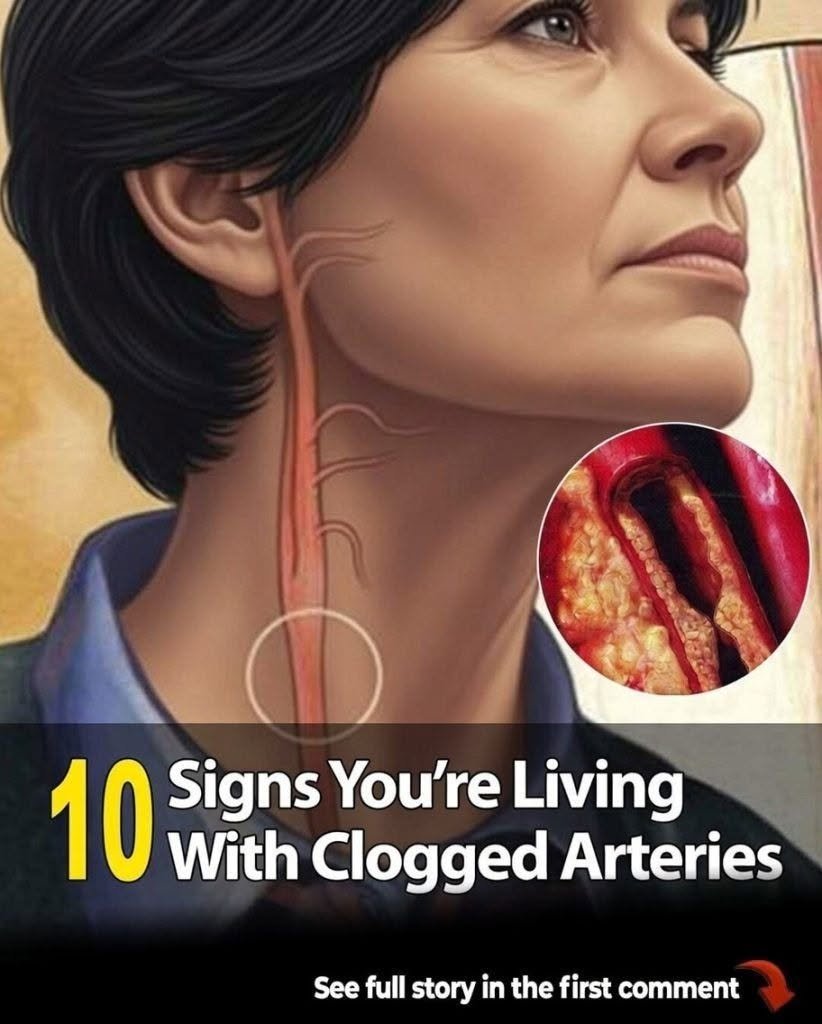
Blocked arteries are most commonly caused by atherosclerosis Atherosclerosis, a condition where fatty deposits (plaque) narrow or harden the arteries. It can affect the heart, brain, and legs—and it often develops silently until it becomes serious.
Here are 10 indicators you shouldn’t ignore:
1. Chest pain or pressure (Angina)
A tight, squeezing, or heavy feeling in the chest—often triggered by activity or stress. This is one of the most important warning signs of reduced blood flow to the heart.
2. Shortness of breath
If your heart can’t pump efficiently due to narrowed arteries, you may feel breathless even with mild activity.
3. Fatigue or low energy
Unusual, persistent tiredness—especially during normal activities—can signal the heart isn’t getting enough oxygen-rich blood.
4. Pain in legs when walking (claudication)
Cramping or aching in the calves, thighs, or hips during walking that improves with rest may suggest peripheral artery disease.
5. Numbness or weakness on one side of the body
This can indicate reduced blood flow to the brain and may be a warning sign of a transient ischemic attack (TIA) or stroke risk.
6. Cold hands or feet
Poor circulation due to narrowed arteries can make extremities feel unusually cold compared to the rest of the body.
7. Slow-healing wounds
Cuts or sores on the legs or feet that heal slowly may indicate poor arterial blood supply.
8. Erectile dysfunction
In men, reduced blood flow due to narrowed arteries can affect sexual function and may appear years before heart symptoms.
9. Dizziness or fainting
Reduced blood flow to the brain—especially if arteries are significantly narrowed—can cause lightheadedness or fainting spells.
10. Sudden severe symptoms (emergency signs)
- Crushing chest pain
- Pain radiating to arm, jaw, or back
- Sudden weakness, confusion, or speech difficulty
These may indicate a heart attack or stroke and require emergency care immediately.
Important note
These symptoms don’t always mean blocked arteries, but they are signals that something may be wrong with circulation or the heart. Many people with early atherosclerosis have no symptoms at all, which is why risk factors (smoking, high cholesterol, diabetes, high blood pressure) matter just as much.
If you want, I can also explain early warning signs vs late-stage symptoms, or how doctors test for blocked arteries.