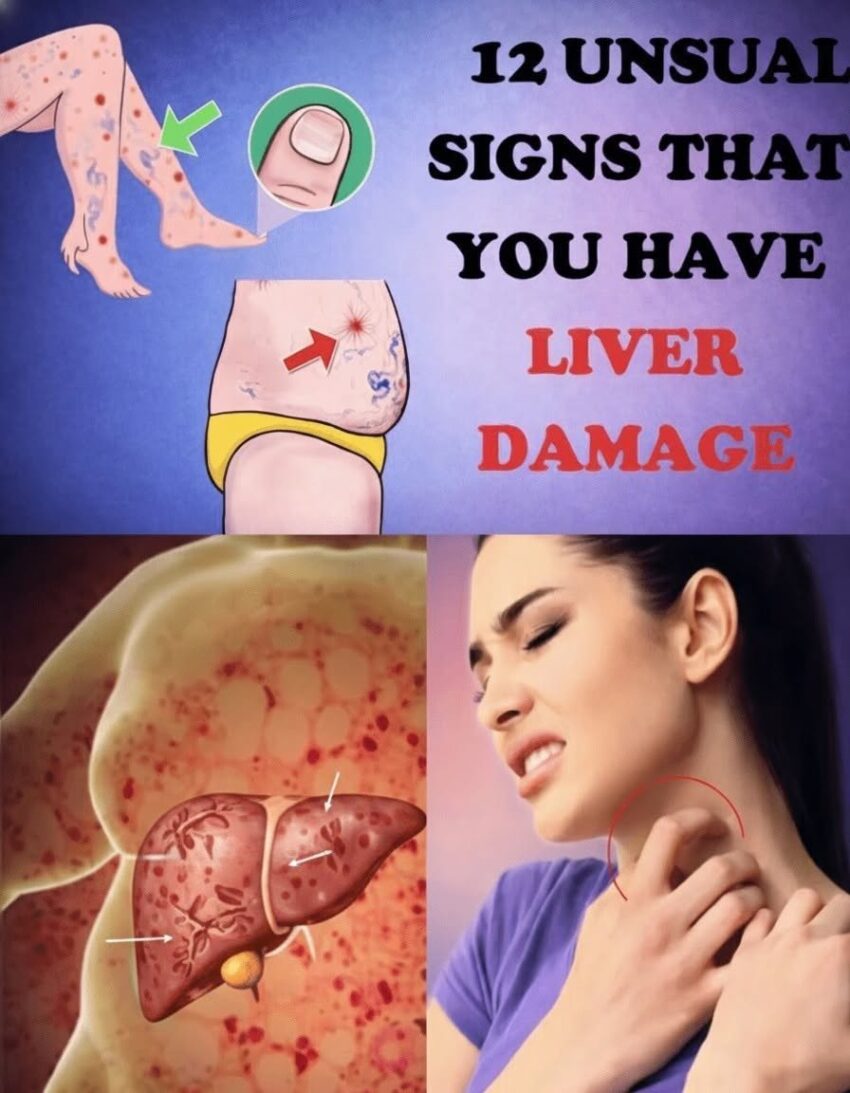
12 Bizarre Red Flags Your Liver May Be Screaming for Help
The liver is remarkably resilient, and that can be a problem: many liver diseases cause few or no noticeable symptoms in their early stages. By the time obvious symptoms such as jaundice, abdominal swelling, or confusion appear, significant liver damage may already have developed.
Also, none of the signs below automatically means you have liver disease. Many can occur with completely different conditions. Think of them as signals worth discussing with a healthcare professional, especially when several occur together or persist.
1. Extreme or unexplained fatigue
Feeling unusually exhausted—even after getting enough sleep—can be an early symptom of liver disease.
Liver problems can affect metabolism, nutrition, inflammation, and the body’s ability to process various substances. Conditions such as cirrhosis and autoimmune hepatitis commonly include fatigue or weakness among their symptoms.
The important clue is persistent, unexplained fatigue, particularly when it occurs alongside poor appetite, weight loss, nausea, itching, or abdominal symptoms.
However, fatigue is extremely nonspecific. Anemia, thyroid disorders, infections, sleep problems, depression, medication effects, and many other conditions can cause it.
2. Itchy skin with no obvious rash
This one can be surprisingly significant.
Some liver and bile-duct disorders can cause persistent itching (pruritus), sometimes without an obvious skin rash. It is particularly associated with conditions that interfere with normal bile flow, including primary biliary cholangitis and primary sclerosing cholangitis.
Why might the liver be involved? When bile flow is impaired, substances associated with bile metabolism can accumulate in the body and contribute to intense itching.
If itching is severe, persistent, unexplained, or accompanied by jaundice or unusually dark urine, it deserves medical evaluation.
3. Your eyes or skin turn yellow
Yellowing of the whites of the eyes or skin is called jaundice.
It happens when bilirubin accumulates in the bloodstream. Liver disease is one possible cause, although problems involving bile ducts or red blood cells can also produce jaundice.
Jaundice is one of the more recognizable warning signs of significant liver or bile-flow problems.
If you notice new yellowing—particularly of the whites of your eyes—don’t simply assume it will disappear on its own. It should be medically assessed.
4. Your urine suddenly becomes unusually dark
Dark or brownish urine can occur when bilirubin enters the urine.
It can accompany liver diseases such as hepatitis and cirrhosis, particularly when jaundice is also present.
But dark urine isn’t automatically a liver problem. Dehydration, certain foods, medications, supplements, and blood in the urine can also change urine color.
The combination of dark urine + yellow eyes/skin + pale stools is considerably more concerning for a problem involving bilirubin or bile flow.
5. Your stools become unusually pale
Normally, bile contributes to the brown color of stool. When bile isn’t reaching the intestine normally, stools can become unusually pale, grayish, or clay-colored.
Pale stools can occur with certain liver and bile-duct disorders. NIDDK specifically lists lighter stool color among symptoms associated with hepatitis and autoimmune hepatitis.
One isolated lighter bowel movement isn’t necessarily alarming. Persistent changes—especially combined with dark urine or jaundice—are more important.
6. Your belly starts swelling
A progressively enlarged or swollen abdomen can sometimes represent ascites, meaning fluid accumulating inside the abdominal cavity.
Ascites is an important complication of advanced cirrhosis and can occur when severe liver disease contributes to increased pressure in the portal circulation and changes in fluid regulation.
This isn’t the same thing as ordinary bloating after a large meal.
Possible clues include:
- Increasing abdominal size
- A feeling of abdominal fullness or pressure
- Rapid changes in body weight
- Swelling occurring along with swollen legs or ankles
New, unexplained abdominal swelling should be evaluated rather than assumed to be simple digestive bloating.
7. Your ankles, legs, or feet become swollen
Fluid can also accumulate in the lower limbs, producing edema.
Swollen ankles and legs are recognized complications of advanced cirrhosis.
Again, liver disease isn’t the only explanation. Heart disease, kidney disease, venous problems, medications, and prolonged sitting can all cause edema.
But persistent swelling—particularly when accompanied by abdominal swelling, jaundice, or known liver disease—is worth prompt medical attention.
8. You bruise or bleed unusually easily
If you suddenly seem to develop bruises from very minor bumps, or bleeding becomes easier than usual, don’t automatically blame it on getting older.
Advanced liver disease can interfere with normal blood clotting and is associated with easier bruising and bleeding.
There are many other causes, including blood disorders and medications such as anticoagulants or antiplatelet drugs.
But unexplained changes in bleeding or bruising patterns should be discussed with a clinician.
9. You lose your appetite and weight without trying
Loss of appetite can occur in liver disease, and unintended weight loss can follow.
NIDDK lists poor appetite and unintentional weight loss among possible symptoms of cirrhosis.
This becomes more concerning when unexplained weight loss occurs alongside:
- Persistent fatigue
- Nausea
- Abdominal discomfort
- Jaundice
- Increasing abdominal swelling
- Muscle loss or weakness
Unintentional weight loss itself deserves investigation because it can have numerous causes beyond liver disease.
10. You develop persistent nausea or discomfort in the upper-right abdomen
The liver is located in the upper-right portion of the abdomen, beneath the rib cage.
Some liver conditions can produce discomfort or pain in this region, as well as nausea or vomiting.
However, upper-right abdominal pain can also come from the gallbladder, stomach, intestines, abdominal muscles, or other organs.
So don’t use the location of pain alone to diagnose a liver problem.
Persistent or severe pain—especially when accompanied by fever, jaundice, vomiting, or significant illness—needs medical evaluation.
11. Your thinking, memory, speech, or behavior changes
This is one of the symptoms you really shouldn’t ignore.
Advanced liver disease can cause hepatic encephalopathy, a condition involving changes in brain function associated with the accumulation of substances that the damaged liver cannot adequately process.
Symptoms can include:
- Confusion
- Difficulty concentrating
- Memory problems
- Personality or behavior changes
- Sleep disturbances
- Trembling
- Slurred speech
- Increasing difficulty thinking clearly
NIDDK identifies confusion and difficulty thinking as complications of cirrhosis, while severe cases can involve substantial changes in mental function.
Sudden confusion, severe drowsiness, slurred speech, or major behavioral changes require urgent medical attention, particularly in someone known to have liver disease.
12. You notice unusual red palms, visible veins, or other skin changes
Advanced liver disease can produce some surprisingly visible changes.
For example, cirrhosis can be associated with red or blotchy palms and visible blood vessels on the skin. Changes in the nails and fingers can also occur.
Certain liver diseases can additionally cause skin findings such as yellowish deposits called xanthomas, particularly in disorders involving bile flow.
These findings aren’t diagnostic by themselves. But if several unusual skin changes appear together with fatigue, itching, jaundice, swelling, or other symptoms, they deserve a medical assessment.
The biggest warning: liver disease can be silent
Perhaps the most important thing to understand is that you don’t need to have symptoms to have liver disease.
Early cirrhosis may cause no symptoms, and some chronic liver diseases can remain relatively silent for years.
That’s why relying entirely on how you feel can be misleading.
People with risk factors such as chronic hepatitis B or C, metabolic conditions associated with fatty liver disease, significant alcohol exposure, certain autoimmune diseases, or inherited liver disorders may need appropriate medical evaluation even if they feel perfectly well.
When should you seek urgent help?
Some liver-related symptoms can represent serious complications.
Seek emergency medical care if you have:
- Vomiting blood
- Black or bloody stools
- Sudden or severe confusion
- Severe difficulty staying awake
- Slurred speech or major changes in consciousness
- Severe abdominal swelling accompanied by significant illness
- New jaundice accompanied by severe symptoms
Vomiting blood or black stools can indicate gastrointestinal bleeding from enlarged veins associated with advanced liver disease.
How doctors actually check the liver
Symptoms alone cannot tell you whether your liver is damaged.
A clinician may consider your medical history, medications and supplements, alcohol exposure, risk factors, physical examination, blood tests, and sometimes imaging. Liver blood tests can include measurements such as ALT, AST, alkaline phosphatase, bilirubin, albumin, and other markers depending on the situation.
Imaging such as ultrasound may also be used, and additional testing depends on what the initial evaluation shows.
Importantly, a single abnormal liver enzyme doesn’t automatically mean severe liver disease, just as normal results don’t necessarily rule out every liver condition. The results have to be interpreted in context.
Bottom line
The liver doesn’t always “scream” when something is wrong. Sometimes it gives subtle clues—fatigue, itching, appetite changes, unexplained weight loss, or mild abdominal discomfort—and sometimes it gives much more obvious signals such as jaundice, dark urine, swelling, bleeding, or confusion.
If you have several of these symptoms, if they’re persistent or worsening, or if you have known risk factors for liver disease, don’t try to diagnose yourself from symptoms alone. Arrange a medical evaluation.
And if there is vomiting blood, black stools, sudden confusion, or another severe acute change, treat it as an emergency rather than waiting for a routine appointment.
This is general health information, not a diagnosis. The symptoms above have many possible causes, and a healthcare professional should determine what is actually responsible