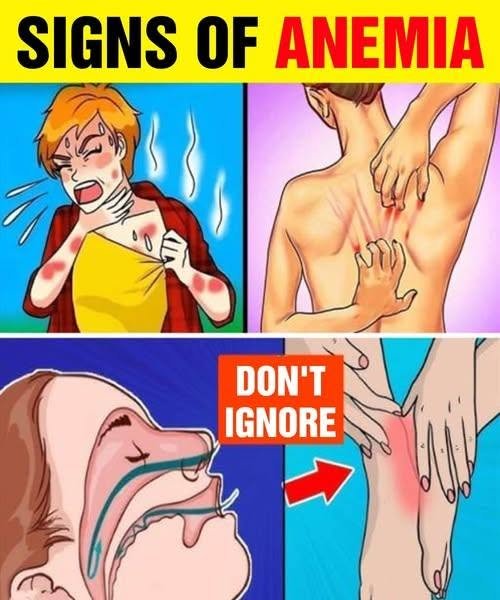
12 Silent Symptoms of Anemia You Shouldn’t Ignore
Anemia is not one single disease. It means your blood does not have enough healthy red blood cells or hemoglobin to deliver adequate oxygen to your tissues. Iron-deficiency anemia is the most common type, but anemia can also result from vitamin B12 or folate deficiency, blood loss, chronic disease, inherited conditions, problems with red-blood-cell production, or increased red-cell destruction.
Anemia can develop gradually, and mild anemia may cause few or no obvious symptoms. That is why some people mistake its early signs for stress, poor sleep, aging, dehydration, or simply being “out of shape.”
Here are 12 symptoms worth paying attention to:
1. Persistent or unusual fatigue
This is one of the most common early clues.
You may feel exhausted even after getting what should be adequate sleep. Ordinary activities—walking, working, climbing stairs, or exercising—may suddenly require much more effort.
The reason is straightforward: hemoglobin carries oxygen. When hemoglobin is low, your muscles and organs may receive less oxygen, contributing to fatigue and reduced exercise tolerance.
Watch for: fatigue that is persistent, unexplained, worsening, or noticeably different from your normal energy level.
2. Weakness or reduced exercise tolerance
Anemia can make your muscles feel unusually weak or heavy.
You might notice that activities you previously handled easily now leave you exhausted. For example, you may struggle to finish a workout, climb several flights of stairs, or walk your usual distance without needing a break.
This can occur because the body is attempting to compensate for reduced oxygen delivery.
3. Shortness of breath
Feeling breathless during activity can be an important sign.
You may notice that you’re breathing harder than usual after walking quickly, climbing stairs, exercising, or doing household chores. With more significant anemia, shortness of breath can occur with relatively mild activity and, in severe cases, even at rest.
Don’t automatically assume you’re simply out of shape. Persistent or unexplained breathlessness deserves medical evaluation because it can have many causes besides anemia.
4. Dizziness or lightheadedness
Anemia can cause dizziness or lightheadedness, particularly when you stand up or exert yourself.
Some people describe this as feeling faint, unsteady, or as though their head is “floating.” Severe anemia can contribute to fainting.
If you repeatedly become dizzy when standing, don’t assume it is necessarily anemia—dehydration, low blood pressure, medications, heart problems, and other conditions can produce similar symptoms.
5. Frequent headaches
Recurring headaches can occur with anemia.
Headaches may be accompanied by fatigue, dizziness, difficulty concentrating, or a general feeling of being unwell.
However, headaches are extremely common and are not specific to anemia. A persistent new headache should not automatically be attributed to low iron.
6. Pale skin
A noticeable loss of normal skin color can be a clue.
People with anemia may appear paler than usual, and pallor can sometimes be easier to notice in the face, lips, gums, nail beds, or inside the lower eyelids.
Paleness by itself doesn’t diagnose anemia, because normal skin tone varies considerably between individuals.
7. Fast, pounding, or irregular heartbeat
When the blood carries less oxygen, the cardiovascular system may compensate by making the heart work harder.
You may notice:
- A racing heartbeat
- Pounding or fluttering in the chest
- A faster pulse during relatively minor activity
- Awareness of your heartbeat
Palpitations are recognized symptoms of anemia, particularly as anemia becomes more significant.
Important: chest pain, severe shortness of breath, fainting, or a sustained/very abnormal heartbeat requires prompt medical attention rather than assuming anemia is responsible.
8. Cold hands and feet
Some people with iron-deficiency anemia notice that their hands and feet feel unusually cold.
This symptom is associated particularly with iron-deficiency anemia, although it can have many other explanations, including normal variation, thyroid problems, circulation issues, and environmental temperature.
If cold extremities occur together with fatigue, pallor, dizziness, or breathlessness, discussing the combination with a healthcare professional is reasonable.
9. Difficulty concentrating or “brain fog”
Anemia can affect how you feel mentally as well as physically.
You might notice:
- Difficulty concentrating
- Trouble thinking clearly
- Reduced mental stamina
- Irritability
- Problems maintaining attention
Difficulty concentrating is documented among symptoms of anemia and iron deficiency.
This doesn’t mean every episode of brain fog is caused by anemia. Sleep deprivation, stress, medications, thyroid disorders, depression, infections, and many other conditions can cause similar problems.
10. Brittle or abnormal nails
Changes in your nails can sometimes provide a less obvious clue, particularly with iron deficiency.
Nails may become brittle or fragile. Iron-deficiency anemia is also associated with other nail abnormalities.
Nail changes alone are not enough to diagnose anemia, but they become more interesting when they occur alongside fatigue, pallor, weakness, or shortness of breath.
11. Unusual cravings for non-food substances
One particularly unusual symptom is pica—a persistent desire to eat substances that have little or no nutritional value.
Examples can include:
- Ice
- Dirt
- Clay
- Starch
- Other non-food substances
Pica is especially associated with iron deficiency.
A strong or persistent craving to chew ice (pagophagia) can therefore be worth mentioning to your healthcare professional.
Don’t assume that having a single unusual craving automatically means you have anemia, but persistent pica deserves evaluation.
12. Sore tongue, mouth changes, or restless legs
Iron deficiency can produce some surprisingly subtle symptoms outside the usual fatigue-and-dizziness pattern.
These can include:
- A sore or inflamed tongue
- Mouth ulcers
- Restless legs symptoms
- Hair loss
- Brittle nails
These manifestations are documented particularly with iron-deficiency anemia.
Vitamin B12 deficiency can also cause anemia and may produce a swollen or red tongue, fatigue, pale skin, shortness of breath, and—when deficiency persists—neurological symptoms such as numbness and tingling.
Why you shouldn’t ignore these symptoms
The important point is that anemia is a finding, not necessarily the underlying cause of the problem.
For example, iron-deficiency anemia can result from inadequate dietary iron, difficulty absorbing iron, increased iron requirements during pregnancy, or blood loss. Heavy menstrual bleeding is one common source of blood loss, while gastrointestinal bleeding can also cause iron deficiency.
Therefore, simply taking an iron supplement without knowing why your iron is low isn’t always the right approach. Excess iron can be harmful, and the underlying cause may need treatment.
How anemia is diagnosed
Symptoms alone cannot confirm anemia.
A healthcare professional will generally use a blood test, commonly a complete blood count (CBC), to evaluate hemoglobin, hematocrit, red blood-cell count, and red-cell characteristics. Depending on the situation, additional testing may include ferritin and other iron studies, vitamin B12 and folate testing, or investigations for possible blood loss.
When to seek medical attention
Make an appointment if you have persistent or unexplained fatigue, weakness, dizziness, breathlessness, paleness, palpitations, or several of these symptoms together.
Seek urgent medical care for severe difficulty breathing, fainting, significant chest pain, or other rapidly worsening symptoms. These can have causes that require immediate attention and should not simply be attributed to anemia.
Bottom line
The “silent” nature of anemia is what makes it easy to overlook. Persistent fatigue, weakness, breathlessness, dizziness, headaches, paleness, palpitations, cold extremities, concentration problems, nail changes, pica, and mouth/restless-leg symptoms can all occur with anemia—particularly iron-deficiency anemia. But these symptoms are not specific to anemia. The safest way to find out is with appropriate blood testing and, if anemia is present, determining why it developed rather than treating the number alone.