-
What to do: Seek advice if the infection keeps returning or does not respond to treatment. Keep skin folds dry, change damp socks, and avoid using steroid-only creams on a suspected fungal rash unless a clinician advises you to.
Diabetes is associated with increased bacterial and fungal skin infections, but recurrent infections alone do not establish a diabetes diagnosis.
10. Cuts, scratches, or sores that take too long to heal

Medical concern: Delayed wound healing and diabetic ulcers
A small cut, blister, crack, or scrape may remain open longer than expected. The skin around it may become swollen, discolored, or inflamed.
-
Why it happens: High blood glucose can impair immune function, damage nerves, and contribute to poor circulation. These changes can slow wound healing.
-
What makes it unusual: A minor injury may worsen without causing much pain, particularly when nerve damage has reduced sensation.
-
What it may indicate: Poorly controlled diabetes or diabetes-related nerve and blood vessel complications. Other conditions, including poor circulation unrelated to diabetes, can also delay healing.
-
What to do: If you have diabetes and develop an open foot wound, contact a healthcare professional promptly. Seek urgent care for spreading redness, warmth, swelling, pus, fever, or darkening tissue. Do not wait for pain to develop.
Important: A nonhealing wound is not simply a cosmetic skin problem. In people with diabetes, early assessment can help prevent serious infection and tissue damage.
11. Yellowish skin or thick, yellowish nails

Possible causes: Nail fungus, skin changes, or circulation problems
Toenails may become yellow, thick, brittle, or crumbly. Some people also notice yellowish discoloration of their skin.
-
Why it happens: People with diabetes may be more susceptible to fungal nail infections. Yellowish skin changes can also occur with particular metabolic or dermatological conditions.
-
What makes it unusual: Nail changes may develop gradually, and thickened nails can put pressure on surrounding skin, potentially causing wounds.
-
What it may indicate: Diabetes can increase the risk of fungal infections, but yellow nails alone are not a reliable sign of diabetes. Nail trauma, aging, and other medical conditions can cause similar changes.
-
What to do: Have persistent nail discoloration examined before starting treatment. If you have diabetes, avoid cutting thick nails too deeply and seek professional foot care if you have reduced sensation or poor circulation.
A yellowish appearance involving the whites of the eyes as well as the skin can indicate jaundice, which requires medical assessment and is not a typical diabetes-specific skin sign.
12. Small, itchy bumps that suddenly spread across the body

Possible condition: Granuloma annulare
This condition causes small, firm, skin-colored, pink, or reddish bumps that often form a ring-shaped pattern. They commonly appear on the hands, fingers, feet, or other parts of the body.
-
Why it happens: Granuloma annulare is an inflammatory skin condition. Its precise cause is not fully understood.
-
What makes it unusual: The bumps may form distinct rings, appear in multiple areas, and persist for months or longer. Some forms itch, while others cause no symptoms.
-
What it may indicate: Generalized granuloma annulare has been associated with diabetes in some studies, but the relationship is not definitive, and most ring-shaped rashes are not proof of diabetes.
-
What to do: Ask a dermatologist to examine persistent or spreading bumps. A clinician may recommend testing if the appearance and your overall health suggest a reason to screen for diabetes.
How to tell whether your skin changes could be related to diabetes
The following table summarizes the signs and what they may suggest.
|
Skin change |
Possible association with diabetes |
Priority |
|---|---|---|
|
Dark, velvety neck or armpits |
Insulin resistance or prediabetes |
Arrange screening |
|
Brown shin spots |
Diabetic dermopathy |
Routine assessment |
|
Persistent dry, itchy skin |
High glucose, dehydration, or nerve changes |
Assess if persistent |
|
Sudden yellowish bumps |
Very high triglycerides |
Prompt medical assessment |
|
Numerous skin tags |
Possible insulin resistance |
Consider screening |
|
Thick, tight upper-back skin |
Long-standing diabetes in some cases |
Medical assessment |
|
Shiny yellow-brown shin patches |
Necrobiosis lipoidica |
Dermatology assessment |
|
Unexplained blisters |
Possible diabetes-related skin condition |
Prompt assessment |
|
Repeated fungal infections |
Increased susceptibility with diabetes |
Assessment if recurrent |
|
Slow-healing wounds |
Circulation, nerve, or immune complications |
Urgent if on the foot |
|
Yellow, thickened nails |
Often fungal infection or nail damage |
Routine assessment |
|
Ring-shaped or spreading bumps |
Possible inflammatory skin condition |
Assessment if persistent |
These are associations, not diagnostic criteria. Skin appearance alone cannot confirm or rule out diabetes.
What tests can confirm diabetes?
If you notice one or more of these changes, particularly darkened skin folds, recurrent infections, or unexplained slow-healing wounds, discuss testing with a healthcare professional.
The main tests include:
1. HbA1c blood test
Estimates your average blood glucose over approximately the previous 2–3 months.
-
Normal: below 5.7%
-
Prediabetes: 5.7–6.4%
-
Diabetes: 6.5% or higher
2. Fasting blood glucose
Measures blood glucose after fasting for at least 8 hours.
-
Normal: 99 mg/dL or lower
-
Prediabetes: 100–125 mg/dL
-
Diabetes: 126 mg/dL or higher
3. Oral glucose tolerance test
Measures how your body processes glucose after you drink a standardized glucose solution.
-
A 2-hour result of 140–199 mg/dL indicates prediabetes.
-
A 2-hour result of 200 mg/dL or higher indicates diabetes.
In the absence of unequivocal high blood glucose with classic symptoms, an abnormal result generally needs confirmation with repeat testing. Your clinician can determine which test is most appropriate.
When should you seek medical help?
-
Arrange a routine appointment: For unexplained dark patches, multiple new skin tags, persistent itching, or recurring fungal infections.
-
Seek prompt medical attention: For sudden widespread bumps, new unexplained blisters, or skin lesions that are growing, painful, or breaking down.
-
Seek urgent care: For a foot wound that is worsening, spreading redness, pus, significant swelling, fever, or blackened tissue.
-
Seek emergency care: If possible diabetes symptoms occur with vomiting, abdominal pain, deep or rapid breathing, confusion, or severe weakness. These can be signs of a medical emergency.
Final takeaway
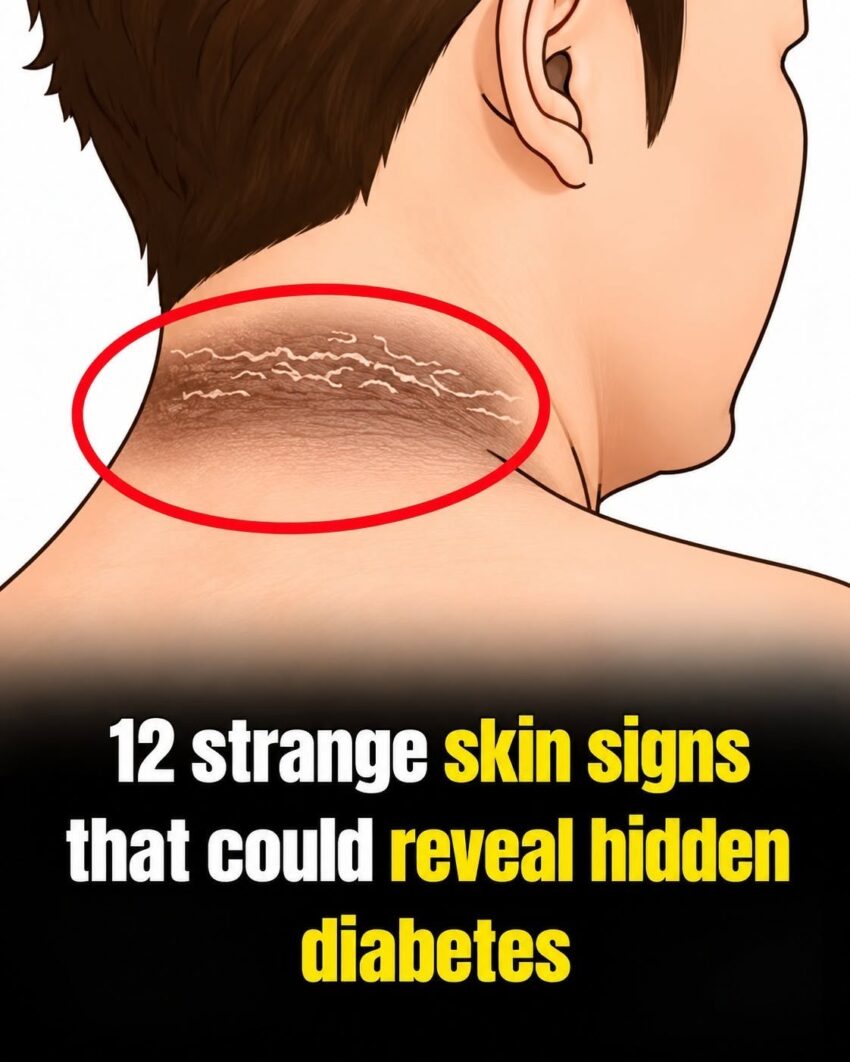
The most useful unusual skin signs to recognize are dark velvety skin folds, numerous skin tags, recurring infections, brown shin spots, and unexplained slow-healing wounds. Some can appear before diabetes is diagnosed, while others occur after blood glucose has been elevated for a long time.
You do not need to have all 12 signs to have diabetes, and having any one of them does not mean you have the condition. If you notice a persistent or unexplained change, a medical examination and appropriate blood tests are more reliable than trying to diagnose yourself from your skin.
Medical information is educational and does not replace an individual assessment by a qualified healthcare professional.
Trusted further reading: American Academy of Dermatology — Diabetes: 10 warning signs that can appear on your skin , and Centers for Disease Control and Prevention — Diabetes and your skin .