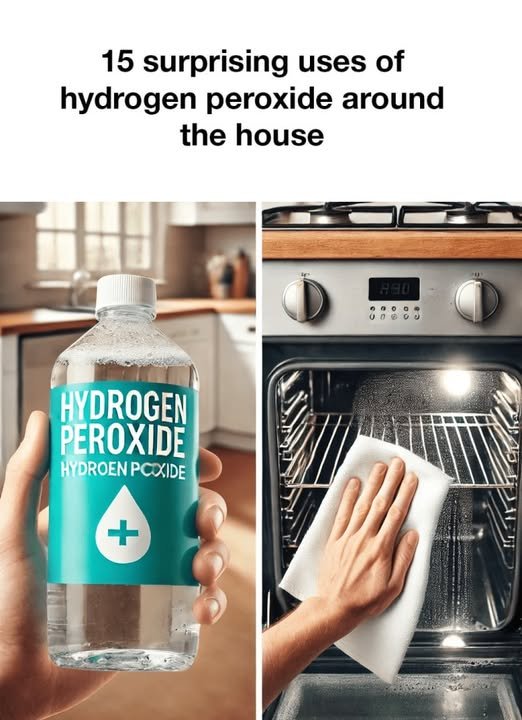
15 Surprising Uses of Hydrogen Peroxide Around the House
Important: The suggestions below are for ordinary 3% household hydrogen peroxide, not concentrated or “food-grade” peroxide. Higher concentrations can cause serious burns and other injuries. Always test an inconspicuous area first, ventilate the room, and follow the product label when using a peroxide product as a disinfectant.
1. Brighten white laundry
Hydrogen peroxide can help brighten dingy white clothing and remove certain organic stains.
How to use it:
Use regular 3% hydrogen peroxide.
Apply a small amount to a stain or add an appropriate amount to the wash according to the product’s directions.
Let the solution work briefly before washing.
For delicate fabrics, test a hidden area first.
Why it works: Hydrogen peroxide oxidizes many colored compounds, which can make stains less visible.
Best for: White cotton towels, socks, sheets, and similar washable fabrics.
Caution: Because it has bleaching properties, it can lighten colored fabrics.
2. Remove blood stains from fabric
Fresh blood can sometimes be treated effectively with 3% hydrogen peroxide.
Method:
Blot the stain rather than rubbing it deeper into the fabric.
Apply a small amount of 3% hydrogen peroxide directly to the stain.
Allow it to fizz briefly.
Blot or rinse with cool water.
Wash normally.
The bubbling occurs because hydrogen peroxide decomposes and releases oxygen when it encounters substances that catalyze its breakdown.
Important: Test first, especially on colored or delicate material. Hydrogen peroxide can have a bleaching effect.
3. Freshen a smelly garbage can
A garbage can can develop odors from food residue and microorganisms.
Try this:
Empty and rinse the bin.
Spray or wipe appropriate surfaces with 3% hydrogen peroxide.
Allow the surface to remain wet for the contact time specified on the product label if you are using it as a disinfectant.
Wipe/rinse as appropriate for the surface and product directions.
Let the bin dry completely.
Hydrogen peroxide is used around the home as a deodorizing agent, including for garbage cans.
4. Deodorize a smelly sink
Kitchen and bathroom sinks can accumulate organic residue that produces unpleasant odors.
How:
Clean visible dirt and residue first.
Apply 3% hydrogen peroxide to appropriate sink surfaces.
Allow it to sit according to the product label if disinfection is the goal.
Rinse thoroughly.
This works particularly well as a supplement to normal cleaning, rather than as a replacement for removing grease, food particles, or soap buildup.
5. Freshen a dishwasher
Hydrogen peroxide can be useful for addressing unpleasant odors in a dishwasher.
Basic approach:
Remove food debris and clean the filter according to the dishwasher manufacturer’s instructions.
Wipe accessible surfaces.
Use hydrogen peroxide only in a way compatible with the appliance and the product label.
Run an appropriate rinse/cleaning cycle.
Poison Control specifically notes hydrogen peroxide as a household deodorizing option for dishwashers.
Don’t: Mix it with other cleaning chemicals.
6. Clean and deodorize a cutting board
Cutting boards can retain food residue and odors.
For a washable, peroxide-compatible board:
Wash the board with dish soap and water first.
Rinse.
Apply 3% hydrogen peroxide.
Follow the product’s directions for any disinfecting claim.
Rinse if required and allow the board to dry thoroughly.
Hydrogen peroxide is commonly used for cleaning/disinfecting surfaces such as counters and cutting boards.
Extra tip: Don’t assume peroxide alone removes all contamination. Physical cleaning comes first.
7. Help remove tea and coffee stains
Hydrogen peroxide can help with some stubborn organic discoloration.
It may be useful on:
White mugs
Certain washable countertops
Ceramic surfaces
Some washable containers
Method:
Apply a small amount.
Allow a short contact period.
Gently wipe.
Rinse thoroughly.
Always check the manufacturer’s care instructions first, particularly for stone, painted, porous, or specialty surfaces.
8. Freshen a smelly trash or recycling area
If the area around your trash container smells unpleasant, cleaning the source is more important than simply masking the odor.
After removing the garbage and cleaning visible residue, 3% hydrogen peroxide can be used on suitable hard surfaces to help deodorize them.
This is especially useful for:
Trash-can lids
Plastic bins
Recyclable containers after washing
Areas where food residue has accumulated
Hydrogen peroxide is recognized as a household deodorizing agent.
9. Clean certain bathroom surfaces
Hydrogen peroxide can be useful for cleaning suitable hard bathroom surfaces.
Potential applications include:
Sink surfaces
Countertops
Some tile
Toilet exterior surfaces
Shower surfaces compatible with peroxide
Best technique: Clean away soap scum and dirt first, then use peroxide according to the product’s directions if you need its disinfecting properties.
Remember that cleaning and disinfecting are different jobs. Removing visible dirt does not necessarily mean that a surface has been disinfected.
10. Remove some mold and mildew staining
Hydrogen peroxide has oxidizing properties and can help with certain mildew or mold-related surface staining.
For a small area on a compatible hard surface:
Remove visible dirt.
Apply 3% hydrogen peroxide.
Allow it to work according to the product directions.
Scrub if appropriate.
Rinse or wipe as directed.
Dry the area thoroughly.
The bigger issue: If moisture continues to be present, mold can return. Fixing leaks, condensation, or poor ventilation is much more important than repeatedly treating the surface.
11. Clean refrigerator surfaces
Hydrogen peroxide can be useful for cleaning appropriate refrigerator surfaces after food spills.
A practical routine:
Remove the food and shelves that can be removed.
Clean the spill with soap and water.
Apply peroxide to compatible hard surfaces.
Follow the label directions if using it for disinfection.
Rinse surfaces where required.
Dry before replacing food.
Don’t use it indiscriminately on electrical components, seals, specialty finishes, or surfaces for which the manufacturer advises against peroxide.
12. Freshen a cat-litter area
Hydrogen peroxide can help deodorize suitable hard surfaces around a litter box.
Poison Control specifically lists cat boxes among places where hydrogen peroxide may be used for odor control.
Safer approach:
Remove the animal and litter from the immediate area.
Clean away urine/fecal residue first.
Use peroxide on compatible hard surfaces.
Rinse/wipe as appropriate.
Allow everything to dry before the animal has access again.
Important: Never mix cleaning chemicals in a litter area, and don’t assume peroxide makes contaminated litter safe to handle without normal hygiene precautions.
13. Help clean up organic stains on hard surfaces
Because hydrogen peroxide is an oxidizer, it can be useful against certain organic stains.
Examples can include:
Food stains
Some drink stains
Certain body-fluid stains
Some discoloration on washable surfaces
The result depends heavily on the material and stain.
Rule: Start with the least aggressive treatment. Test peroxide on a hidden section before treating a visible area.
14. Freshen certain household cleaning tools
Sponges, brushes, and other washable cleaning tools can develop unpleasant odors.
For compatible items, you can use 3% hydrogen peroxide as part of a cleaning routine:
Remove visible debris.
Wash the item thoroughly.
Apply peroxide if compatible with the material.
Follow the product directions.
Rinse when appropriate.
Allow it to dry completely.
Important: Don’t assume peroxide makes a heavily contaminated or deteriorated sponge hygienic indefinitely. Sometimes replacing the item is the better option.
15. Clean up odors and residue in hard-to-clean household areas
One of the most useful properties of hydrogen peroxide is its ability to help break down certain odor-causing organic compounds.
That makes it potentially useful for suitable hard surfaces in places such as:
Garbage-storage areas
Sink surrounds
Bathroom surfaces
Pet-related areas
Certain washable containers
Some appliance interiors
Its deodorizing applications are documented by Poison Control, which lists sinks, dishwashers, garbage cans, toilets, and cat boxes among household applications.
What Hydrogen Peroxide Should NOT Be Used For
Some popular internet “hacks” are misleading or potentially dangerous.
❌ Don’t drink hydrogen peroxide
Do not use hydrogen peroxide as a health drink, detox, or internal remedy. Concentrated products can cause serious injury, and even household-strength peroxide can irritate the digestive tract.
❌ Don’t use it to clean wounds routinely
Hydrogen peroxide was historically used on cuts and scrapes, but it can damage cells involved in healing. Modern wound care generally does not recommend routinely putting hydrogen peroxide into wounds.
❌ Don’t use “food-grade” peroxide for household DIY experiments
“Food-grade” does not mean safe to drink. Products around 35% hydrogen peroxide are dramatically more concentrated than ordinary 3% household peroxide and can cause severe injuries.
❌ Don’t mix it with other cleaners
The safest general rule is use hydrogen peroxide by itself unless the product label specifically instructs otherwise.
Never experiment with homemade mixtures of cleaning chemicals. Mixing household products can generate hazardous reactions or fumes.
❌ Don’t mix it with chlorine bleach
Bleach chemistry is particularly hazardous to experiment with. Poison Control advises against mixing household cleaning products because some combinations can produce toxic gases.
❌ Don’t assume it is safe for every surface
Hydrogen peroxide can have bleaching/oxidizing effects. Be cautious with:
Colored fabrics
Natural stone
Wood finishes
Painted surfaces
Metals
Delicate materials
Test an inconspicuous area first and follow the manufacturer’s care instructions.
How to Store Hydrogen Peroxide
Hydrogen peroxide gradually decomposes, especially after opening and when exposed to light.
For household use:
Keep it in its original opaque container.
Store it away from children and pets.
Keep it away from heat and direct sunlight.
Don’t transfer it into a drinking bottle or unlabeled container.
Use ordinary 3% household peroxide rather than concentrated peroxide for household cleaning.
Poison Control notes that unopened household peroxide can last around three years, while opened peroxide may begin losing effectiveness considerably sooner.
A Simple Rule to Remember
Clean first → peroxide second → rinse when appropriate → dry thoroughly.
Hydrogen peroxide is most useful when you treat it as a specialized household cleaning/deodorizing agent, rather than as a magical all-purpose cleaner. Its effectiveness depends on concentration, contact time, surface, and what you’re trying to remove.
If hydrogen peroxide gets into the eyes, rinse with plenty of running water for 15–20 minutes. Skin exposure should also be rinsed thoroughly. Significant ingestion or exposure to concentrated peroxide warrants prompt professional advice.