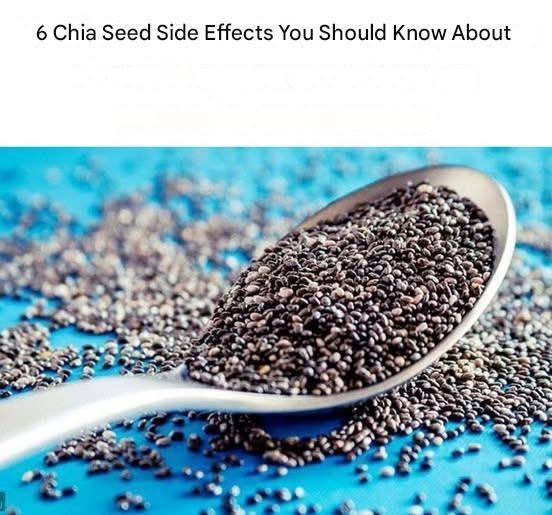
Chia seeds are generally safe and very nutritious, but they can cause side effects in some people—especially if eaten in large amounts or without enough water. Here are 6 chia seed side effects you should know about, explained in detail:
1. Digestive Problems (Bloating, Gas, Constipation)
Chia seeds are extremely high in fiber. Just a small amount can add a big fiber load to your diet.
- If your body isn’t used to high fiber, you may experience:
- Bloating
- Gas
- Stomach cramps
- Constipation (if you don’t drink enough water)
Why it happens: Chia absorbs up to 10–12 times its weight in water, forming a gel-like substance in the gut. Without enough fluid, this can slow digestion instead of helping it.
2. Choking Risk (Especially When Dry)
Dry chia seeds can swell quickly when they come in contact with liquid.
- If swallowed dry, they may expand in the throat or esophagus
- This can create a choking hazard, especially for people with swallowing difficulties
Safer way: Always soak chia seeds in water, milk, or juice before eating.
3. Low Blood Pressure (Hypotension)
Chia seeds may naturally help lower blood pressure due to their omega-3 fatty acids and fiber.
- This is helpful for some people
- But in others, it can cause:
- Dizziness
- Lightheadedness
- Fatigue
Risk increases if you already take blood pressure medication.
4. Blood Sugar Drops (Hypoglycemia Risk)
Chia seeds can slow down digestion of carbohydrates, which helps stabilize blood sugar—but it may sometimes lower it too much.
- Possible effects:
- Weakness
- Shakiness
- Dizziness
- Higher risk for people with diabetes on medication or insulin
5. Allergic Reactions (Rare but Possible)
Although uncommon, some people may be allergic to chia seeds.
Symptoms can include:
- Skin rashes or hives
- Itching
- Swelling of lips or tongue
- Breathing difficulty (severe cases)
If any of these occur, stop consumption immediately and seek medical help.
6. Drug and Nutrient Interactions
Chia seeds may interfere slightly with how your body absorbs or responds to certain substances:
- Blood thinners (due to omega-3 content)
- Blood pressure medications
- Possibly some diabetes medications
Also, because chia is high in fiber, it may reduce absorption of minerals like:
- Iron
- Zinc
- Calcium (if consumed in very large amounts)
Safe Consumption Tips
To avoid side effects:
- Start with 1 teaspoon daily, then gradually increase
- Soak before eating (important)
- Drink plenty of water
- Typical safe amount: 1–2 tablespoons per day
Bottom Line
Chia seeds are healthy for most people, but problems usually happen when they are:
- Eaten dry
- Consumed in excess
- Taken without enough water
- Combined with certain medications
If you want, I can also explain who should avoid chia seeds completely or best time to eat them for weight loss or digestion.