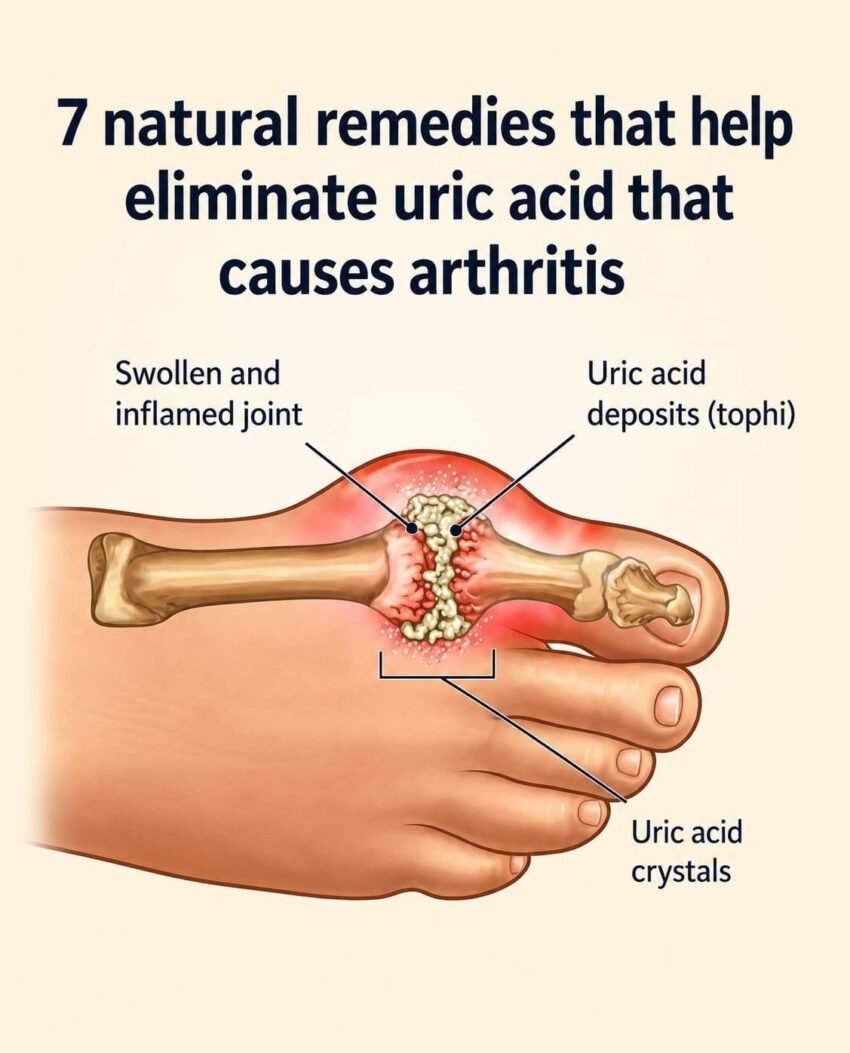
7 natural approaches that can help gout
1. Drink enough water
Good hydration supports the kidneys, which are responsible for eliminating much of the body’s uric acid.
Practical approach:
- Drink water regularly throughout the day rather than consuming a huge amount at once.
- Increase fluids during hot weather, exercise, or illness when you are losing more water.
- Don’t deliberately dehydrate yourself through fasting, excessive exercise, or very restrictive diets.
- If you have kidney, heart, or liver disease and have been told to restrict fluids, follow your clinician’s fluid recommendation instead.
Dehydration can itself trigger gout attacks, so maintaining adequate hydration is particularly important.
What about lemon water?
Lemon water is fine if you enjoy it, but there isn’t good evidence that lemon water “dissolves” gout crystals or dramatically lowers uric acid. The main benefit is that it can make drinking water easier.
2. Cut back on high-purine animal foods
Purines are broken down into uric acid. You don’t necessarily need to eliminate every purine-containing food, but reducing major sources can help.
Limit particularly:
- Organ meats such as liver and kidney
- Red meat
- Sardines and anchovies
- Shellfish
- Large portions of other seafood
- Meat-heavy gravies and broths
The American College of Rheumatology specifically recommends limiting foods associated with increased gout risk.
Better choices: vegetables, whole grains, beans and other plant proteins, lower-fat dairy, and appropriately portioned lean proteins.
Interestingly, vegetables such as spinach, asparagus, cauliflower and mushrooms contain purines but have not been associated with increased gout attacks in the same way as certain animal foods.
3. Eliminate or sharply reduce sugary drinks
This is one of the most useful dietary changes.
Reduce:
- Regular soda
- Sweetened iced tea
- Energy drinks
- Fruit drinks with added sugar
- Foods and drinks containing large amounts of high-fructose corn syrup
Excess fructose can increase uric acid production and is associated with gout. The ACR specifically recommends avoiding excessive fructose consumption and sugary beverages.
Choose instead: water, unsweetened tea, sparkling water, or other unsweetened beverages.
Whole fruit is generally preferable to fruit juice because it provides fiber and is consumed more slowly.
4. Reduce alcohol—especially beer
Alcohol can raise uric acid and increase the likelihood of gout attacks.
Beer can be particularly problematic because it contains alcohol and purines. Spirits and wine can also contribute to gout risk, especially with heavier consumption.
If you currently drink, reducing the amount—and having alcohol-free days—can help. NHS guidance likewise recommends reducing alcohol as part of gout prevention.
During an active flare, avoiding alcohol altogether is a sensible choice.
5. Try tart cherries
Tart cherries are one of the more frequently studied foods for gout.
Some evidence suggests that cherries or tart-cherry products may modestly reduce gout attacks, although they shouldn’t be considered a substitute for urate-lowering medication when medication is indicated.
The ACR notes that tart cherries may provide a modest reduction in gout attacks.
You can incorporate:
- Fresh or frozen tart cherries
- Unsweetened tart-cherry products
Be careful with heavily sweetened cherry juice because excessive sugar/fructose can work against your goal.
6. Maintain a healthy weight—but avoid crash diets
If you’re overweight, gradual weight loss can improve metabolic health and may reduce gout risk.
Aim for:
- Gradual, sustainable weight loss
- Regular physical activity
- Plenty of vegetables and high-fiber foods
- Appropriate portions
- Fewer ultra-processed foods and sugary beverages
Avoid crash diets and prolonged fasting. Rapid weight loss can temporarily increase uric acid and potentially trigger a flare. NHS guidance specifically recommends losing weight if overweight while avoiding crash diets.
Exercise is beneficial, but during an acute flare, avoid putting heavy stress on the painful joint.
7. Consider a DASH/Mediterranean-style eating pattern
Rather than obsessing over individual “gout foods,” consider changing your overall dietary pattern.
A gout-friendly pattern can emphasize:
Eat more
- Vegetables
- Whole grains
- Fruits in reasonable portions
- Nuts and seeds
- Low-fat dairy
- Legumes
- Healthy unsaturated fats
Eat less
- Red and organ meats
- Large seafood portions
- Sugary drinks
- Highly processed foods
- Excess alcohol
- Very large meals
This approach also helps address conditions frequently associated with gout, such as high blood pressure, cardiovascular disease, diabetes, and excess weight.
What about apple cider vinegar, baking soda, celery juice, turmeric, or “detox” drinks?
Be cautious with claims that these substances flush uric acid out of the body.
There isn’t strong clinical evidence that drinking vinegar, baking soda, celery juice, detox teas, or similar preparations can eliminate gout crystals.
In particular, don’t use baking soda routinely to treat gout without medical advice. Its sodium content can be problematic for some people, and altering your body’s acid-base balance isn’t a proven gout treatment.
Likewise, herbal supplements aren’t automatically safe. If you’re taking gout medicines such as colchicine, supplements and herbs can potentially interact with medications; NHS guidance recommends discussing supplements with a doctor or pharm
The important part: natural remedies may not be enough
If you have repeated gout attacks, tophi, kidney stones, kidney disease, or persistently high uric acid, lifestyle measures alone may not adequately control the disease.
Medications such as allopurinol or febuxostat can lower uric acid production, while other treatments can help remove uric acid or control inflammation. The ACR recommends allopurinol as the preferred first-line urate-lowering therapy for patients who need it and recommends gradually adjusting treatment to reach the target urate level.
During an acute gout attack, treatments such as colchicine, NSAIDs, or corticosteroids may be needed to control inflammation.
A simple daily gout-friendly routine
Morning: water + unsweetened breakfast with whole grains/fruit/low-fat dairy
Lunch: vegetables + whole grain + plant protein or lean protein
Afternoon: water; fruit or unsalted nuts rather than sugary snacks
Dinner: vegetables + whole grain + modest protein portion
Throughout the day: stay adequately hydrated and avoid sugary drinks
Alcohol: preferably none, particularly during a flare
Exercise: regular moderate activity, but rest the affected joint during a severe attack
Seek urgent medical attention if a supposedly “gouty” joint is accompanied by fever, feeling very unwell, or rapidly worsening symptoms, because a joint infection can look similar to gout and requires prompt treatment
If you want, I can also give you a 7-day gout diet plan (breakfast, lunch, dinner, snacks, and drinks) specifically designed to help lower uric acid naturally.